Bugatti Type 101: old dog, new tricks

| 23 Apr 2025
Classic & Sports Car – Bugatti Type 101: old dog, new tricks

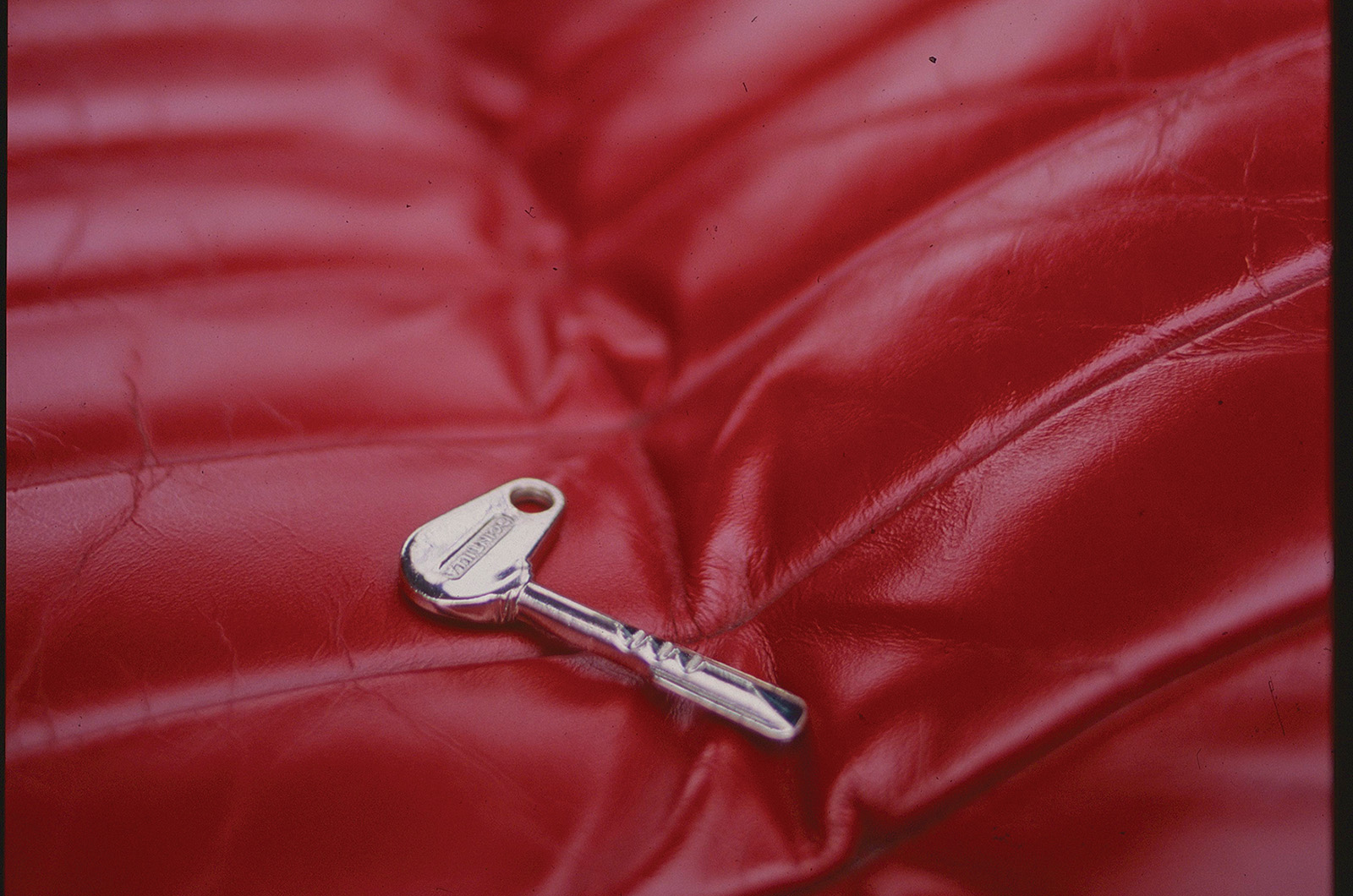
Push in the oddly ribbed key a notch to light up the dash and the gauges galvanise into life.

One more notch and the starter whirs, and a long way forward, in the front of the engine bay, the cast one-piece, broad-bladed cooling fan slowly begins to rotate.

Suddenly, all eight cylinders crack simultaneously into life and the long, tall slab of an engine settles to a rapid, busy tickover.

As it warms, you can lift a little ignition advance with the lever on the right of the dash, to raise tickover speed and chivvy the warm-up along, until you rev it, when the blower squeals like a pack of hyenas.
Classic & Sports Car – Bugatti Type 101: old dog, new tricks

The Bugatti Type 101’s serrated key wakes the supercharged engine

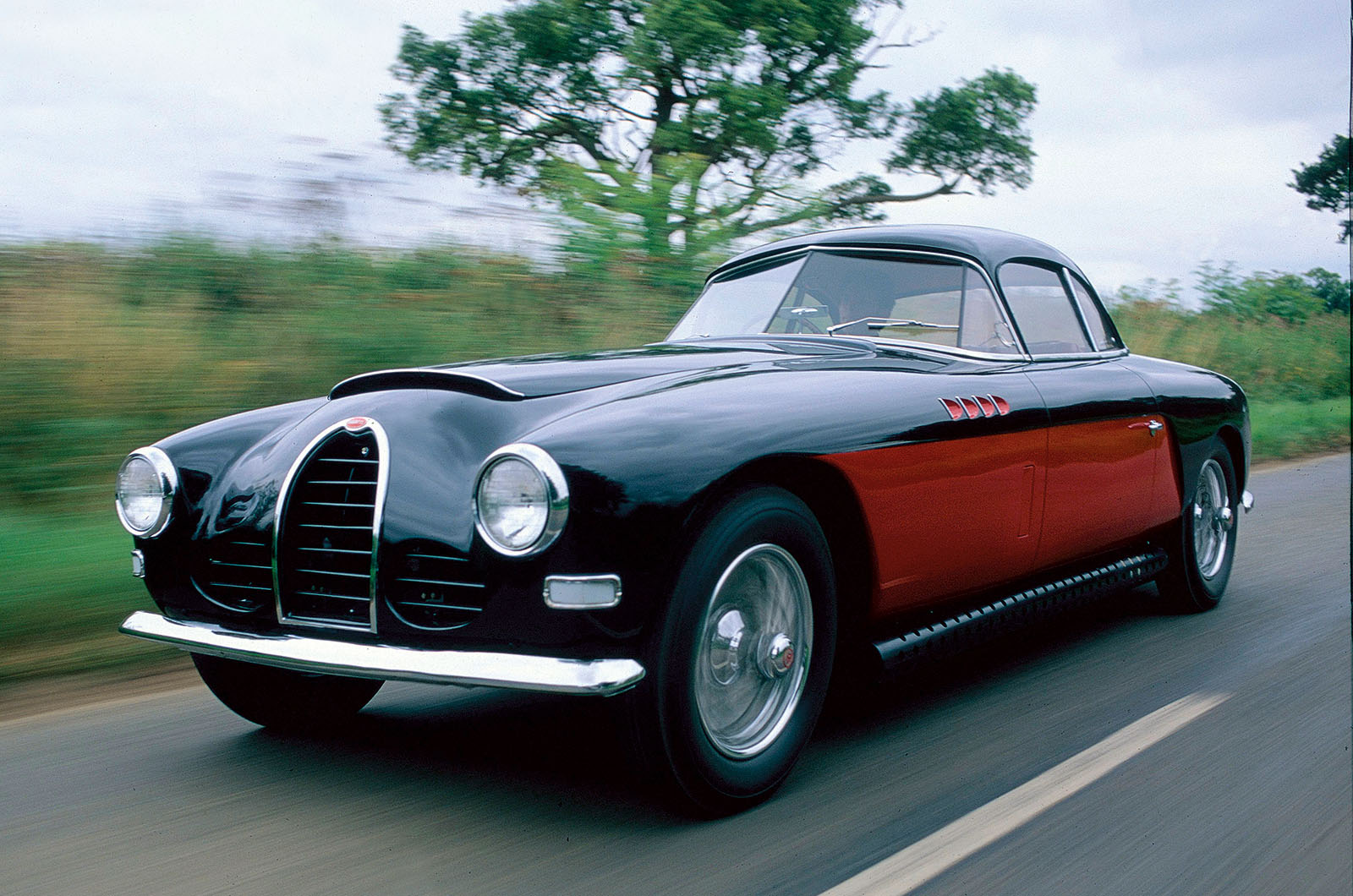
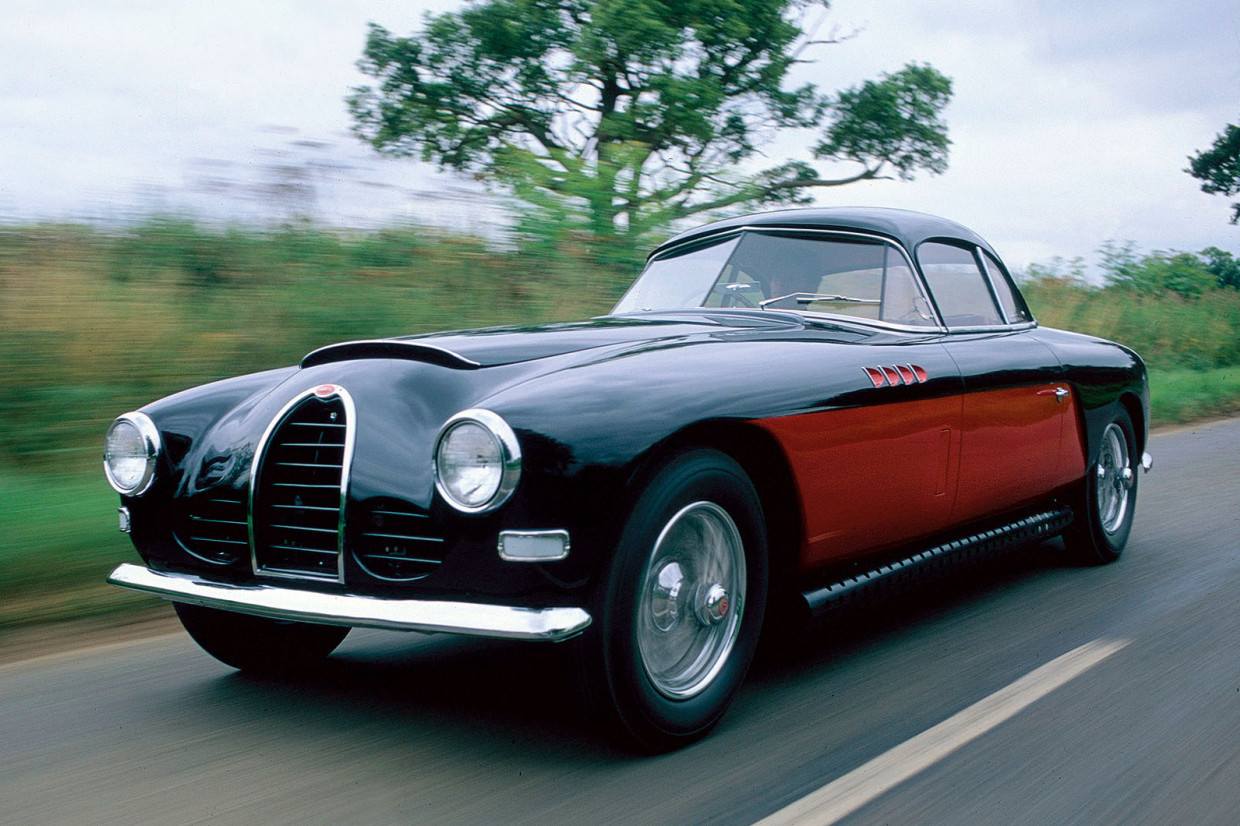
It’s a Bugatti all right – even the swoopy, 1950s coupé body style can’t detract from the famous horseshoe grille up front.

But it looks out of place, giving conflicting messages: just what kind of a Bugatti is this; what era; what year? 

It’s a Bugatti Type 101. Only six were made, in 1951.

Hadn’t Bugatti gone down the tubes by then? After all, Ettore Bugatti had departed to the great engineering shop in the sky four years earlier, on 21 August 1947.
A clue to its origins comes with a glance under the front valance, where the cranked, hollow-tube front axle with leaf springs slotted through it, and the finned sump are on display.

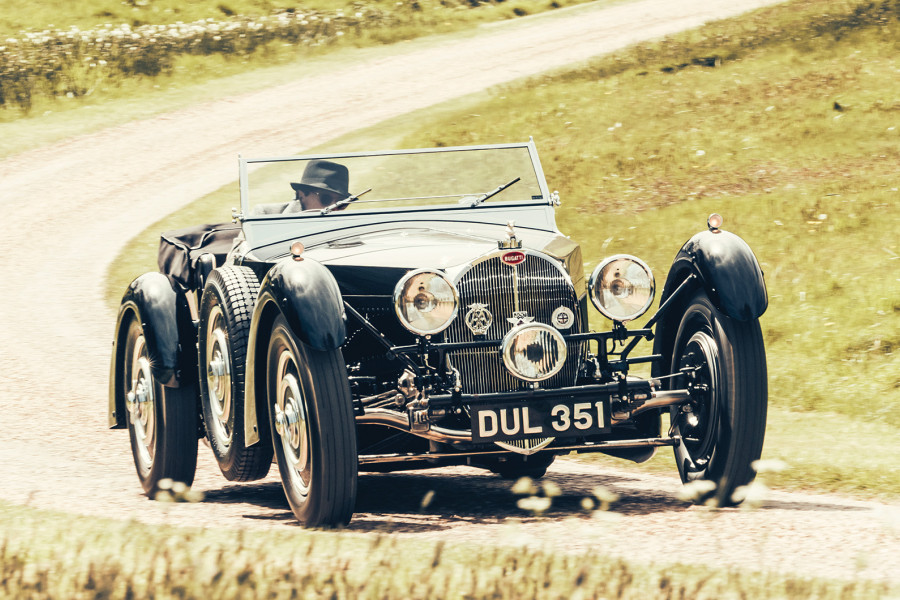
Pre-war underpinnings: it’s definitely a Bugatti. Really, it’s a Type 57 underneath.

The Bugatti T57 was the car with which Ettore finally, reluctantly acknowledged that he had to bend to fashion, to go with the flow, to compete against the Delages, Delahayes and Bentleys of the day, and a car upon which his talented son, Jean, had much influence.

Classic & Sports Car – Bugatti Type 101: old dog, new tricks

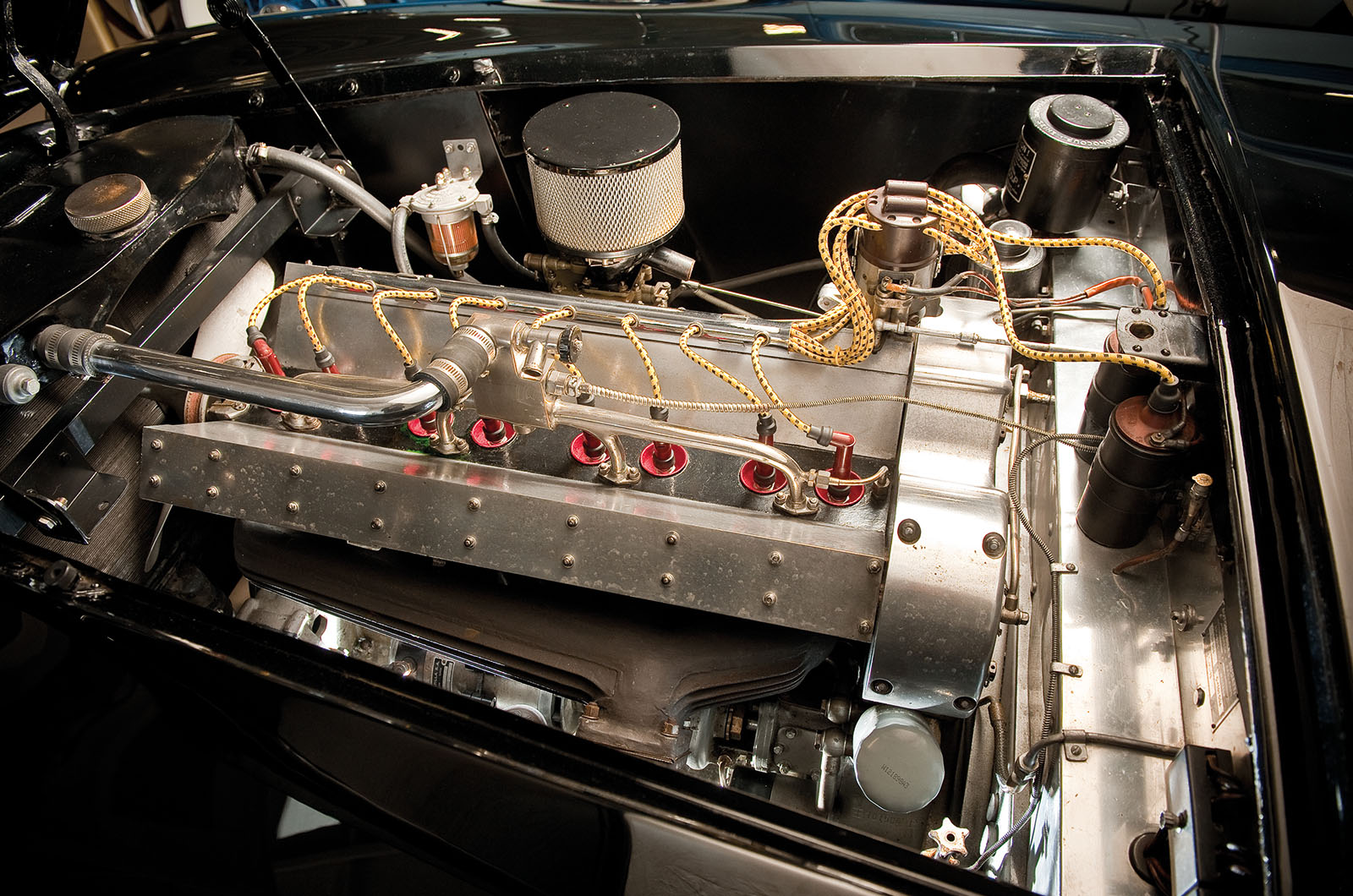
The Bugatti Type 101’s all-alloy straight-eight has a Weber carburettor, instead of the Type 57’s Stromberg UUR2

There was no place for thinly disguised racers any more, nor enormous white elephants such as the Type 41 Royale.

But there was still a market for a reliable, high-performance Bugatti, especially when clothed in fine French bodywork. 

The old man would not relinquish his beloved front axle – indeed, when Jean arrived in a prototype saloon with an independent front end he was told to remove it, and revert to Bugatti-type front suspension.

But Ettore allowed Jean his input into that car, and it became Bugatti’s greatest seller, at 680 in all, in various types from the first cable-braked saloon right up to the famous supercharged T57SC, with rakish, low coachwork, usually by either Gangloff or Molsheim.

That was Bugatti’s last great model: since the mid-1930s, the company’s main business had been its railcar operations and, when general industrial unrest in France even included a strike at Molsheim, a disillusioned Ettore moved to Paris, preoccupied by his railcar contracts, leaving Jean to look after the factory.

Jean died in a road accident testing a ‘Tank’-bodied racing Bugatti T57C in ’39; then war intervened and Ettore moved on to Bordeaux.

Classic & Sports Car – Bugatti Type 101: old dog, new tricks

The Bugatti Type 101’s extreme length is disguised by trims to the sills and the two-tone colour scheme

Post-war, a trickle of T57s continued to come out of the factory, but no new models had appeared save the prototype, alloy-chassis Type 64 of 1938 that had been largely Jean’s creation.

Ettore died in 1947, aged 66, and the factory at Molsheim was passed into the hands of Roland Bugatti and Ettore’s two daughters, L’Ébé and Lidia, and was managed by Pierre Marco.

Two years after the death of Le Patron, thoughts turned to the resumption of car manufacture with a new model, and parts left over from pre-war Bugatti Type 57 stocks were found in the stores and dusted off.

The design was given a downdraught Weber carburettor instead of the old Stromberg UUR2, which was no longer available, and an electrically operated Cotal gearbox was fitted, to give it similar standing to its great rival, the Delahaye 135. A supposed five-speed Bugatti ’box never materialised.

The existing chassis already had hydraulic operation for its large, elegant alloy drum brakes, as Bugatti Type 57s had from 1938 when Ettore finally relinquished his system of cables and compensating bike chains.

The wheels were 17in wires, with 6.00-section crossplies, rather than the 18s on which T57s rode to the opera. 

Classic & Sports Car – Bugatti Type 101: old dog, new tricks

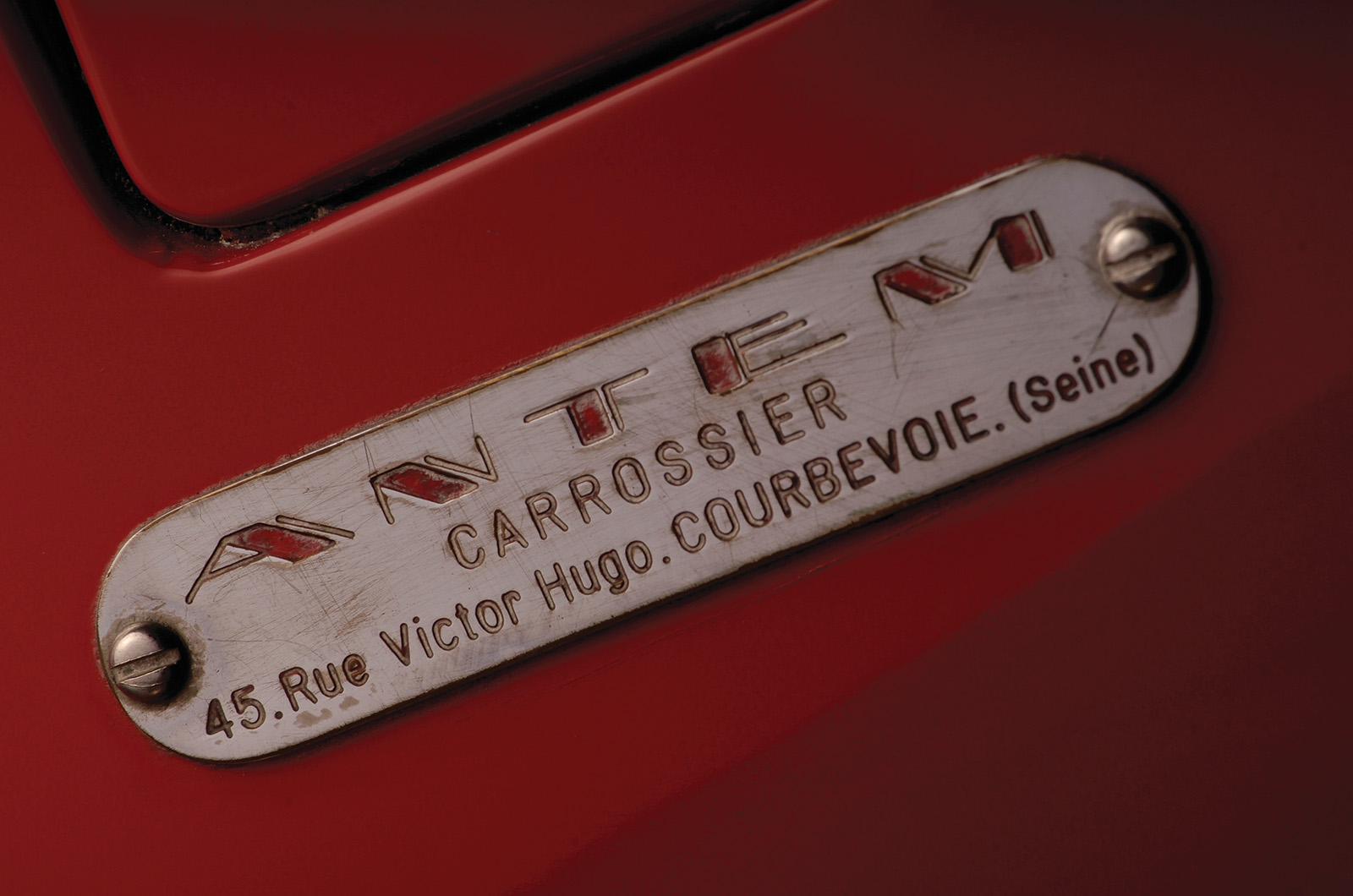
The Bugatti Type 101’s build plate, from coachbuilder Antem

Two Type 101s were shown at the 1951 Paris Salon, and catalogues and specification sheets were made available to the public.

The six (some say seven) cars built were bodied by various French carrossiers in the grand style, but this, chassis 101.504, is the most spectacular.

It’s the only one to be bodied as a two-seater coupé by Antem, actually van Antem, a Dutch coachbuilder with a Paris address at 45 Rue Victor Hugo in Courbevoie, a north-western suburb of the capital, by the Seine. 

There is some conflict about its early history. Conventional wisdom says it was first owned by René Bolloré, a Frenchman who had married Ettore’s widow, Geneviève Delcluze, and it ran in practice for the Le Mans 24 Hours, but never raced.

The Bugatti Trust records the first owner as De Dobbeleer, a well-known Brussels Bugatti dealer, followed by R Stanley and E Allan Henderson, although Richard Day, the Trust’s curator, spoke with Mme Bolloré, and she said she did remember the car.

What is certain is that the Type 101 found its way to the USA, spending some time in the Harrah Automobile Collection, was subsequently owned by Jaques Harguindeguy, and has later returned to the UK in the hands of British collector Nick Harley.

Classic & Sports Car – Bugatti Type 101: old dog, new tricks

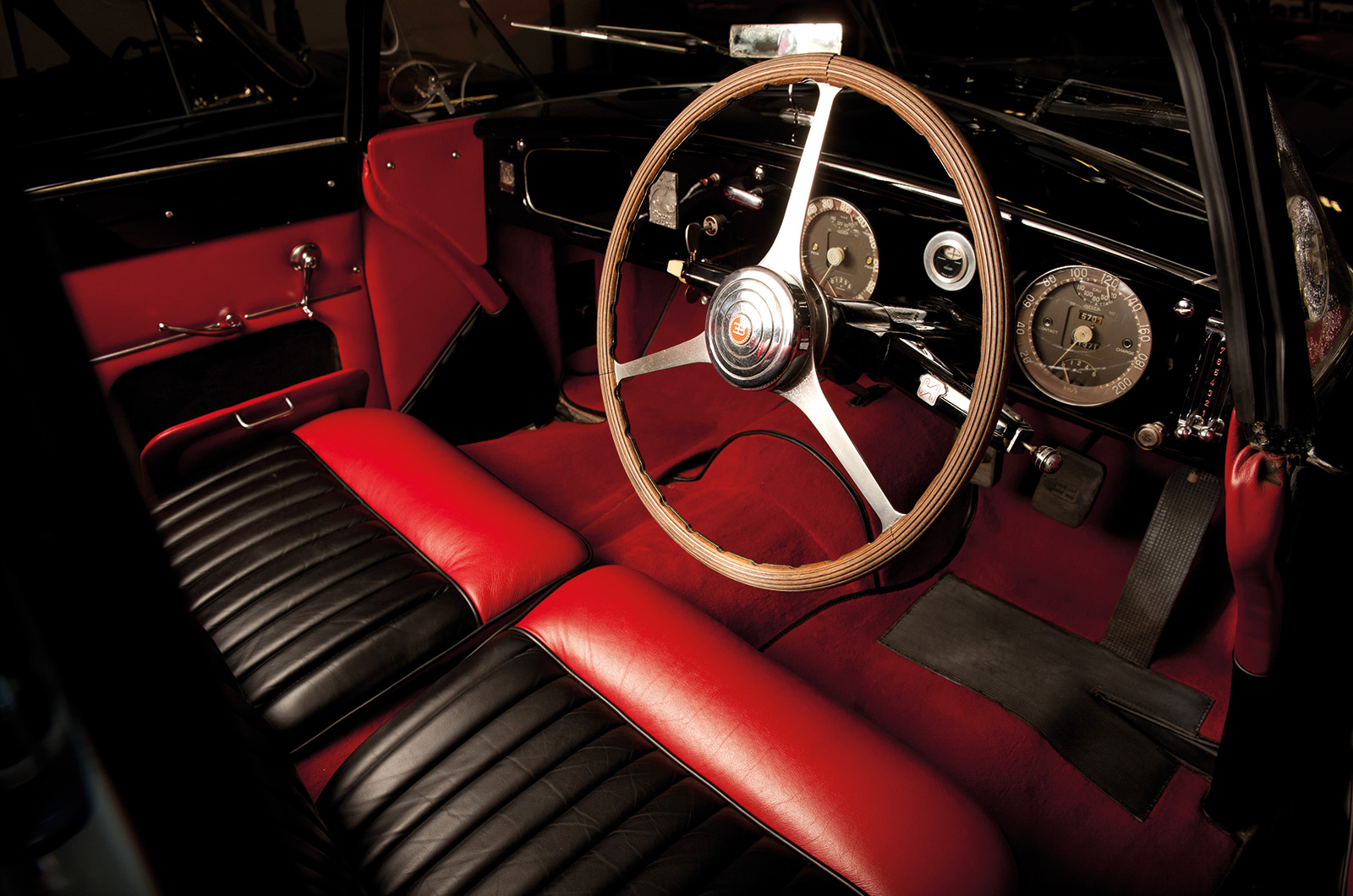
The Bugatti Type 101’s intimate cabin boasts big dials, plus a large steering wheel with the Cotal shifter on the right-hand stalk

The body detailing is exquisite, carried out in steel with some alloy pieces.

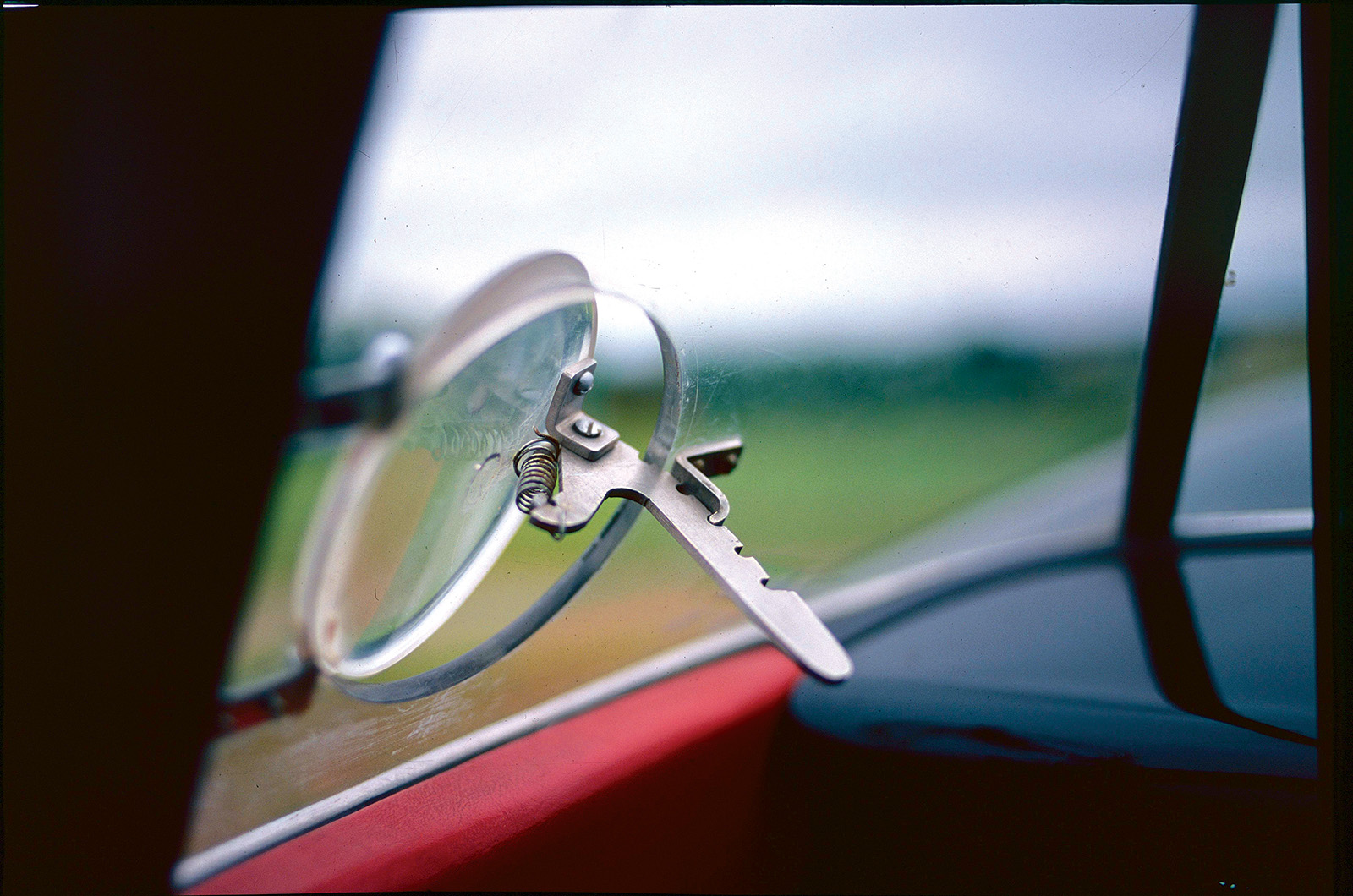
The vee-shaped windscreen, each flat half with an independent wiper arm, motor and control, is blended masterfully with the curved capsule of the tiny two-seater cabin, and there are delicate little penny-flaps in the curved Perspex front quarter-windows.

The rear side windows hinge for extra ventilation, and there’s a roll-up blind on the rear ’screen. 

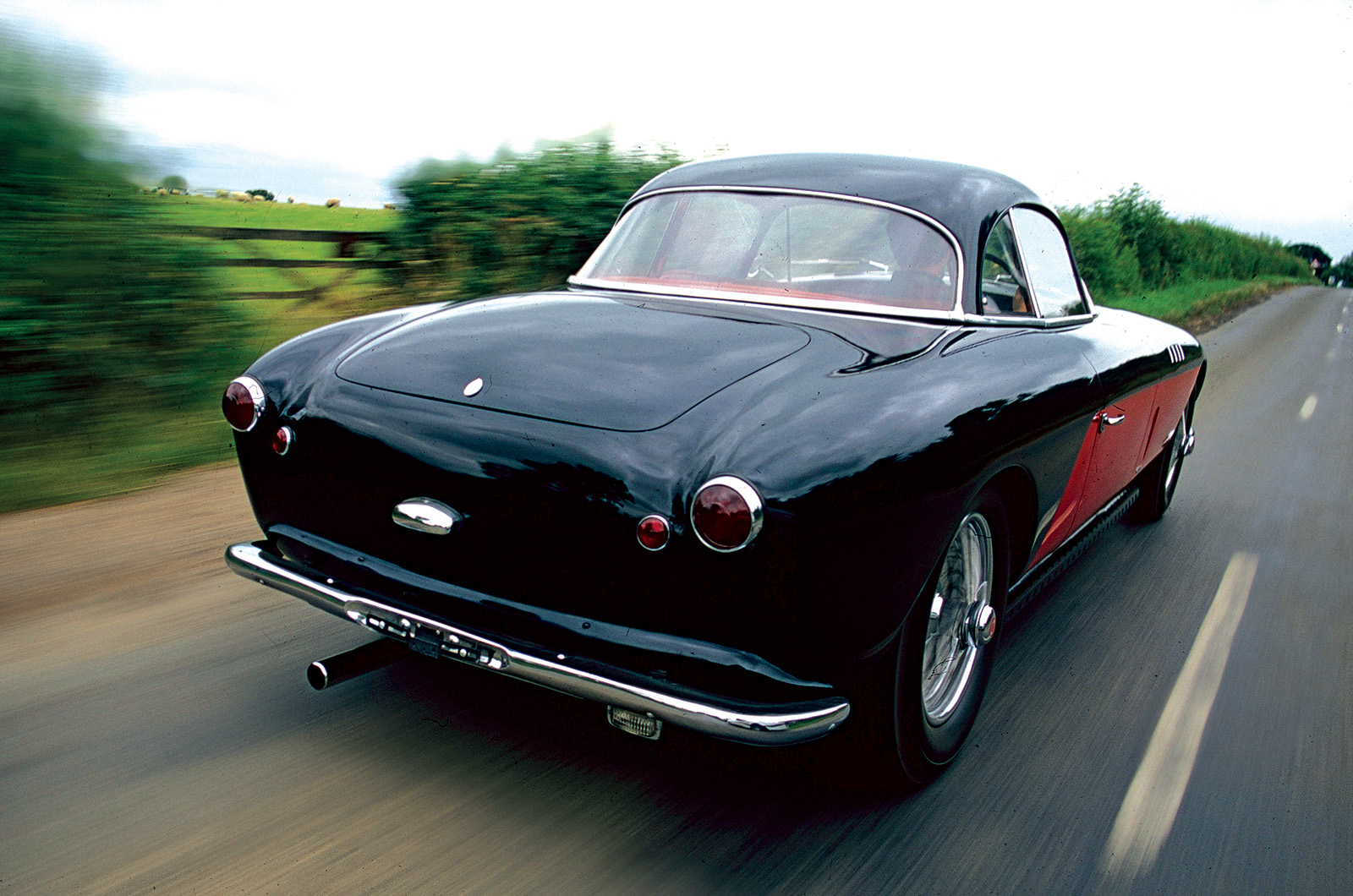
The flanks of the abbreviated rump curve subtly in, finished by the simple Scintex tail-lights, and the extreme length of the car is disguised in three ways: four vents in each front wing, probably inspired by – but so much more successful than – the clumsy portholes of the contemporary yank dreamboats; the duotone paint scheme; and those rather out-of-place perforated sill guards.

They look like an afterthought, but the left one conceals the exhaust and they’ve been there from new. 

The grille has only seven slats, as opposed to the mesh style of the other Bugatti Type 101s and the honeycomb radiators of the earlier cars, and vents on either side also cool the brakes.

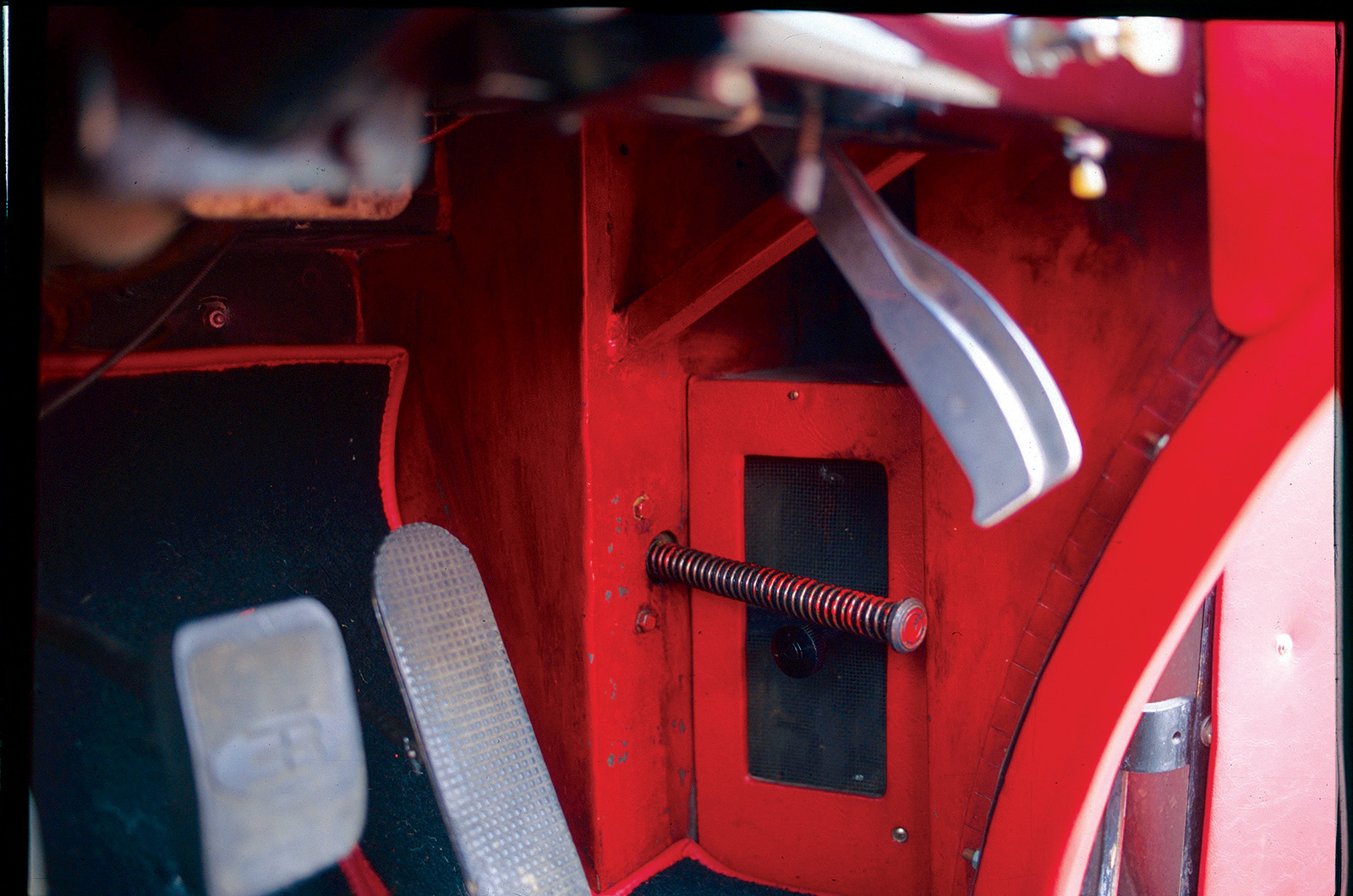
The chassis has one-shot lubrication, via a plunger next to the throttle, and there are cooling flaps operated via knobs in the footwells.

Classic & Sports Car – Bugatti Type 101: old dog, new tricks

The Bugatti Type 101 has a stylish handbrake, with the chassis lube plunger beneath

Lift the scooped bonnet, sitting over the engine like the crest on a Red-necked Grebe, and you find a magnificent slab of aluminium alloy, the 3.3-litre twin-cam straight-eight having its camshafts gear-driven from the back of the block.

The supercharger, nestling low on the right under the carb, Alfa Romeo style, runs off the same geartrain.

It’s matched on the other side by a big Scintilla magneto, although there’s a pair of coils and a distributor, too: once warm, it will happily run on either, with contact selected by twisting the key to positions I or II. 

The whining ‘eight’ is up to 50°C now, so it’s down with the nicely weighted clutch; forward in what looks like a conventional gearlever, but is in fact only the forward/neutral/reverse change; then select ‘1’ in the tiny gate of the Cotal gearchange, just a little-finger’s stretch away from the huge, whippy wheel rim.

You drive the car conventionally, and changing gear with two fingers of the right hand feels entirely natural.

On inviting the straight-eight to work a little harder with a touch more throttle, the high-pitched whine becomes the topping on a deep bass boom, with a whistling from the carb and blower as the T101 surges forward.

With near 200bhp estimated from the ‘eight’ when it was new, 115mph would have been on the cards.

Classic & Sports Car – Bugatti Type 101: old dog, new tricks

The Bugatti Type 101 has penny-flaps in the curved Perspex front quarter-windows

Certainly, what feels like 50mph comes up at about 2000rpm on the clock in top, and these engines are reckoned to be safe to 5500rpm.

Acceleration confounds the great weight: the lengthy chassis weighs just over a ton, and the body must add half that again. 

While the performance will keep you up with modern traffic, the chassis and brakes will be falling short – at least on bumpy roads.

The steering is incredibly heavy, although very direct, and it is a real effort to turn corners even at 40mph.

The ride is choppy and, although the performance of the large, finned drum brakes is sparkling, the crossply tyres squeal as soon as you even look at that broad brake pedal.

The great black beast does – as a country dweller, I am ashamed to report – frighten the horses with its sinister profile and thundering straight-eight locomotion.

In the context of the 1930s, this was a true supercar.

In the right social setting, it could still have been the belle of the ball in the ’50s – blue-blooded one-offs will always find takers.

But once you’d got it home, there might have been mixed feelings on squiring such an unconventional beauty: under that debutante’s expensive couture there lurks a grande dame of great charm but with a few wrinkles of age, a few delicately concealed surprises.

Images: Tony Baker/RM Sotheby’s

Thanks to: Coys of Kensington; The Bugatti Trust

This was first in our October 2000 magazine; all information was correct at the date of original publication


Factfile

Classic & Sports Car – Bugatti Type 101: old dog, new tricks

Bugatti Type 101

  • Sold/number built 1951-’52/six
  • Chassis pressed and welded channel/box-section steel frame, steel and aluminium body
  • Engine all-alloy, monobloc 3257cc straight-eight, with twin gear-driven cams, two valves per cylinder, five plain main bearings, non-detachable head, wet sump, Roots-type supercharger, single Weber carburettor
  • Max power 188bhp @ 5200rpm
  • Max torque n/a
  • Transmission four-speed, electrically operated Cotal epicyclic gearbox, with forward and reverse transfer box mounted in line, RWD
  • Suspension: front dropped tube axle with semi-elliptic leaf springs running through rear live axle, forward-facing quarter-elliptic leaf springs; Allinquant telescopic dampers f/r
  • Brakes Lockheed hydraulic 13¾in (350mm) finned alloy drums, twin leading shoes
  • Wheelbase 10ft 10in (3300mm)
  • Weight 3000lb (1361kg)
  • Top speed c115mph
  • Price new Ffr3million

Enjoy more of the world’s best classic car content every month when you subscribe to C&SC – get our latest deals here


READ MORE

Delahaye 135CS: Rob Walker’s Gallic warrior

Bugatti Type 57S: Molsheim’s missing link

Delahaye Type 145: the retired racer turned chic coupé