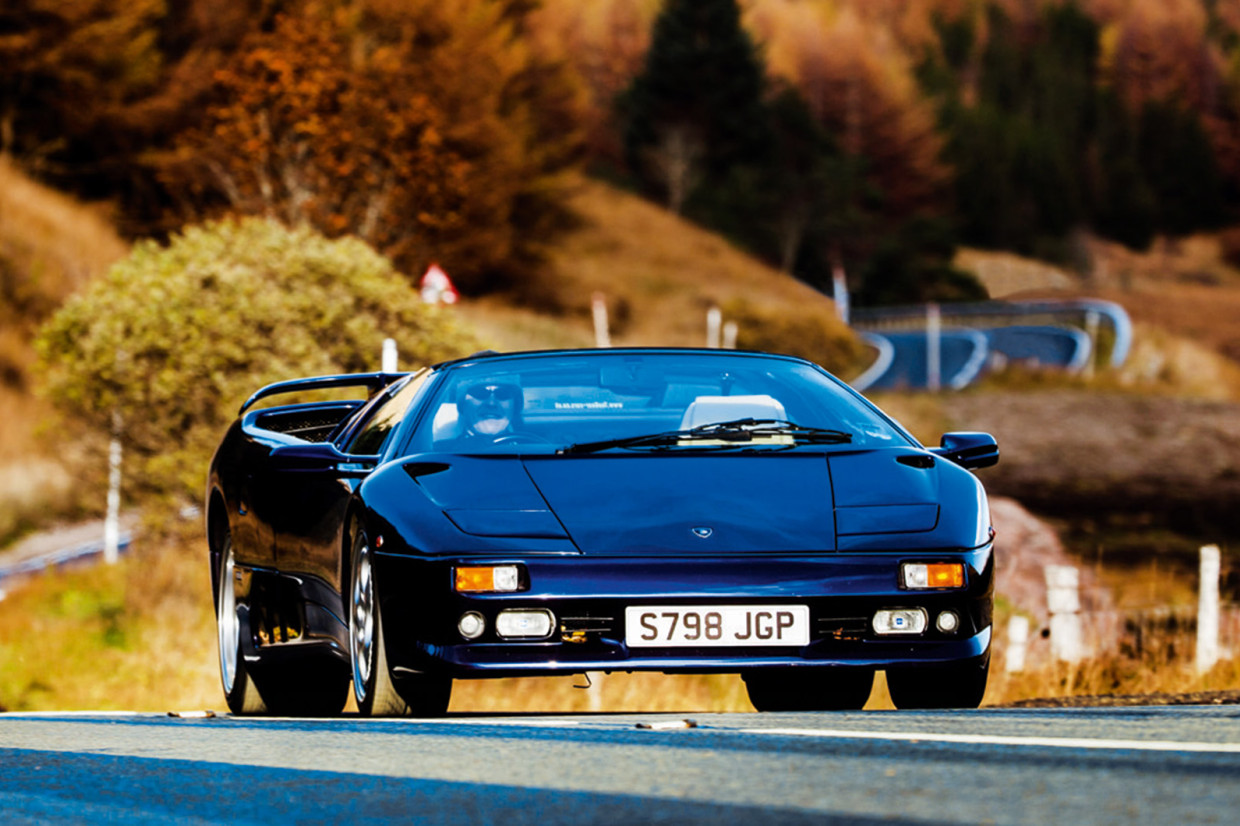
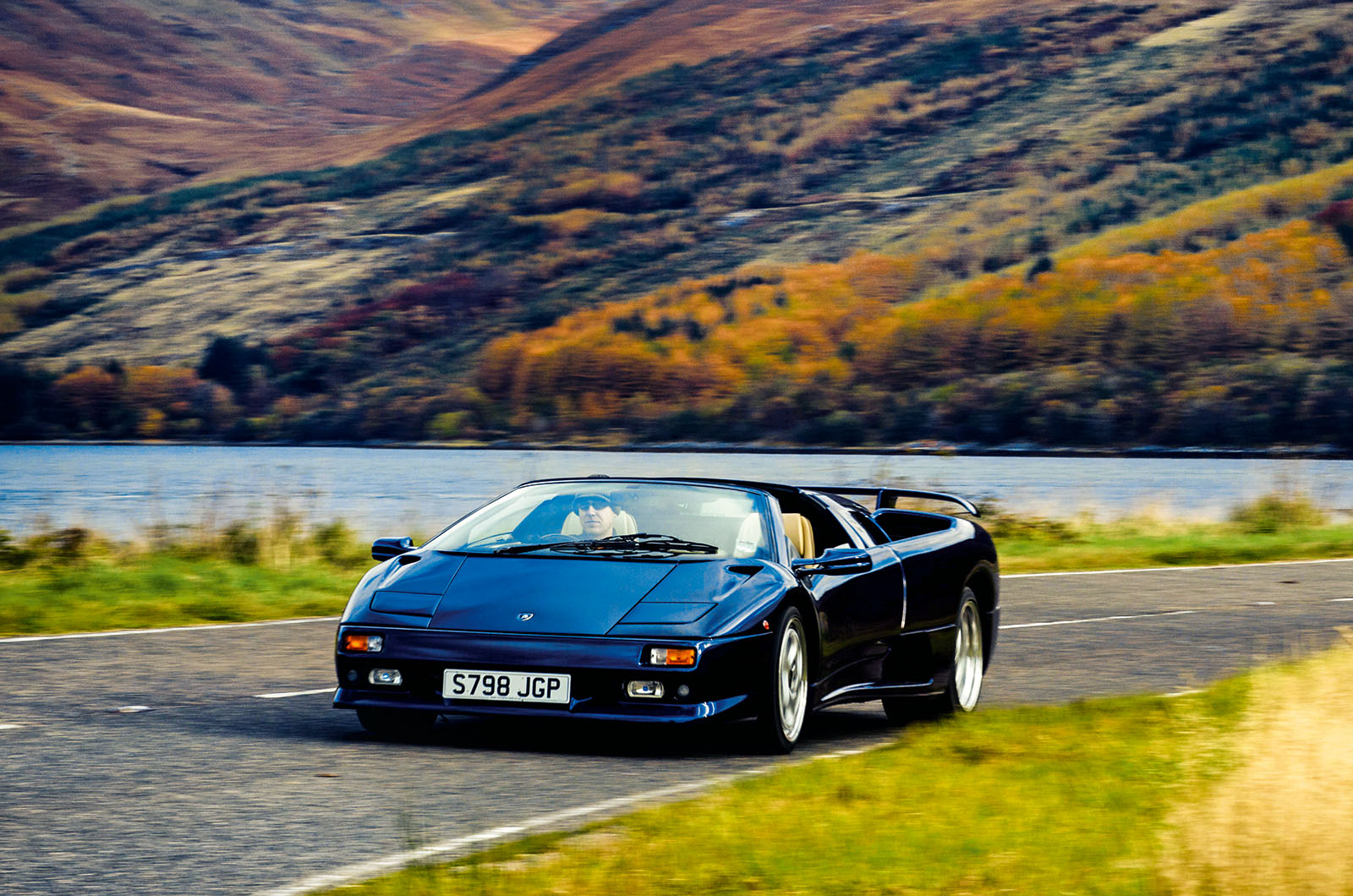
Find yourself isolated up here and the environment can change in a flash, but there is little danger today: horsepower has come a long way in the intervening centuries and all 492 of the Lamborghini’s propel us through.
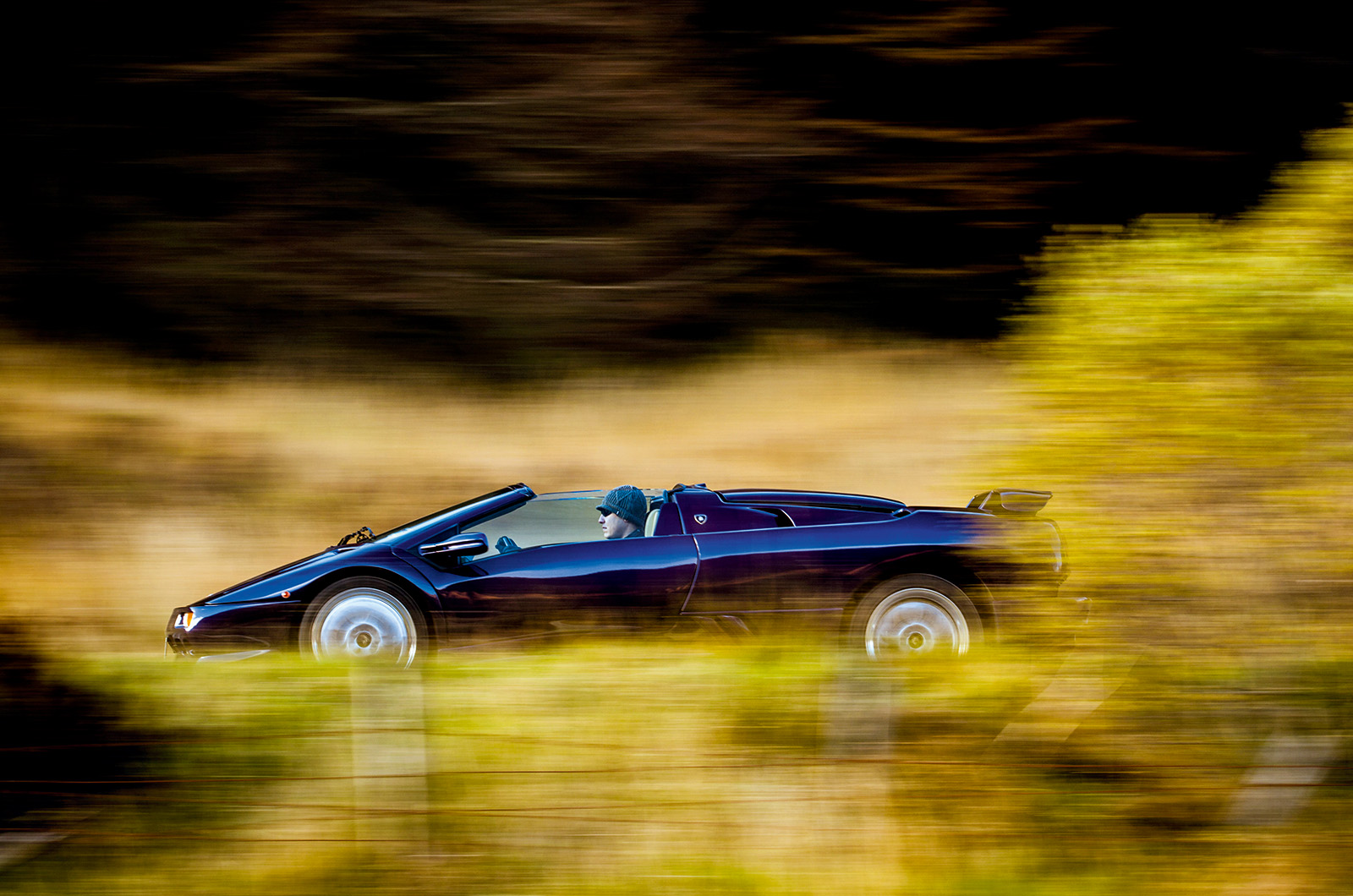
Just after Ballachulish we branch off on the A828 and loop round to follow the West Coast tourist route south, encountering only the remnants of the high season’s motorhome invasion.
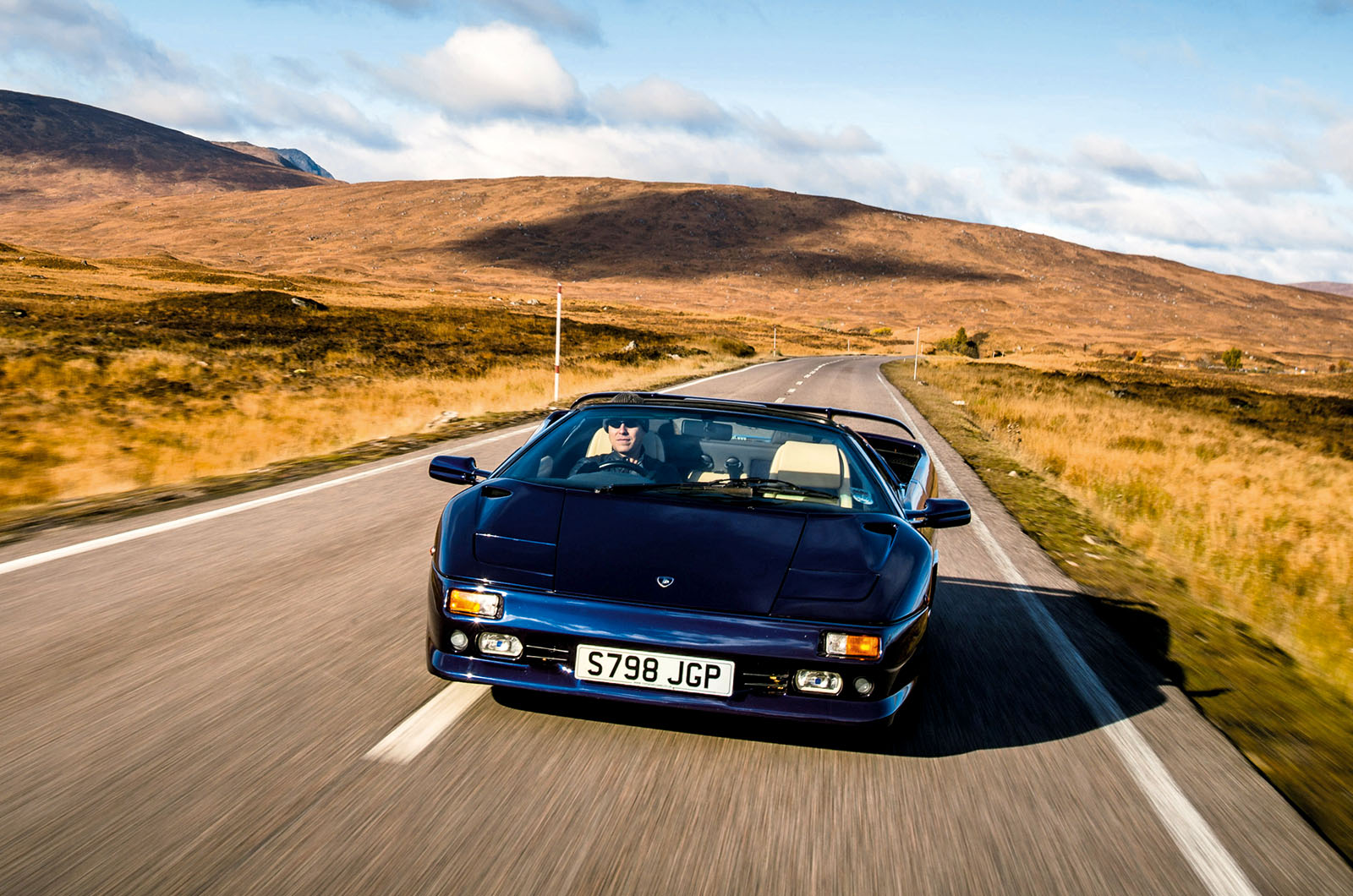
The brooding claustrophobia of the glens is suddenly released as the VT spears along this open coastal road.
After the crossing at Loch Creran, the main road is left behind in favour of one of this area’s best-kept secrets: a lochside route, sparingly used by locals and the odd Forestry Commission worker.
It’s an undulating rollercoaster that runs along the eastern section through the Barcaldine Forest.
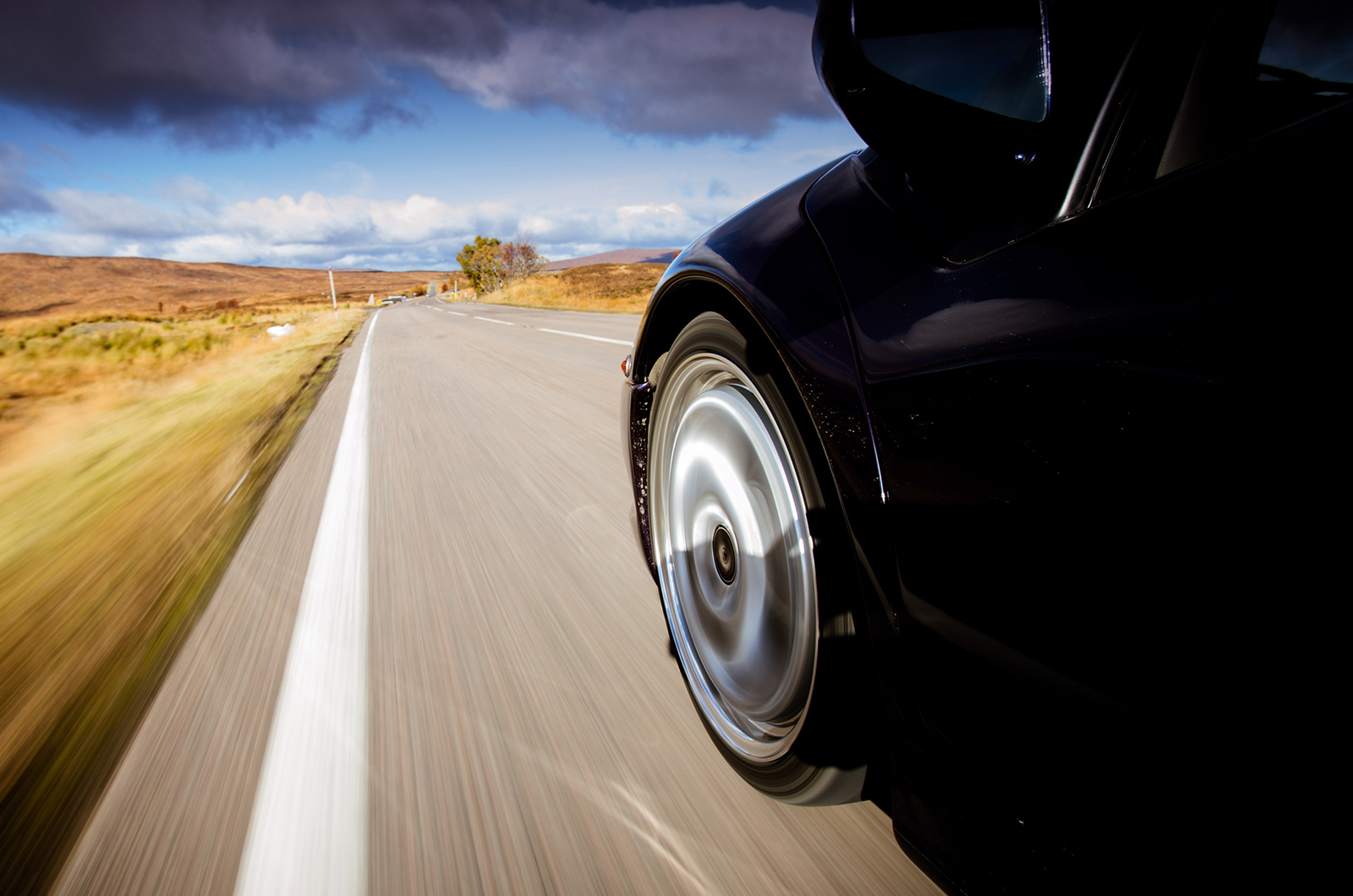
Here the Roadster is in its element. The steering is inspiring, but the phenomenal level of traction takes your breath away, along with the barrage of noise resonating through the trees.
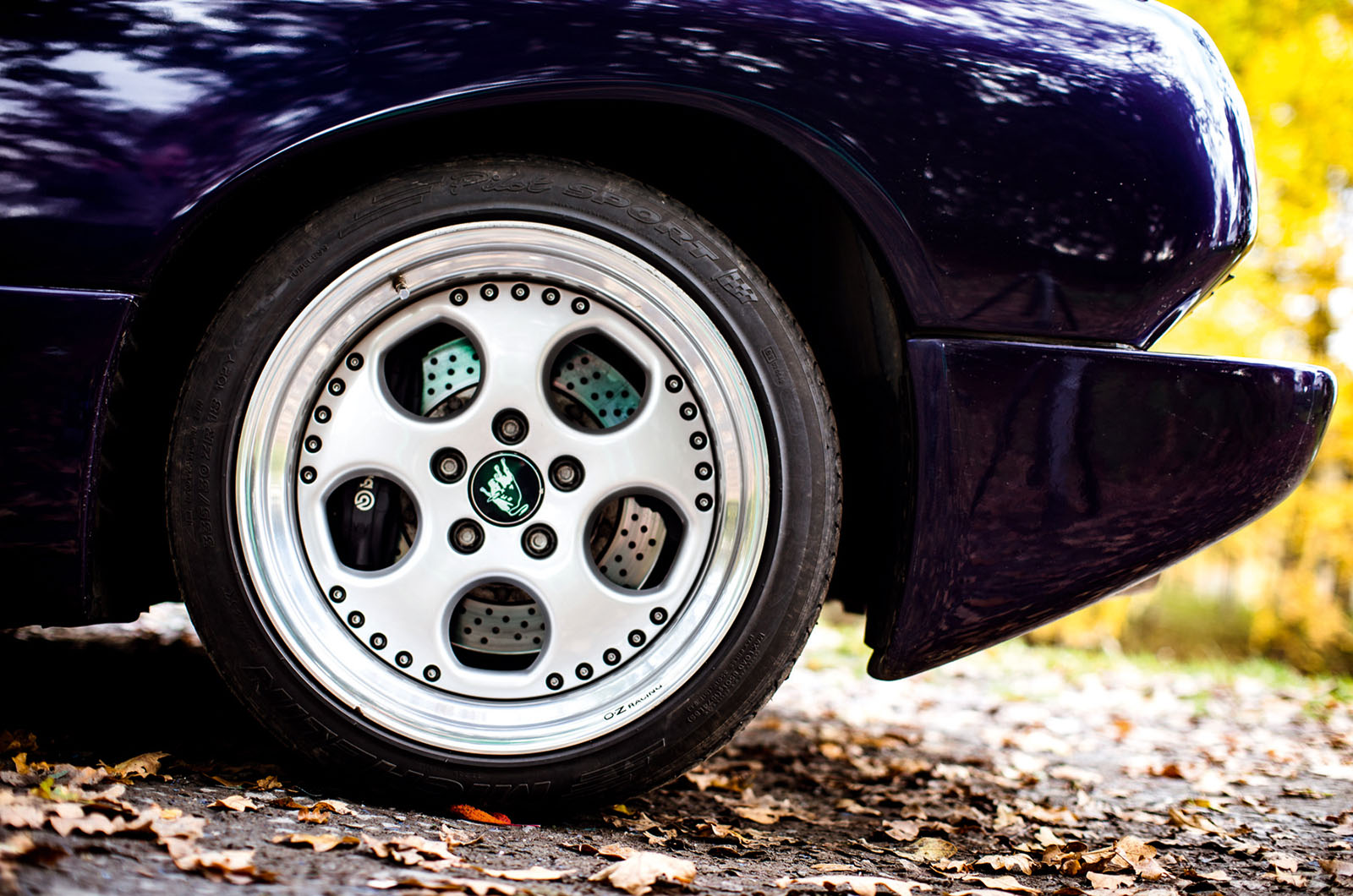
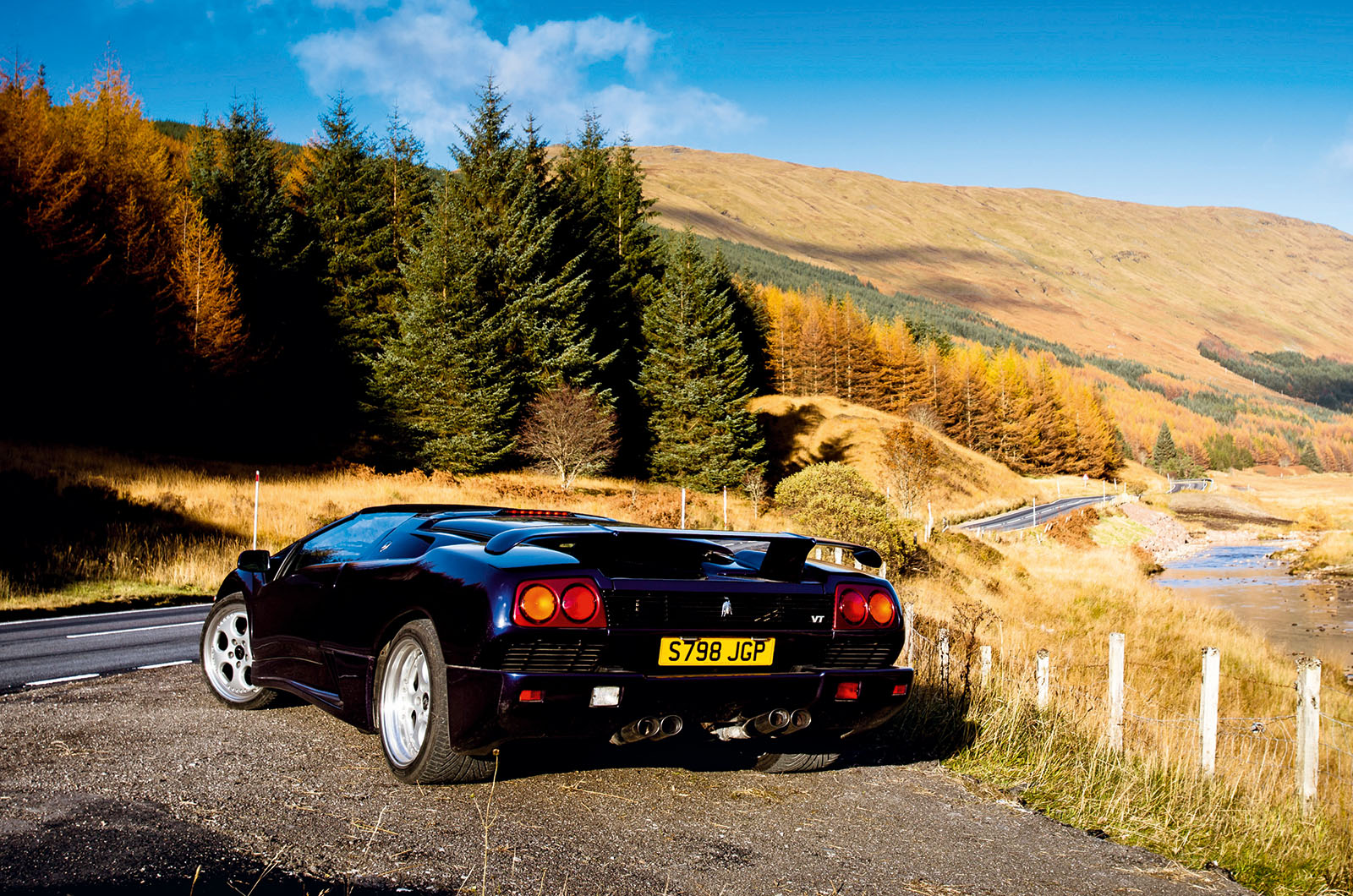
The Lamborghini Diablo VT Roadster’s vast 335/35 ZR17 rear tyres give superb traction
The suspension has anti-dive and anti-squat geometry and, coupled with the VT of the title – which stands for Viscous Traction – it helps the Diablo to redefine the rules of the road.
No longer are corners taken slow in/fast out, but fast in/even faster out.
Once the preserve of fire-breathing rally machines and their roadgoing brethren, four-wheel drive was brought to the supercar world by Lamborghini.
“It transformed the car’s drivability by taming the power,” explains Carlo. “You’d need to be a lunatic to get to its limits on a public road.”
The system, developed in conjunction with Steyr-Daimler-Puch, functions via a centre differential with a viscous coupling between front and rear axles.
It’s pretty much rear-wheel drive most of the time, with up to 29% of the power sent to the front if traction is lost.
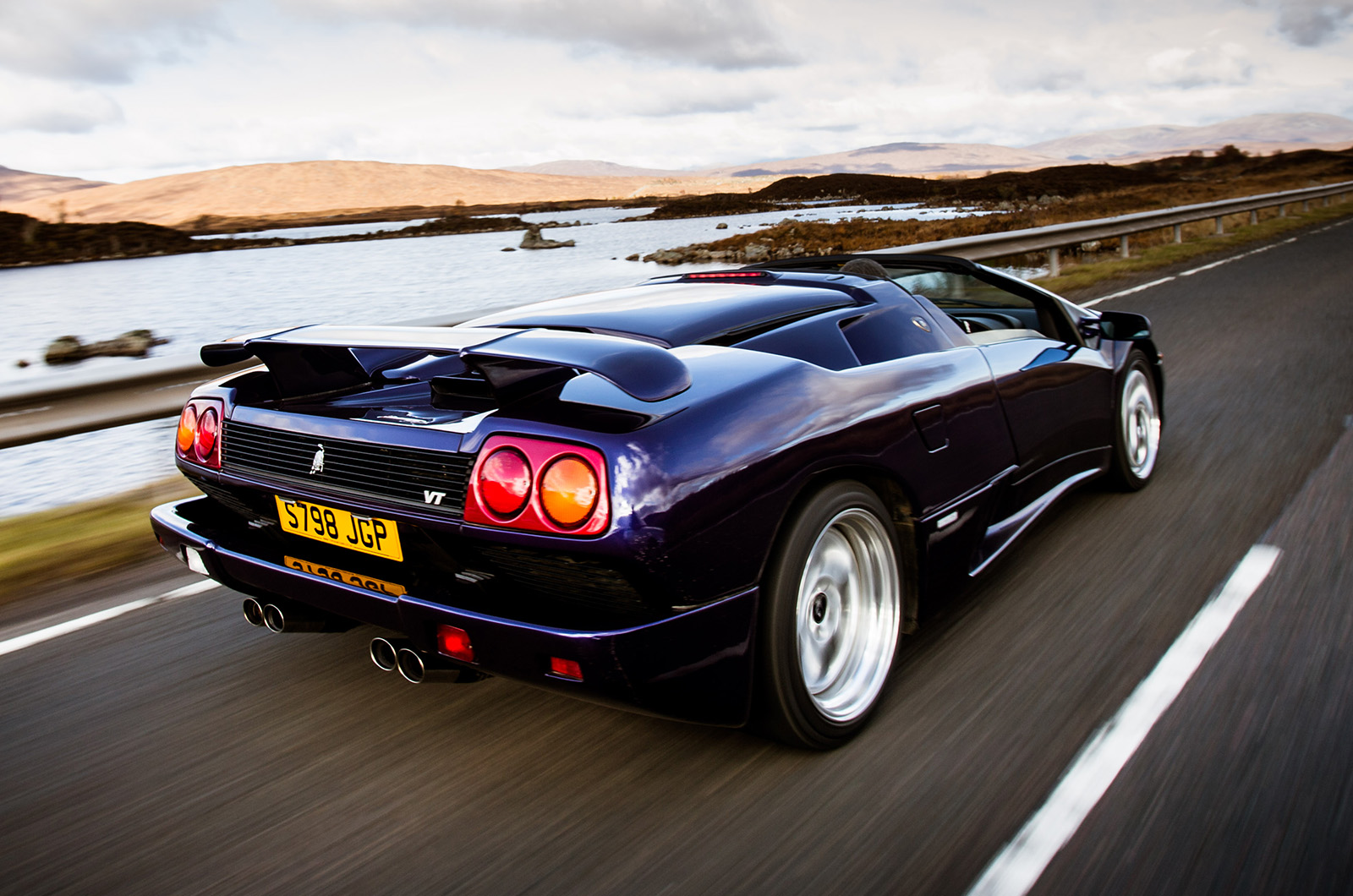
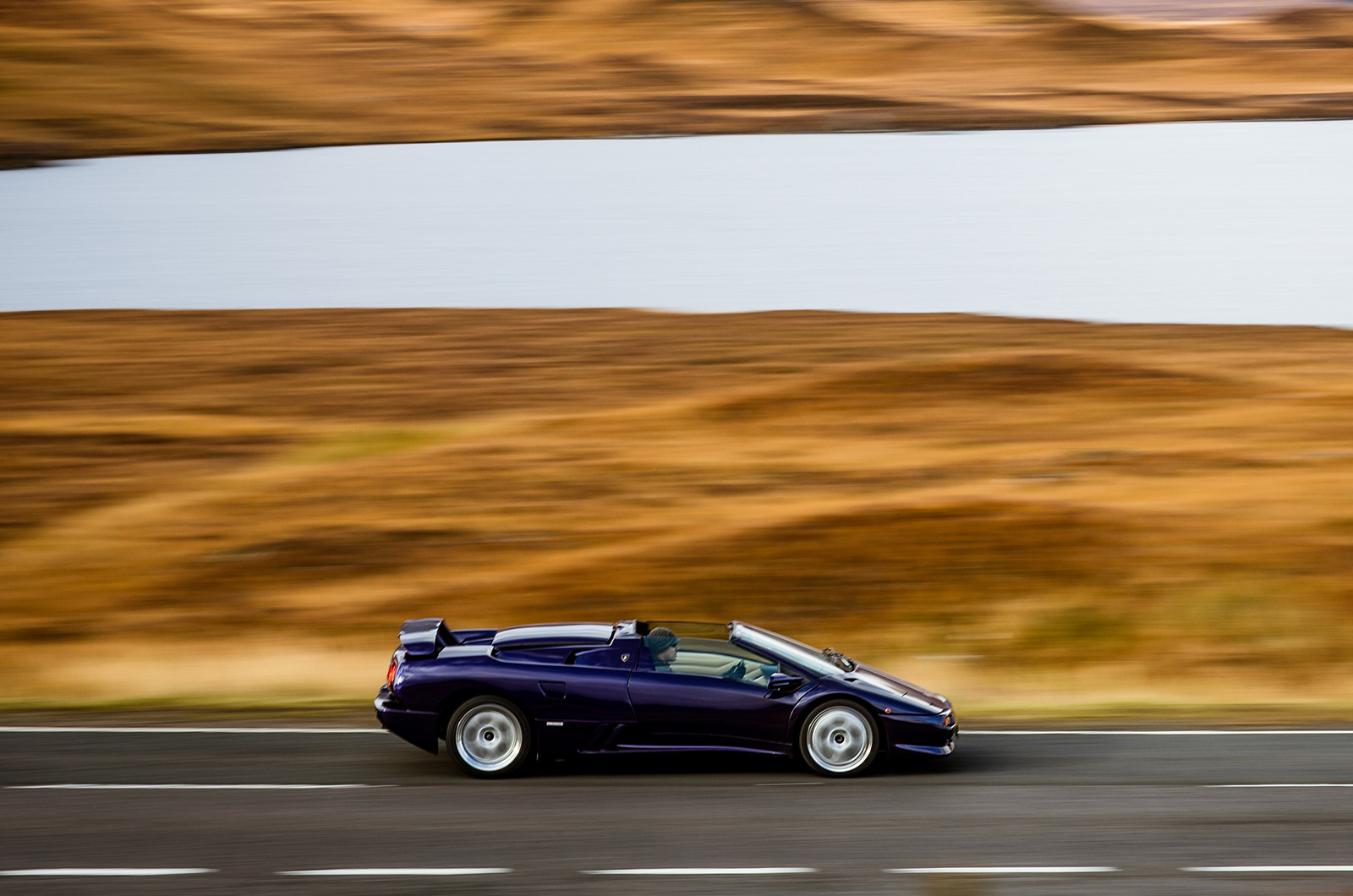
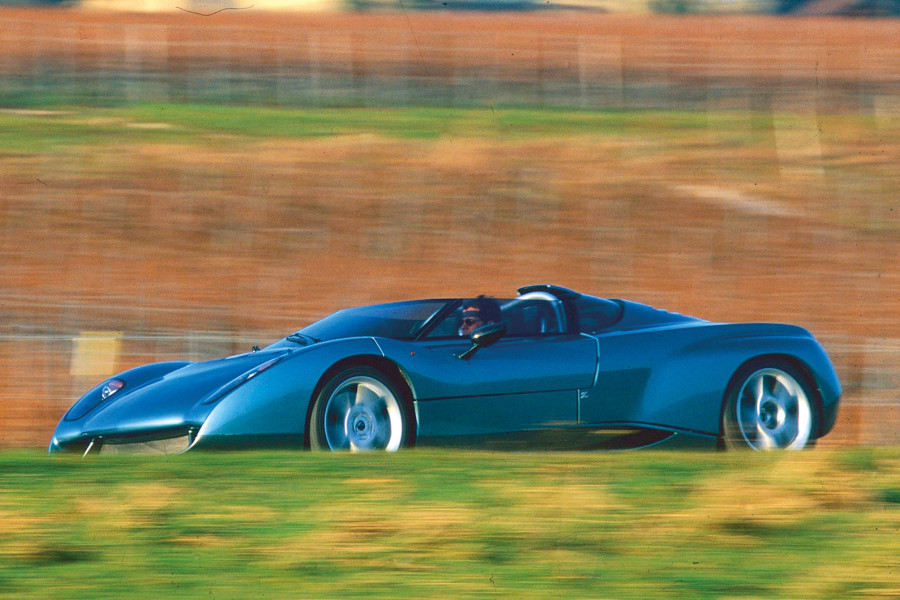
Lochs pass by in a blur as the Lamborghini Diablo VT Roadster makes rapid progress
This technology, coupled with the open top, didn’t come cheap: at launch in ’93 a VT cost £162,000, with its Roadster sibling coming in at £175,000, making it the most expensive model in the range.
That’s £27k more than the rear-drive cars and a full £50k ahead of the stripped-out SV, which became the ‘entry level’ Diablo.
After numerous lochside runs, Carlo takes the controls a little further on at Inverlochy and is soon pushing the car along at a pulsating rhythm.
The final journey back to Killin is a mesmerising drive on deserted asphalt.
The Diablo handles each attack without a hint of pendulum effect and with only reasonable air ingress into the cabin – but what it must be like at 200mph-plus is anyone’s guess.
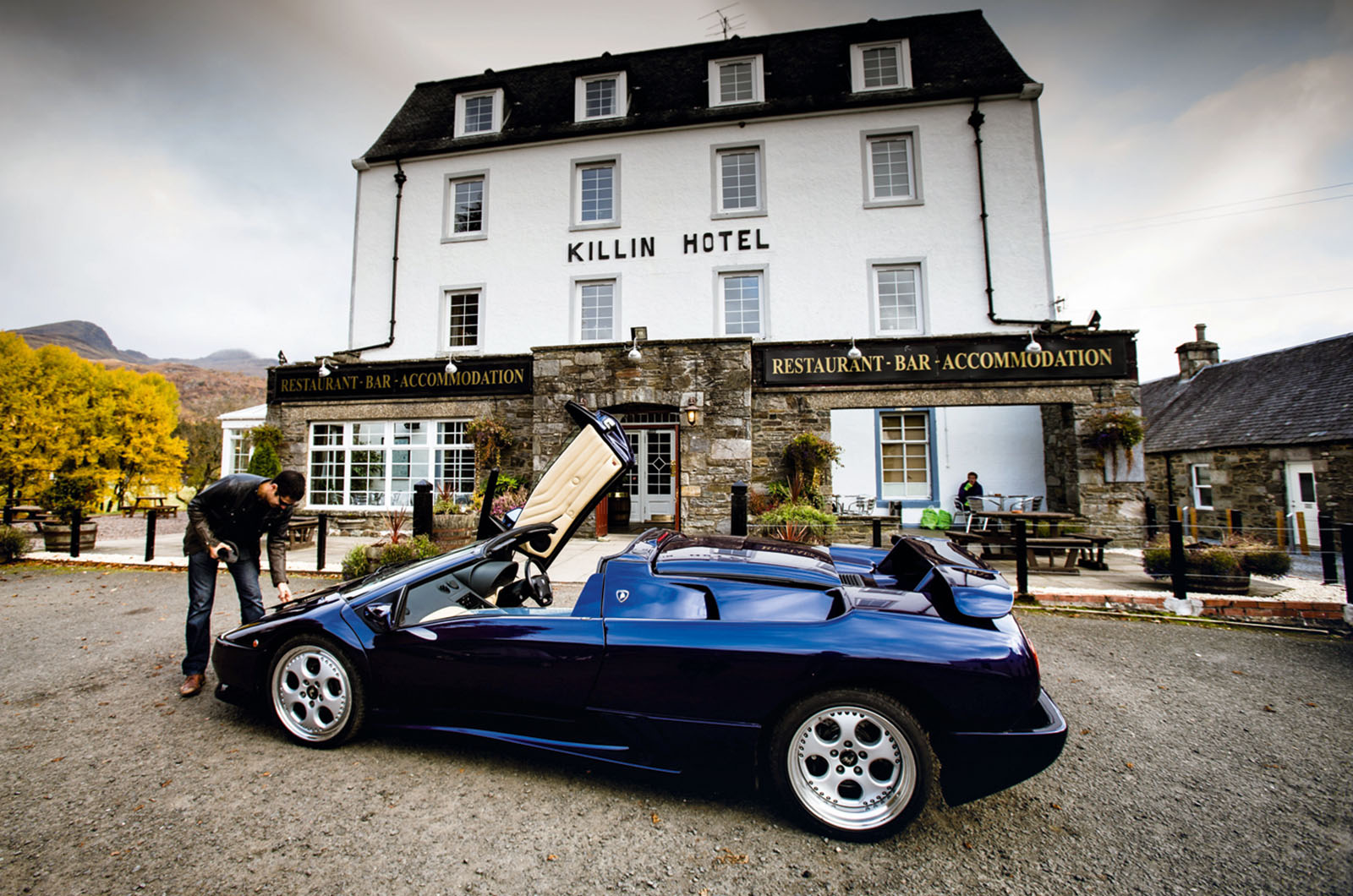
Back at the hotel, with dinner out of the way, we feverishly retrace the day’s exertions over a couple of nips of Scotch.
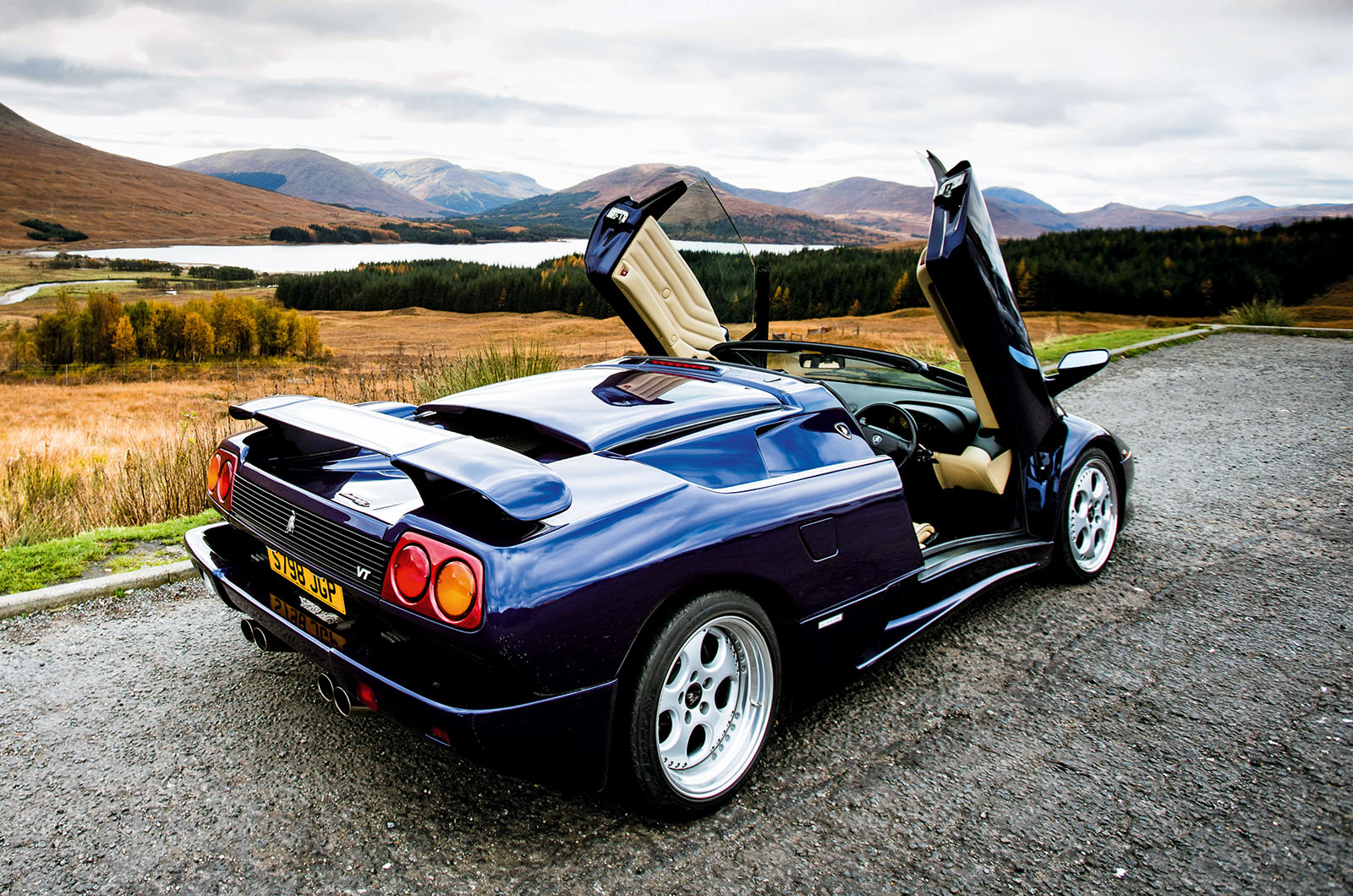
The Lamborghini Diablo VT Roadster caused a stir at the hotel
I retire to bed but can’t sleep. As soon as I close my eyes, I’m suddenly transported back to the glen, attacking every crest and corner in my mind’s eye, yet still barely uncovering the Diablo’s abilities.
Wilder and more track-focused cars were to follow – as did a facelifted Roadster, with more power and faired-in headlights replacing the pop-up pods – but that glorious open-top symphony means it’s too late for me.
In my dreams, I’ve already sold my soul to this particular devil.
Images: Malcolm Griffiths
Thanks to: Carlo McCrindle, Top Gear Specialist Cars; The Killin Hotel
This was first in our April 2013 magazine; all information was correct at the date of original publication
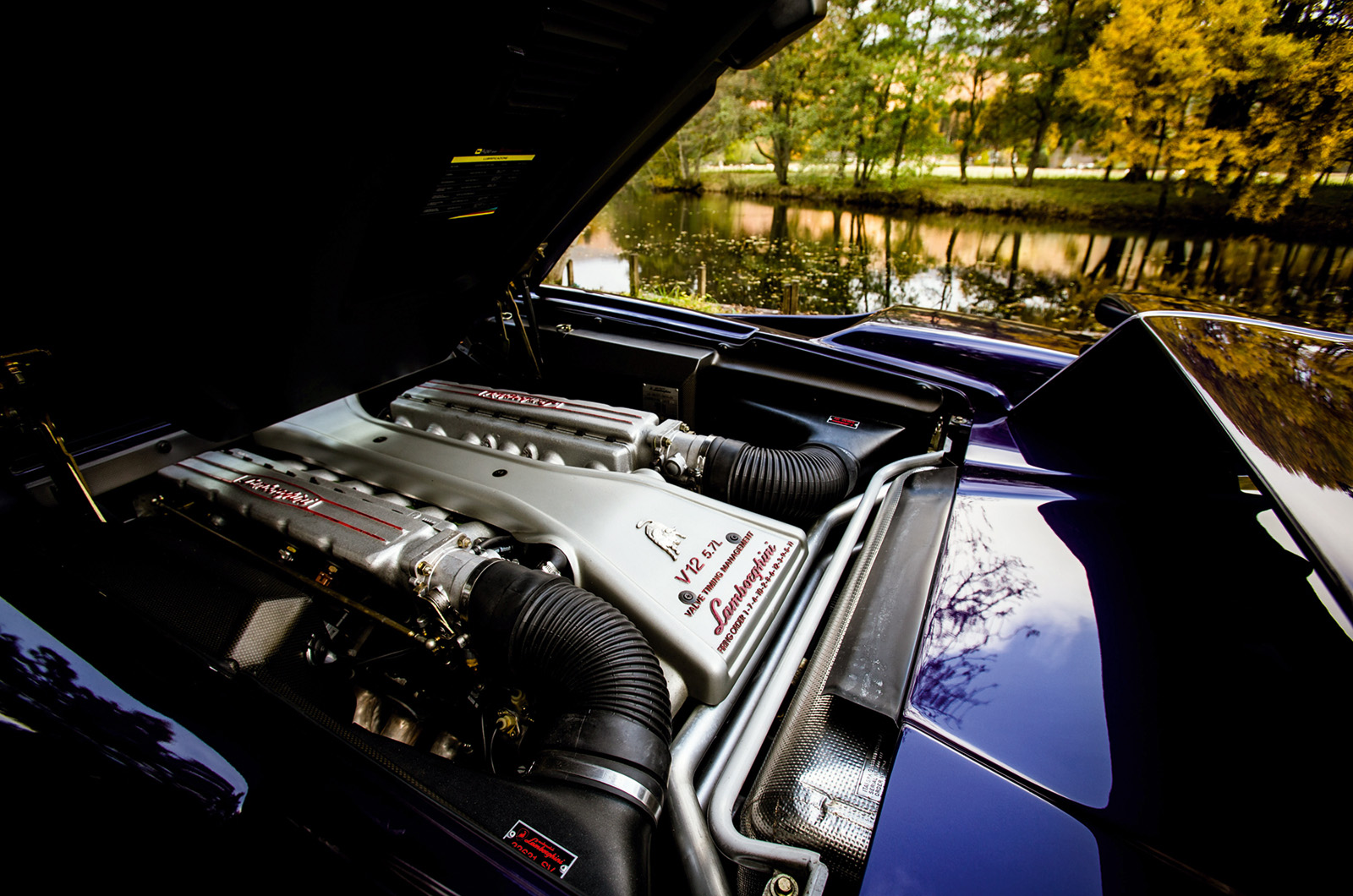
Giotto Bizzarrini’s V12: timeless jewel
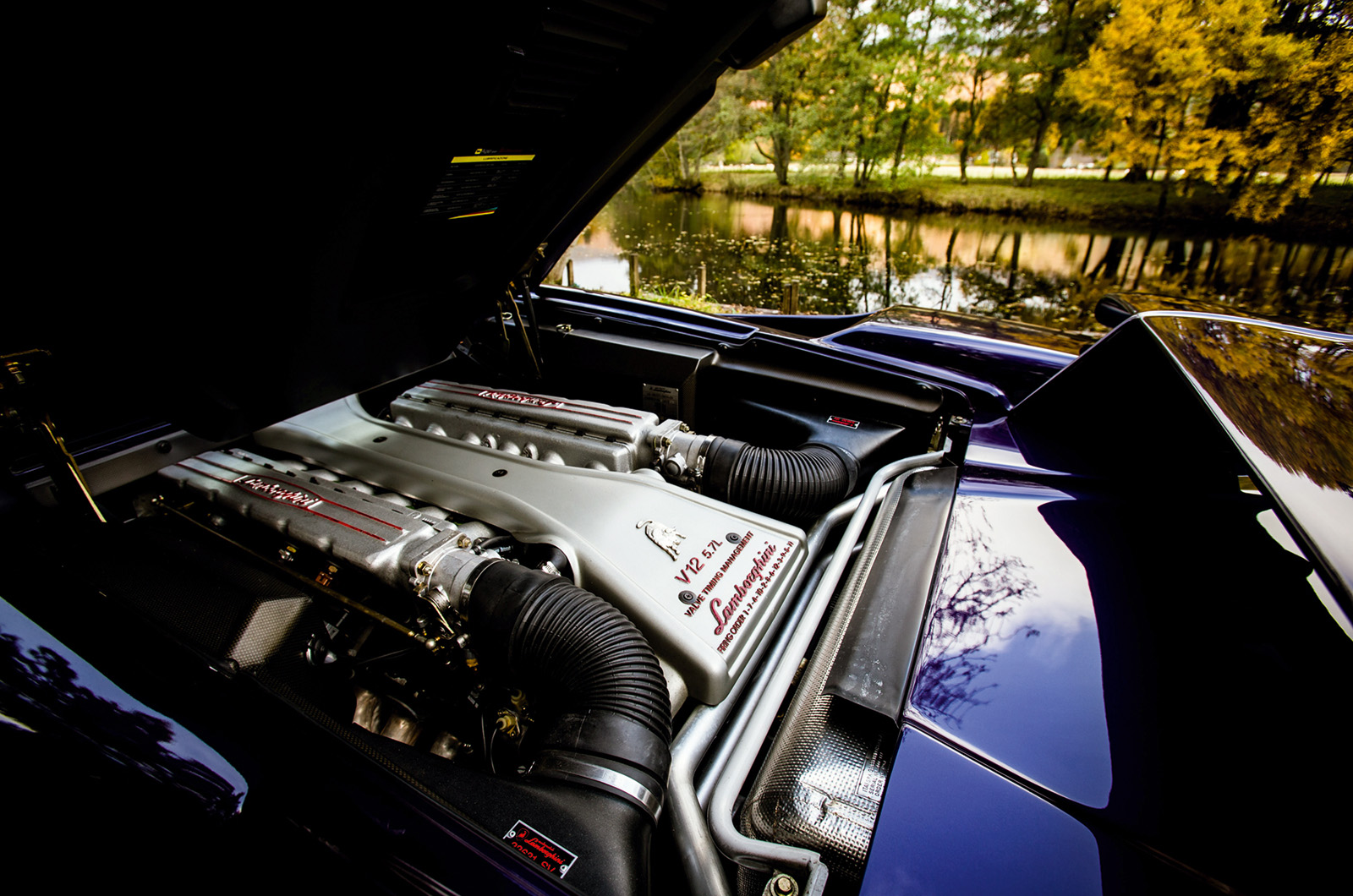
The Lamborghini Diablo VT Roadster’s V12 has even more drama, with full access to the noise
If you require a masterpiece, employ a master.
Lamborghini did just that when he commissioned freelancer Giotto Bizzarrini – of Alfa Romeo and Ferrari fame – to build a new engine.
Based on similar lines to his earlier, abandoned 1.5-litre F1 V12, the oversquare 3.5-litre unit had twin overhead cams and was more advanced than Ferrari’s then-current production engines.
From traditional placement in the GT cars to transverse-mid installation in the Miura then longitudinale posteriore in the subsequent Countach, Diablo and Murciélago, it has proven its versatility and adaptability in a wide range of models.
Capacity and power output has grown from 3.5 litres and 300bhp in the original 350GT to 6.5 litres and an incredible 670bhp in its final Murciélago 670-4 SuperVeloce incarnation.
Bizzarrini’s association with the firm may have ended in 1963, but his legacy continued until 2010, thanks to this magnificent motor.
Factfile
Lamborghini Diablo VT Roadster
- Sold/number built 1995-2000/300 (est)
- Construction multi-tubular steel spaceframe chassis, aluminium and composite panels
- Engine all-alloy, dohc-per-bank 5707cc 60° V12, with Lamborghini LIE engine-control system and electronic fuel injection
- Max power 492bhp @ 7000rpm
- Max torque 428lb ft @ 5200rpm
- Transmission five-speed ZF manual, 4WD via a centre differential
- Suspension independent, by double wishbones, coil springs, adaptive telescopic dampers, anti-roll bar f/r
- Steering power-assisted rack and pinion
- Brakes ventilated and cross-drilled 13in (330mm) front, 12¼in (310mm) rear discs, with servo
- Length 14ft 8in (4470mm)
- Width 6ft 8in (2040mm)
- Height 3ft 8in (1115mm)
- Wheelbase 8ft 8in (2650mm)
- Weight 3582lb (1625kg)
- Mpg 12
- 0-60mph 3.9 secs
- Top speed 202mph
- Price new £175,000*
*Price correct at date of original publication
Enjoy more of the world’s best classic car content every month when you subscribe to C&SC – get our latest deals here
READ MORE
A beauty and a beast: driving the Lamborghini Diablo SE30
Lamborghini Espada S3 meets Aventador Ultimae as Bizzarrini’s V12 bows out
Lamborghini Miura: The Italian Job reloaded
Ross Alkureishi
Ross Alkureishi is a contributor to Classic & Sports Car