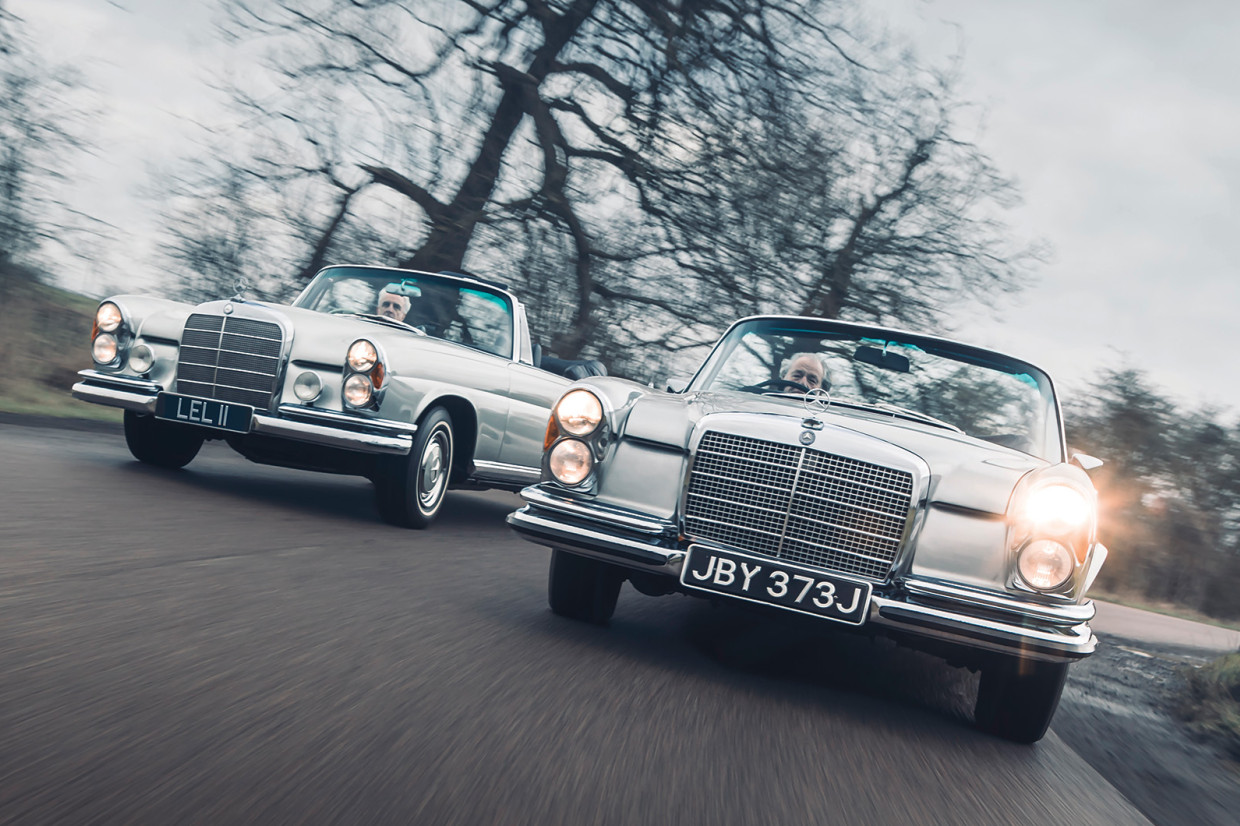
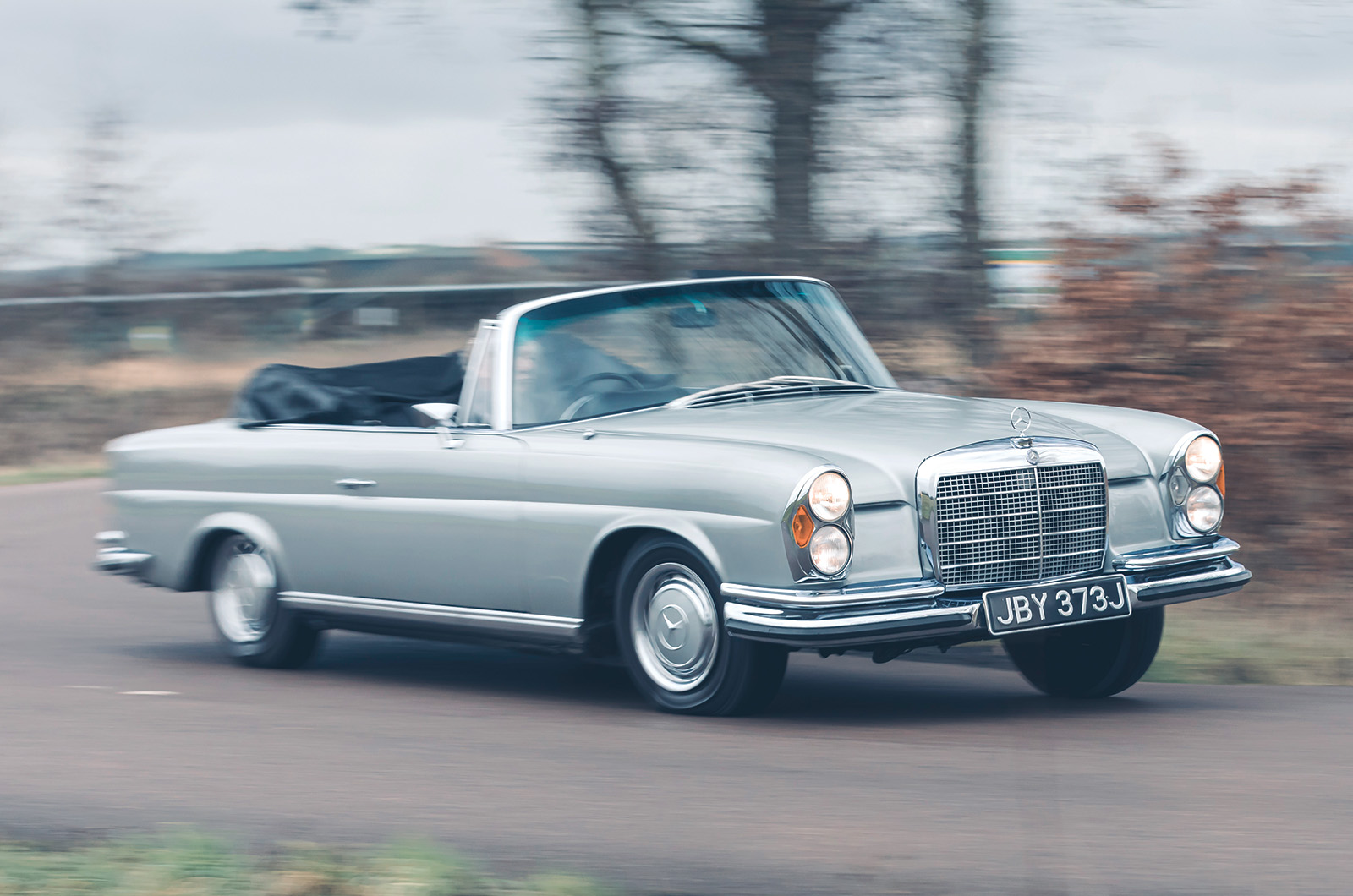
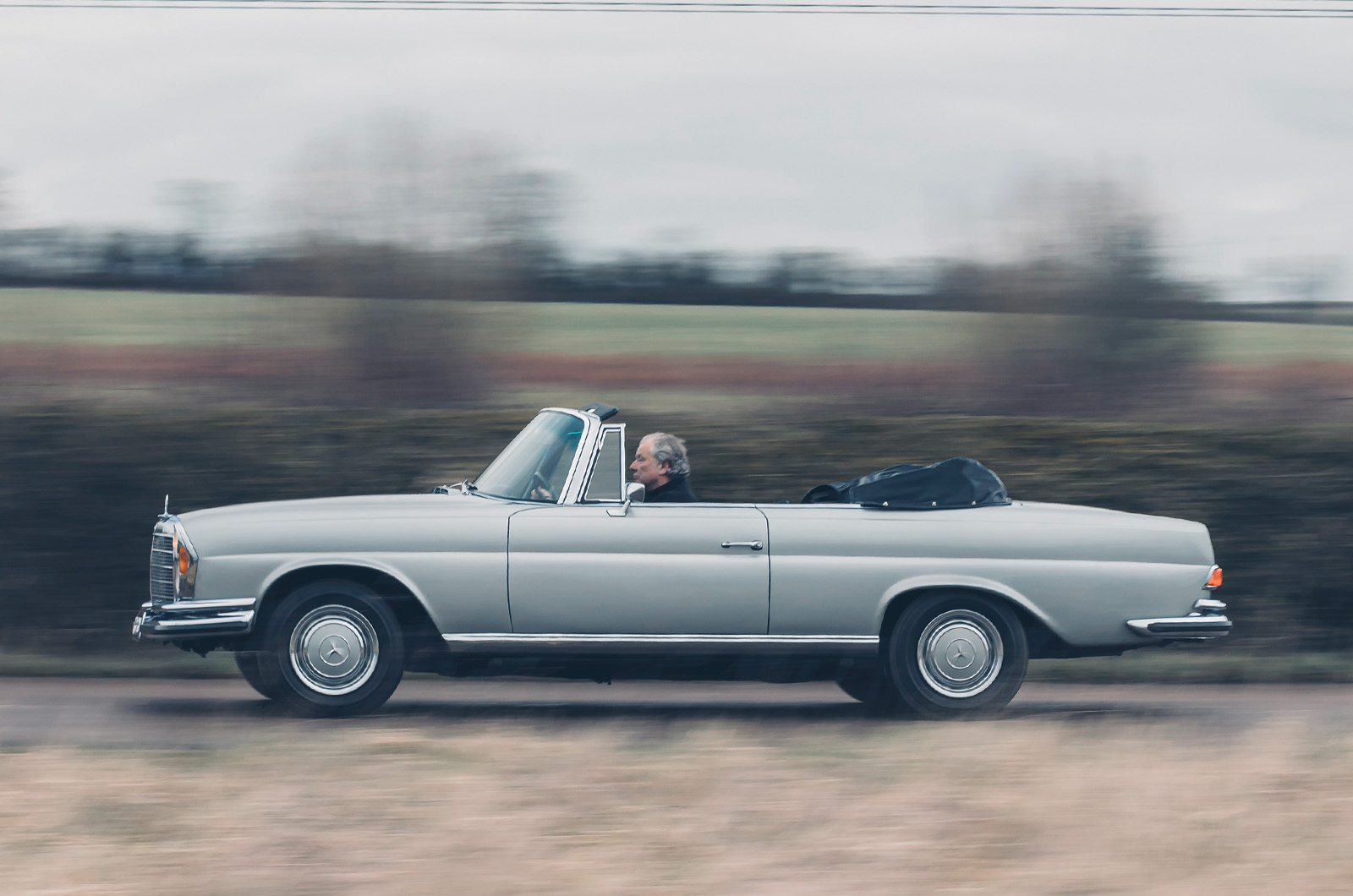
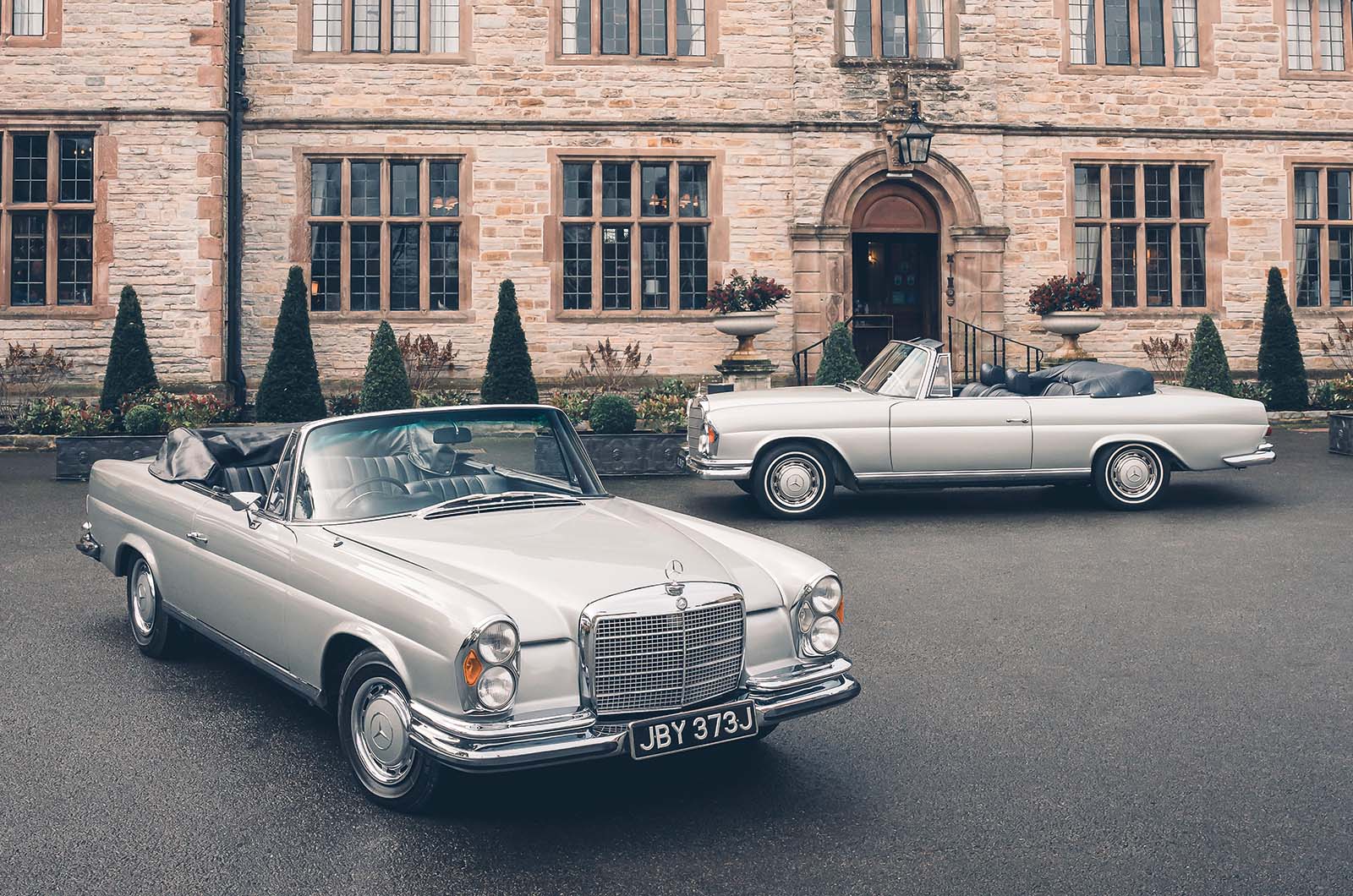
The 280SE 3.5 Cabriolet handles easily, softly in almost all circumstances.
It heaves and dips its nose a little in tight, run-wide corners, but feels assured and confident on faster, longer curves.
Hard driving might persuade the 3.5 to waggle its swing-axles in the air, but it doesn’t encourage such aggressive use.
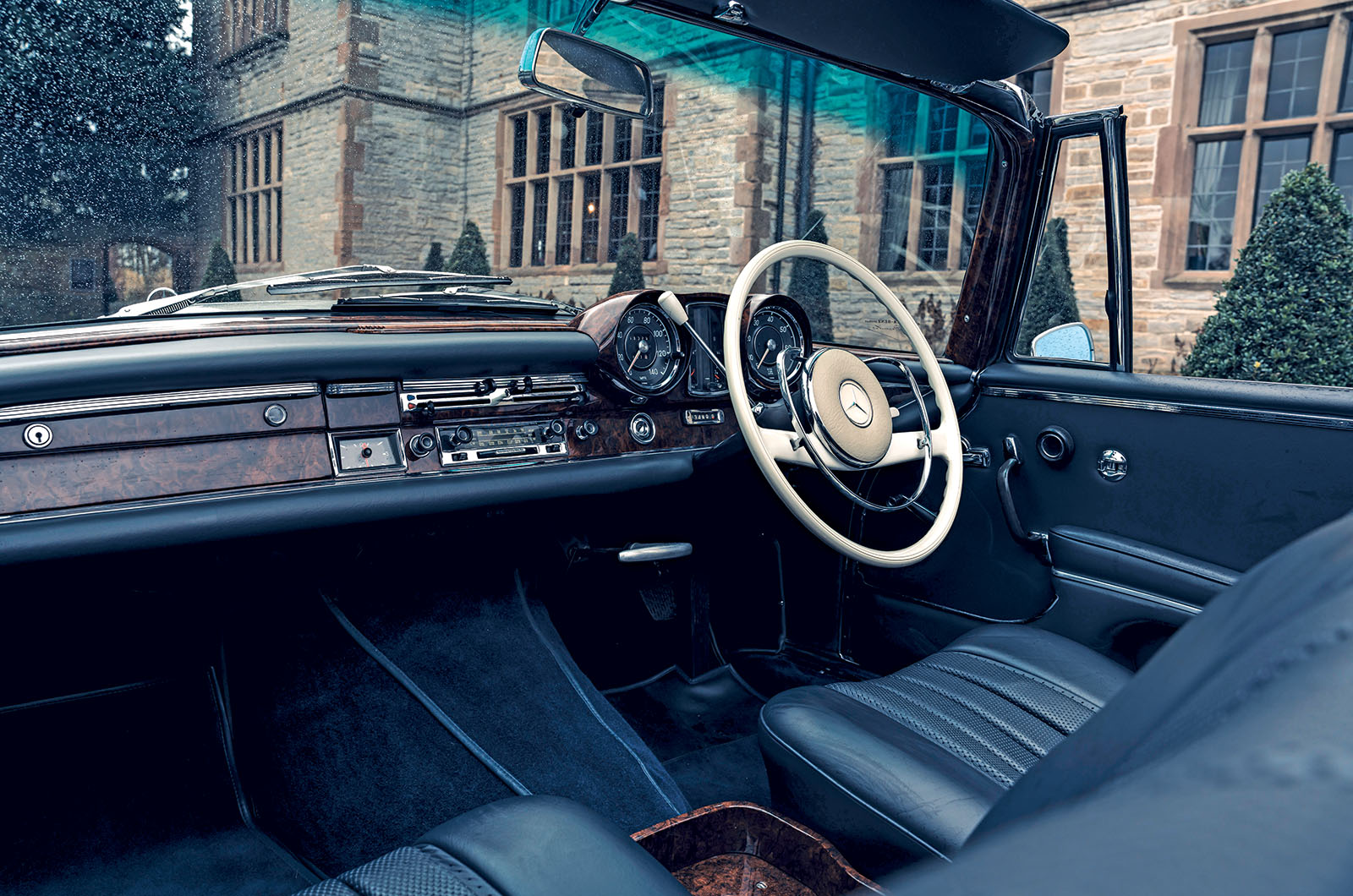
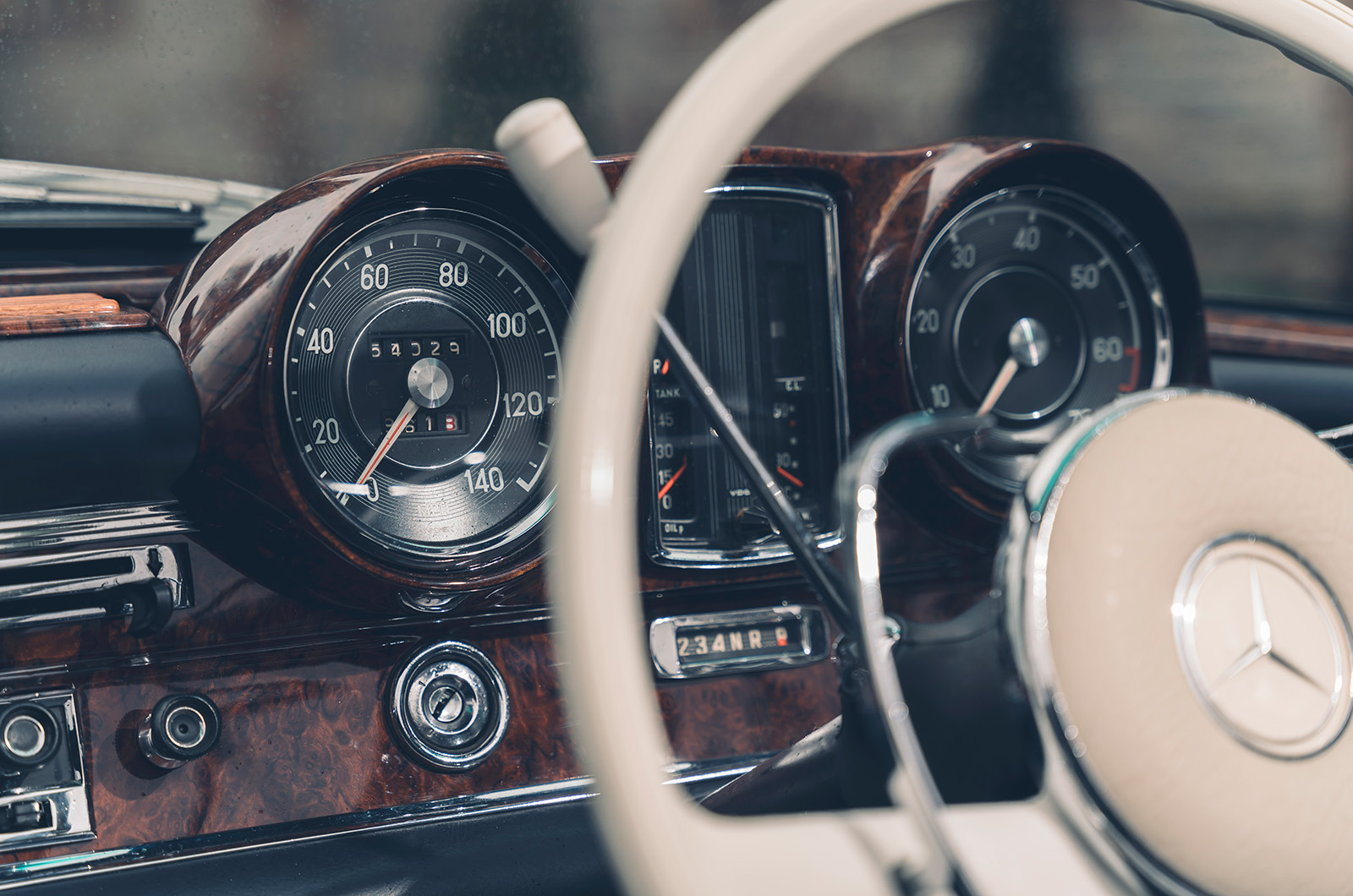
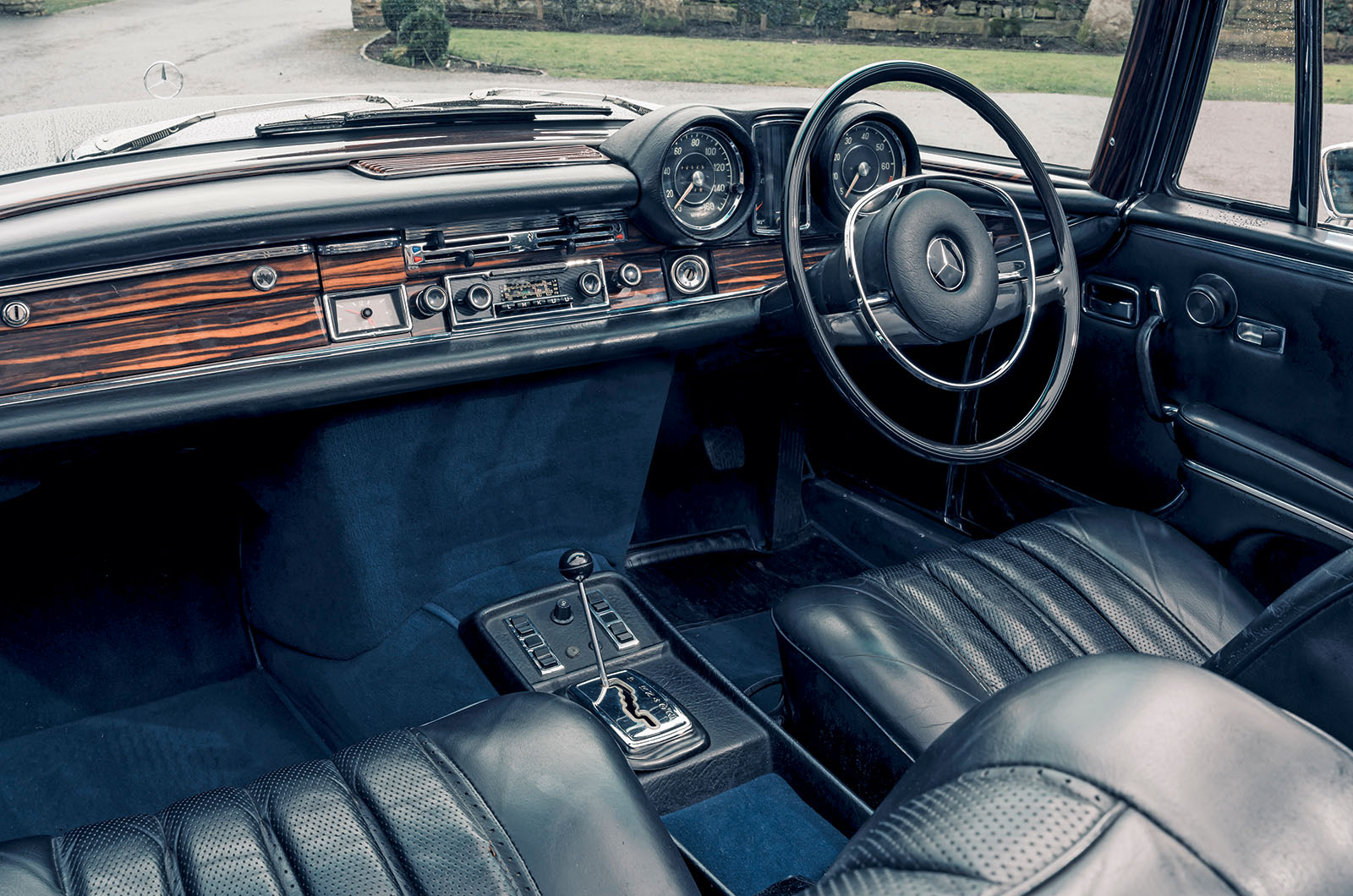
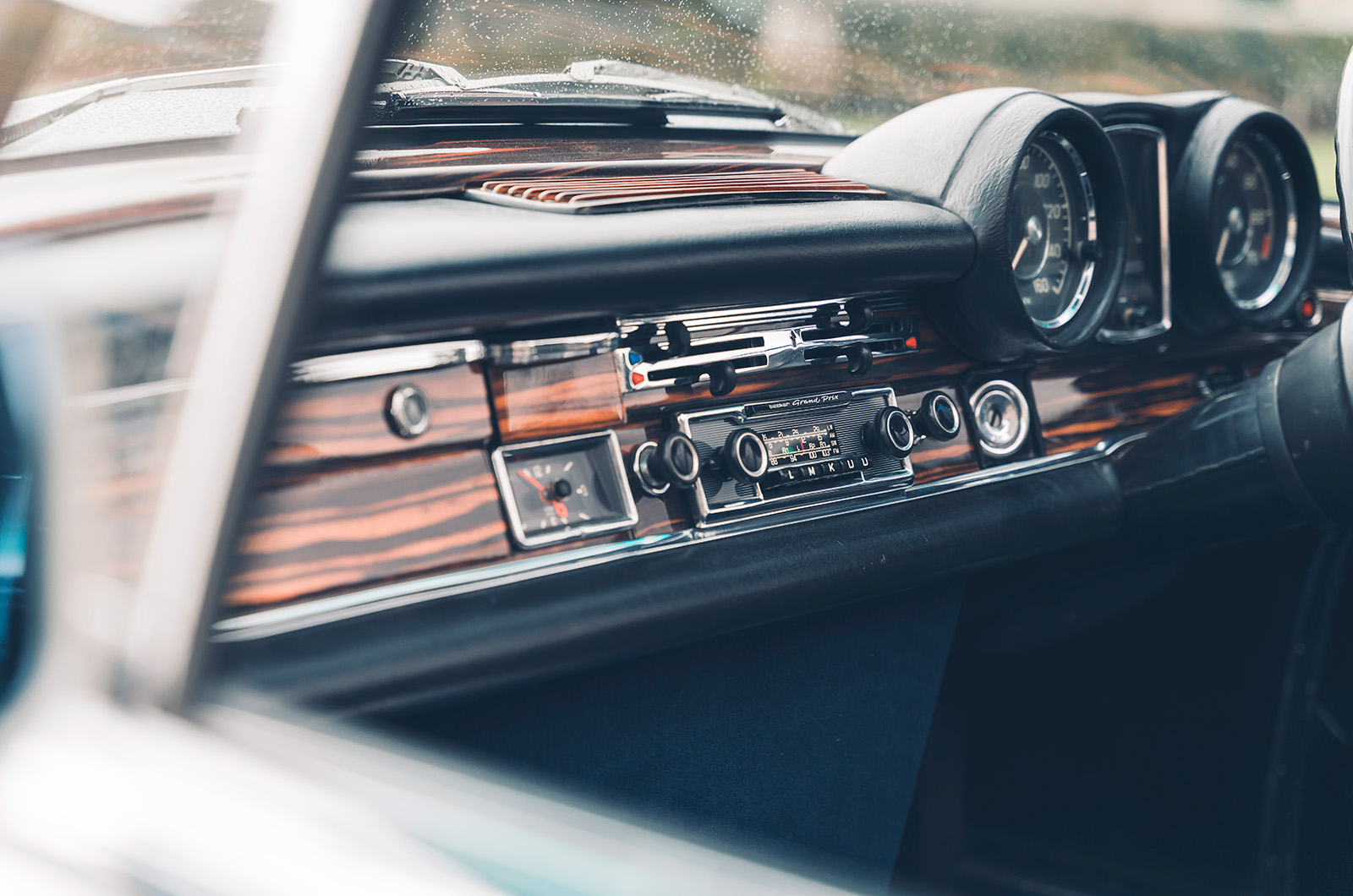
It wants to waft maturely: simply sit back and enjoy its torque, the smell of leather, the smooth weight and precision of each switch and button, and the supple ride that has none of the scuttle shake normally associated with open-top cars.
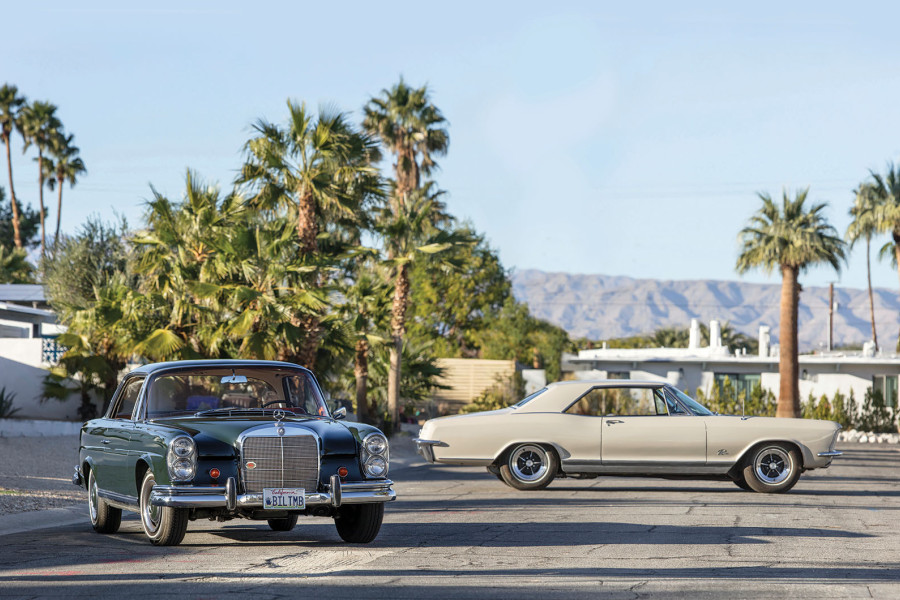
‘The Mercedes-Benz 280SE 3.5 Cabriolet’s finely figured walnut, fat seats and chrome are typically ’60s German’
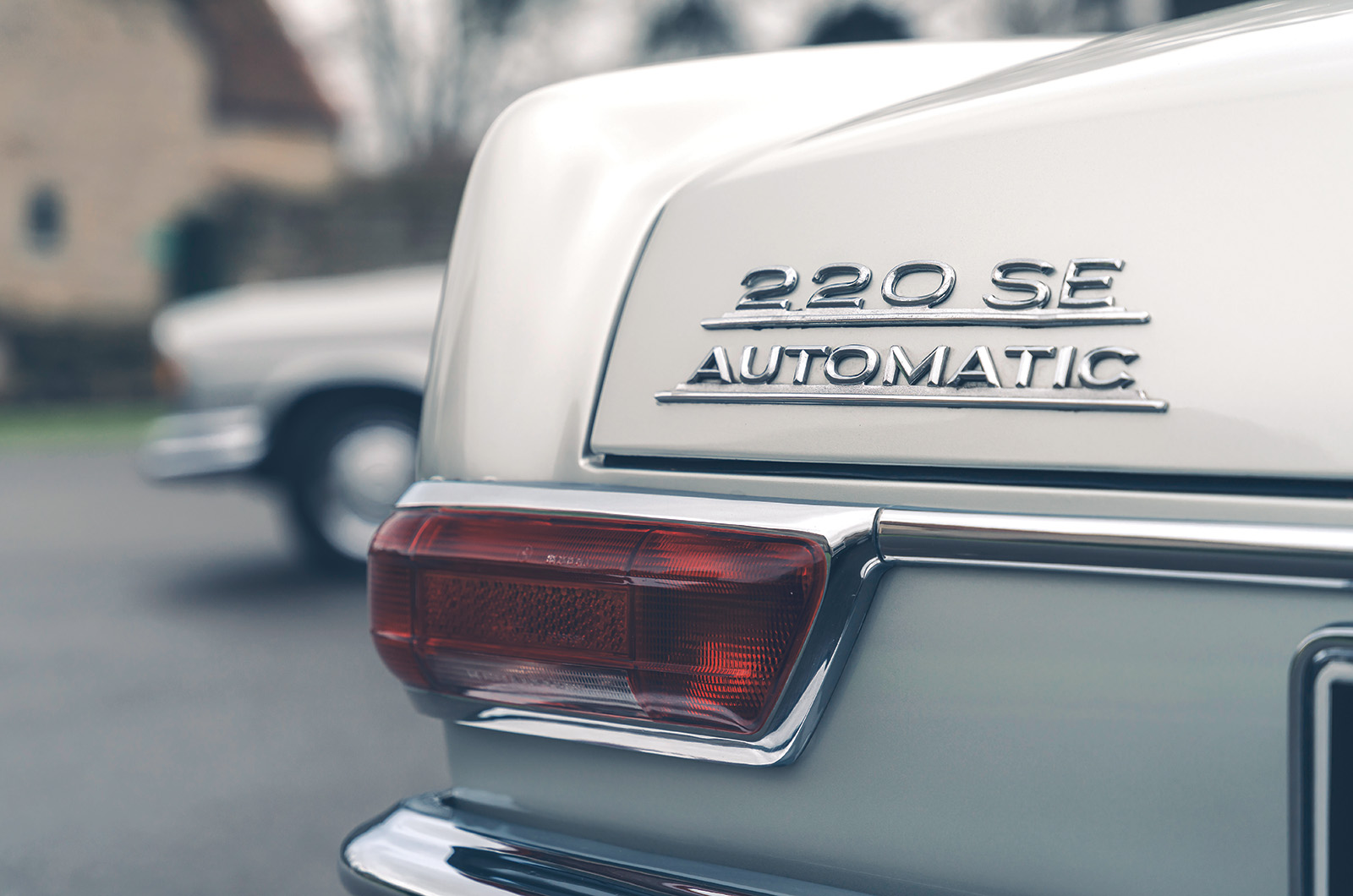
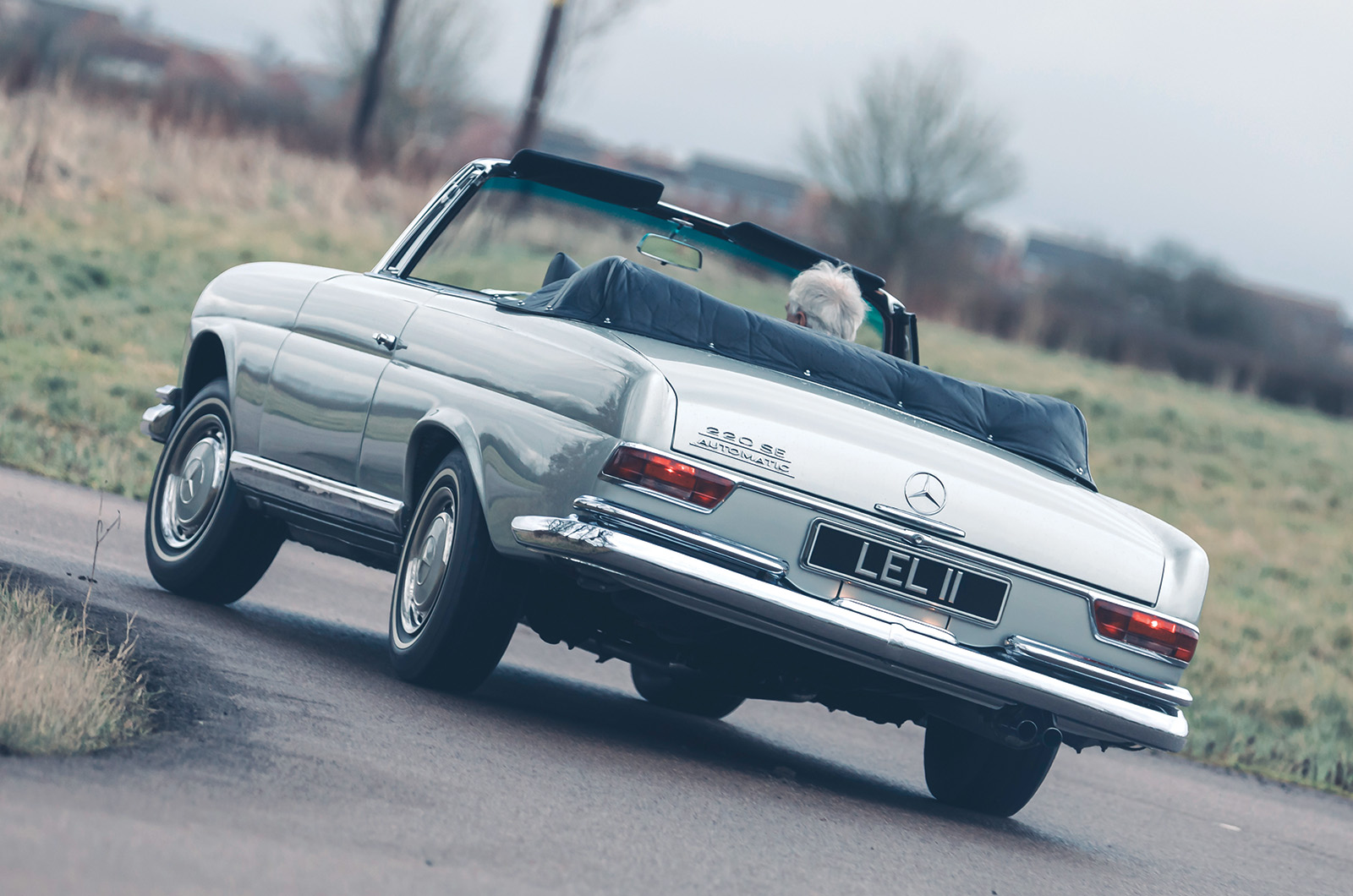
You can say much the same of the Mercedes-Benz 220SEb Cabriolet.
It is slower, noisier and requires that you hold momentum to get the best out of it.
Its steering is a shade lighter, but it rides just as well and, if anything, its gearshifts are smoother.
If 2195cc and 120bhp don’t sound like much for a 3000lb-plus five-seater, you would be hard pressed to say that the 220SEb feels slow.
Once again it keeps up with modern traffic easily and will cruise way beyond the national speed limit.
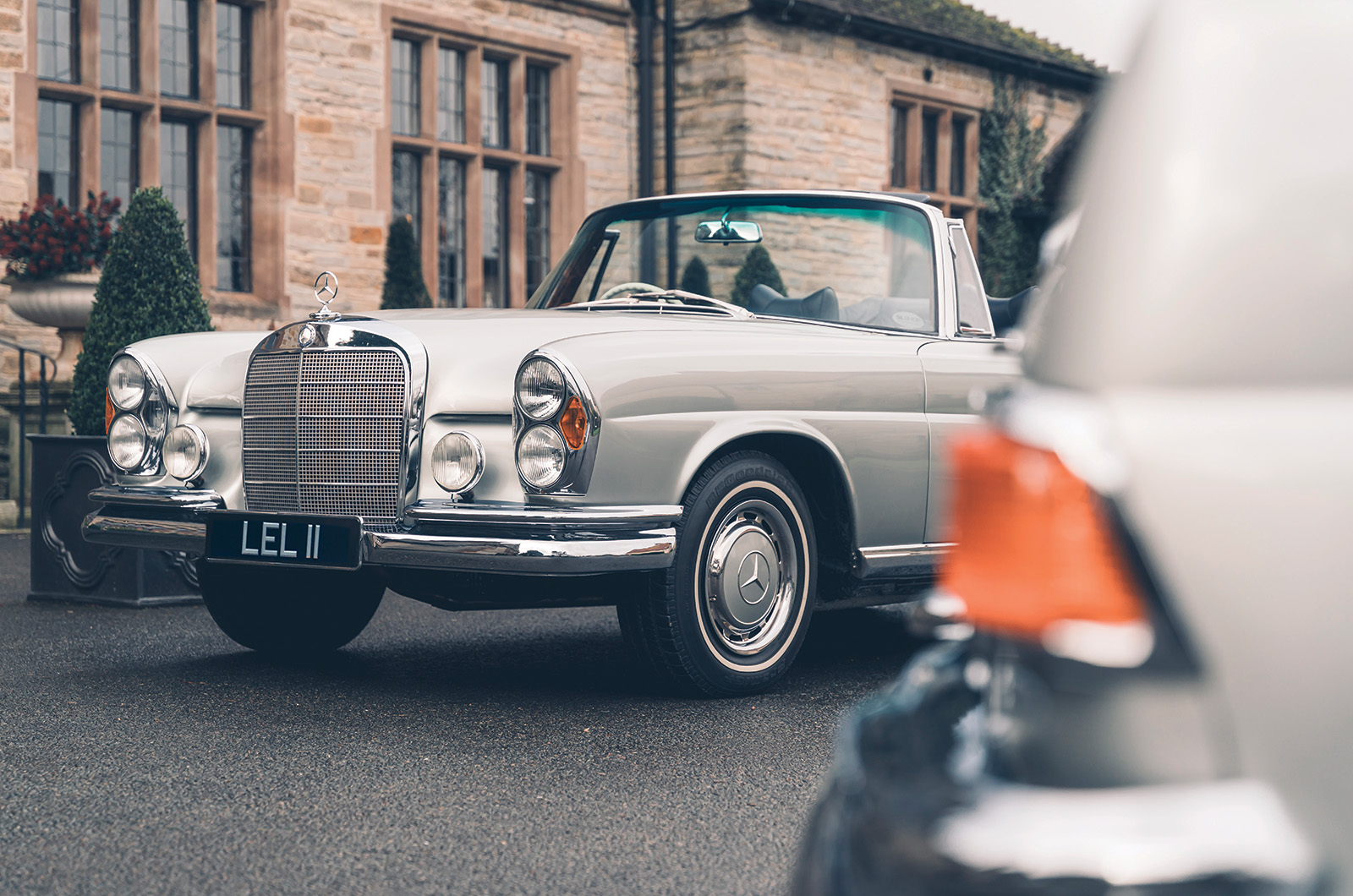
The Mercedes-Benz 280SE 3.5 Cabriolet was a subtle evolution of Paul Bracq’s stylish W111
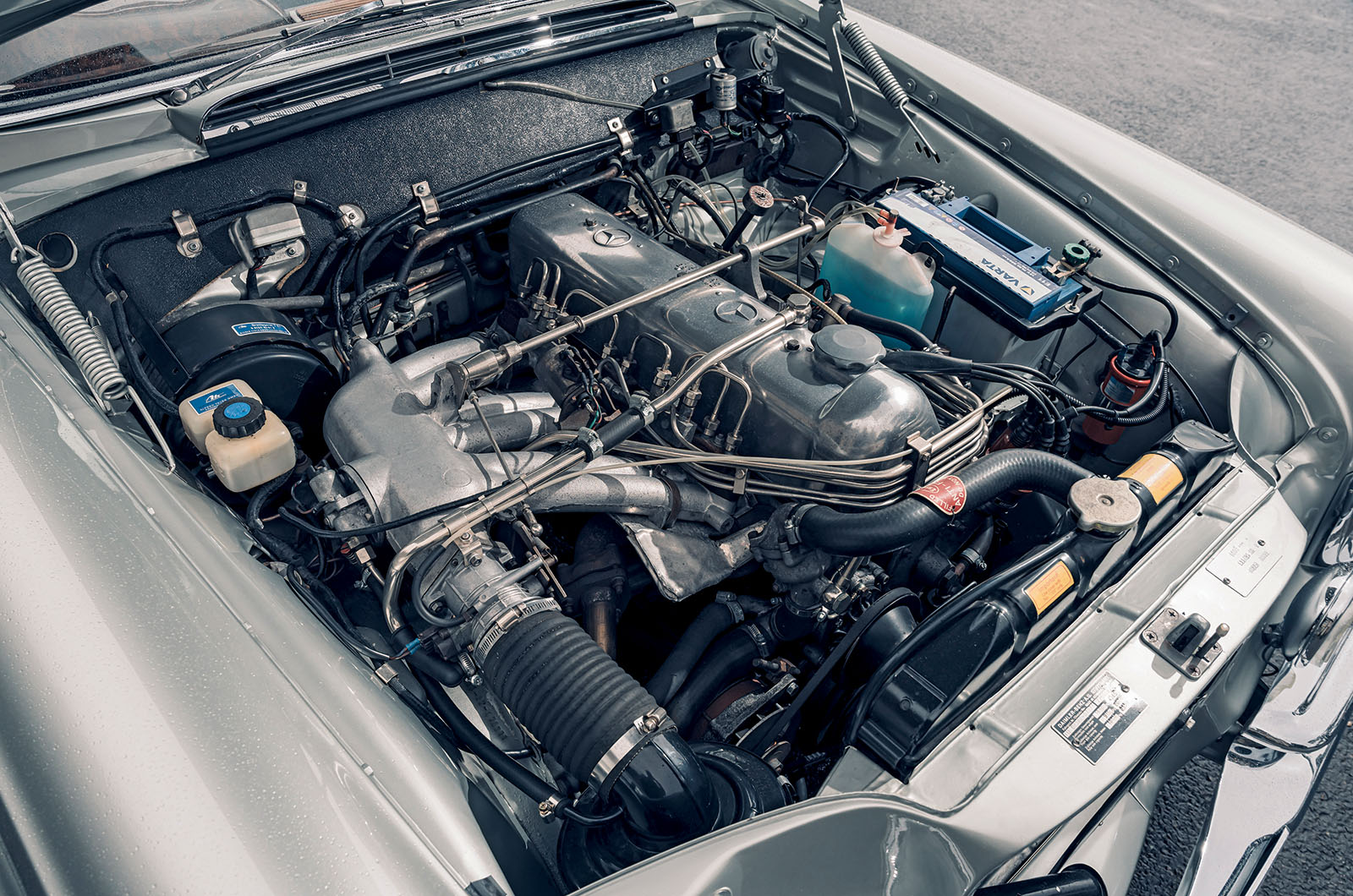
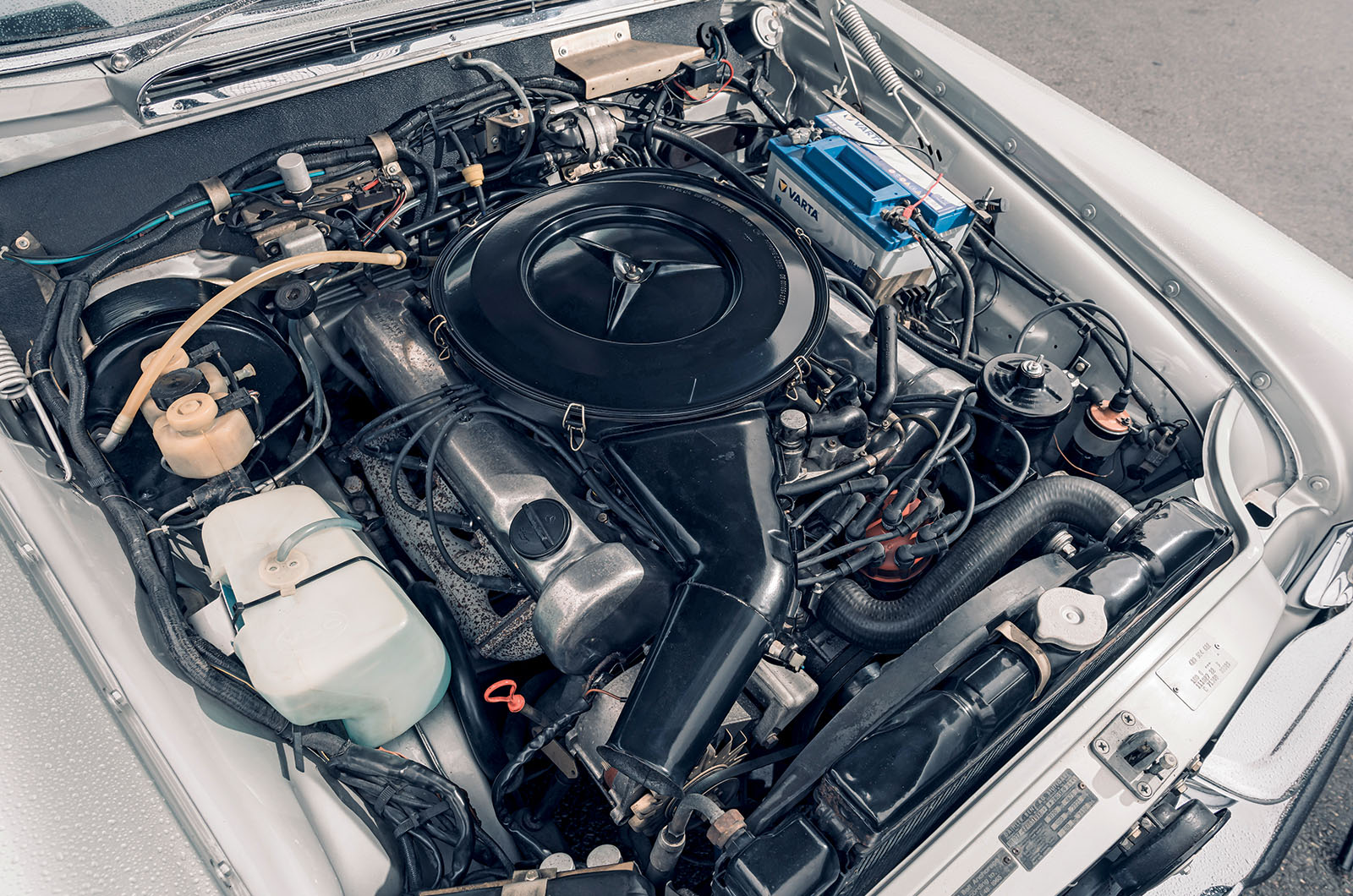
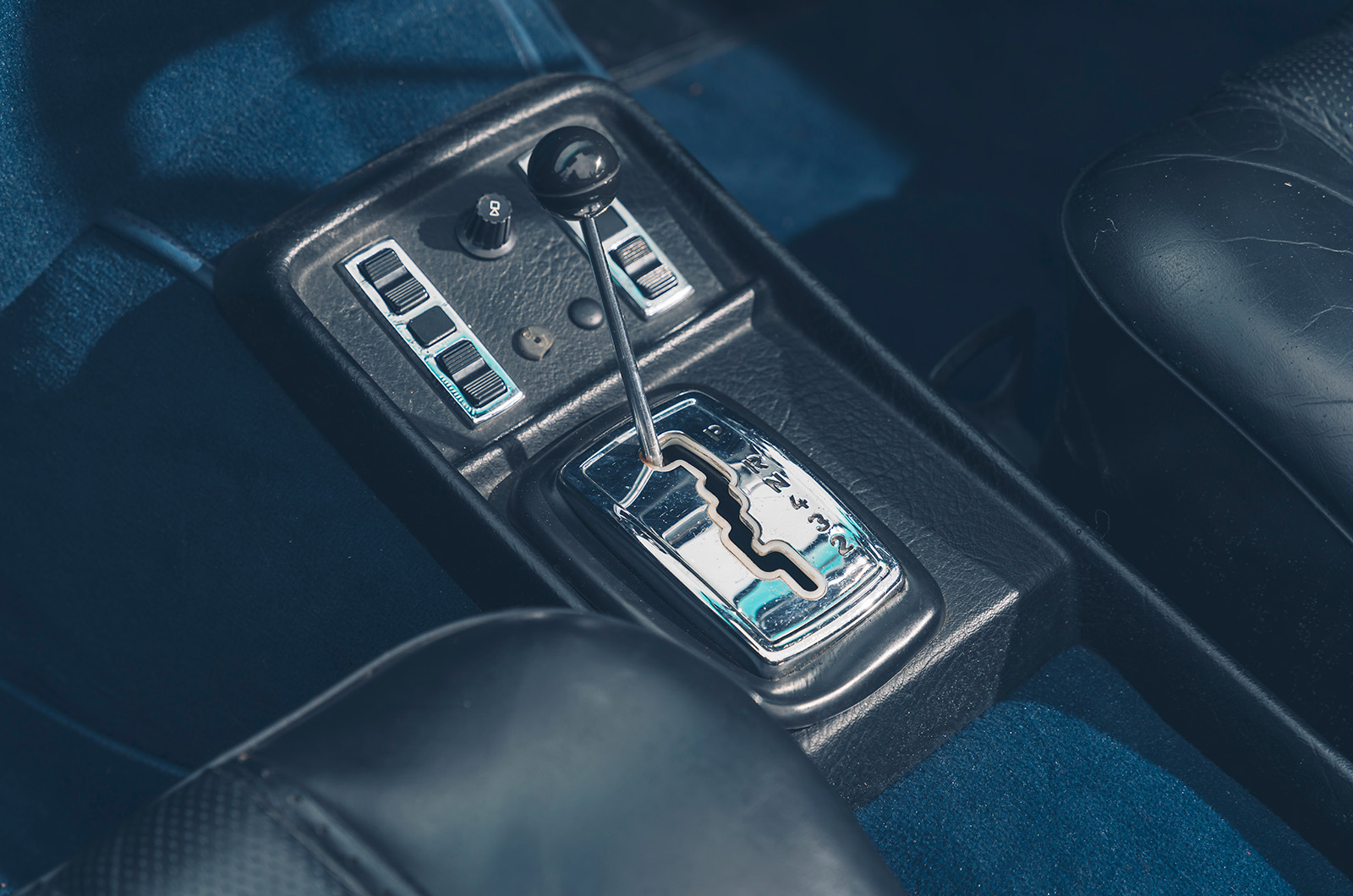
Even with the more commonly fitted column-shift automatic gearbox (which suits it rather better than the floor-change manual, with its odd set of ratios), Stuttgart’s overhead-cam, short-stroke M127 ‘six’ thrives on revs, breathing well through large, staggered valves.
It is geared to pull its 108mph maximum speed at 6000rpm and was designed from the start as an engine that could sustain high revs for long periods without flying apart.
As in the 280SE 3.5 Cabriolet, fuel injection makes for easy cold starts and general good manners.
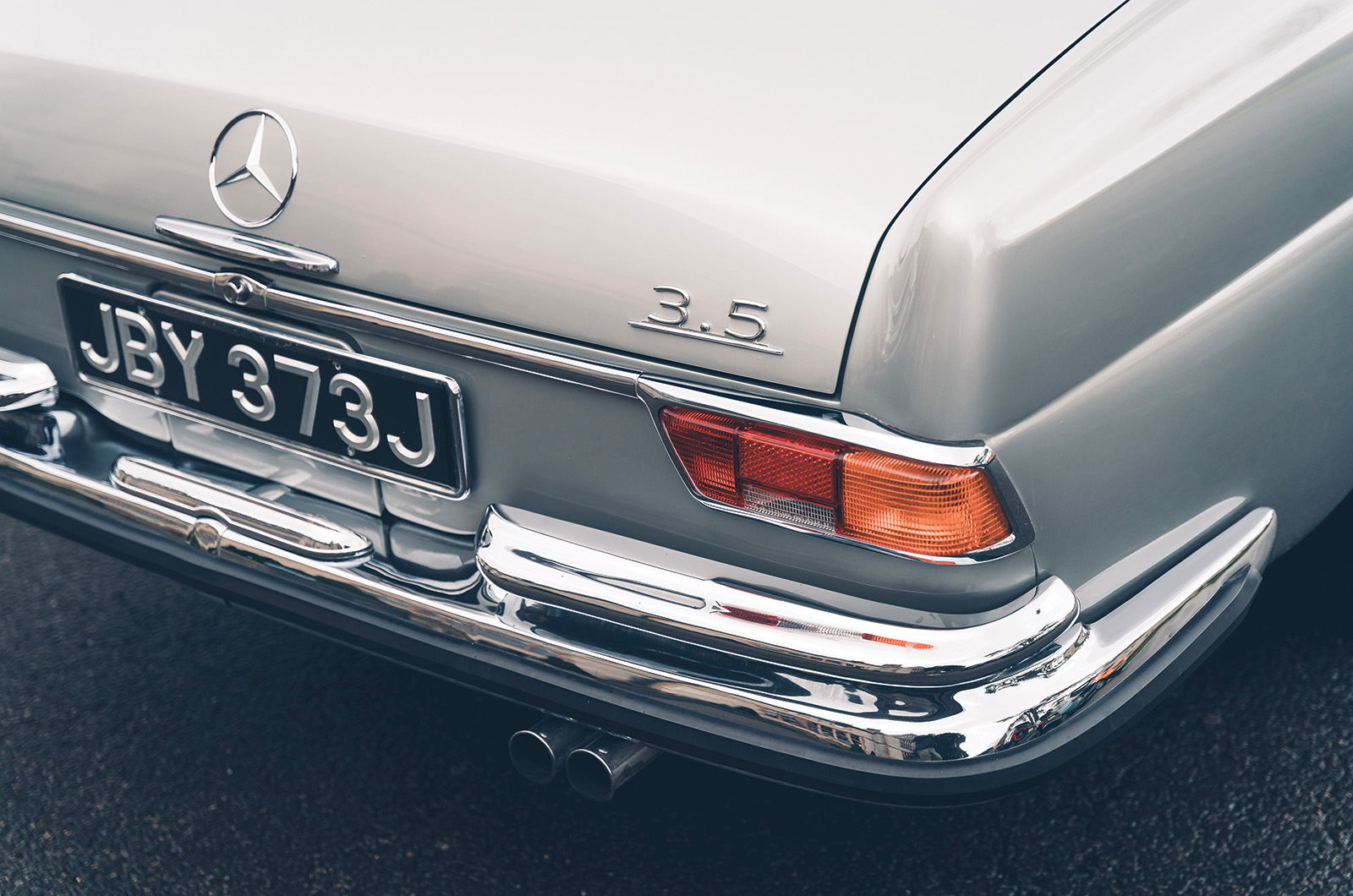
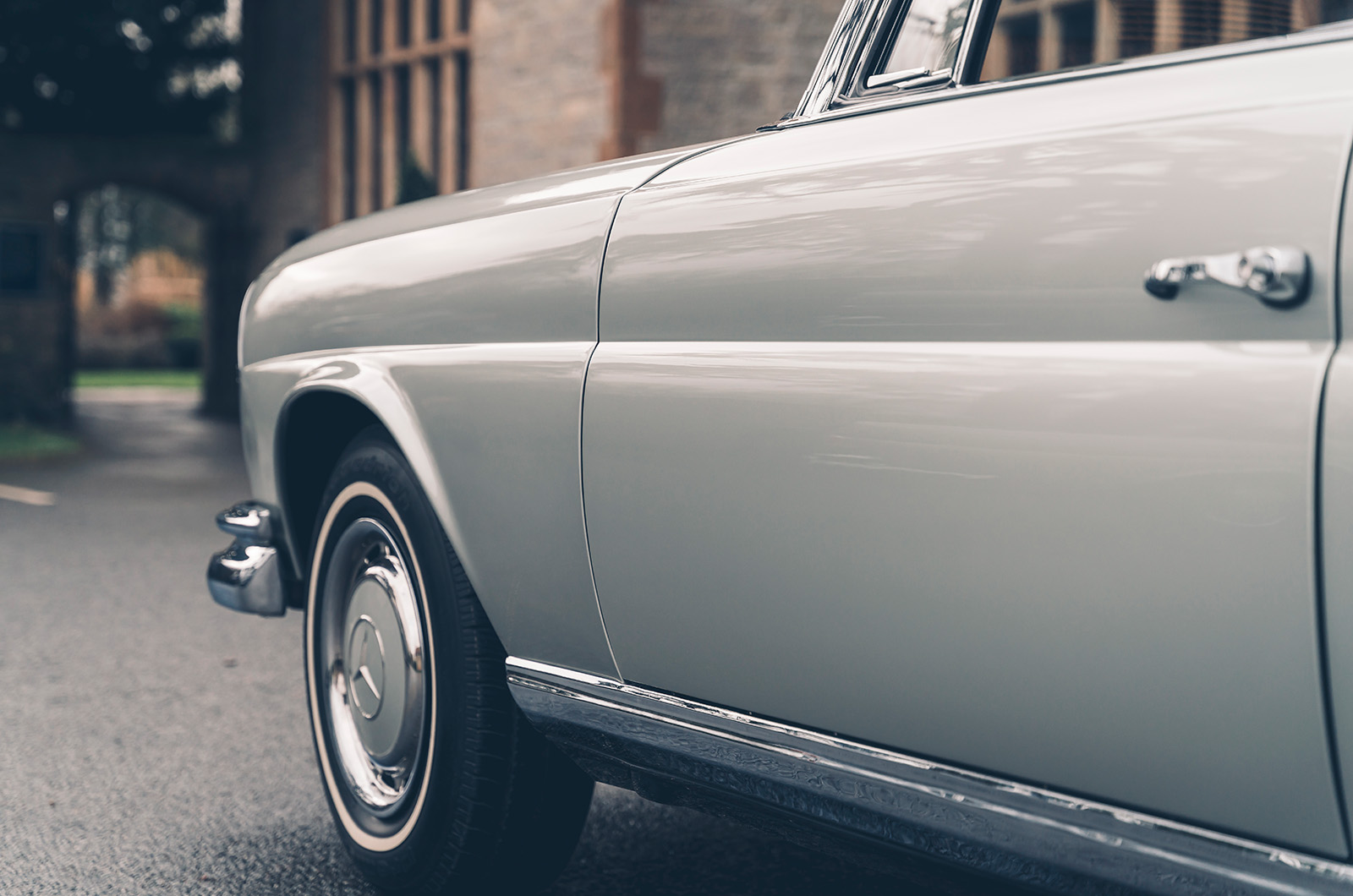
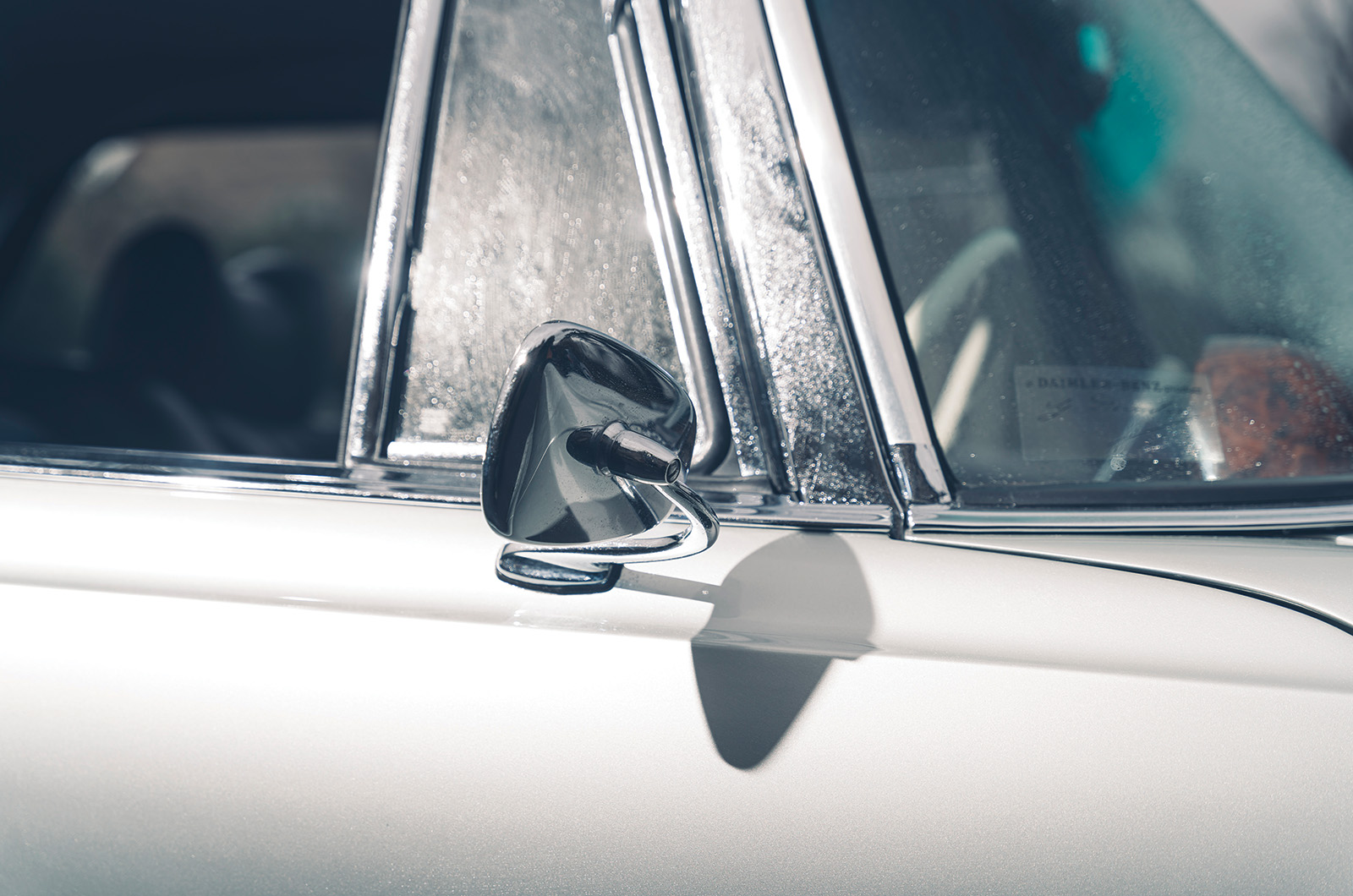
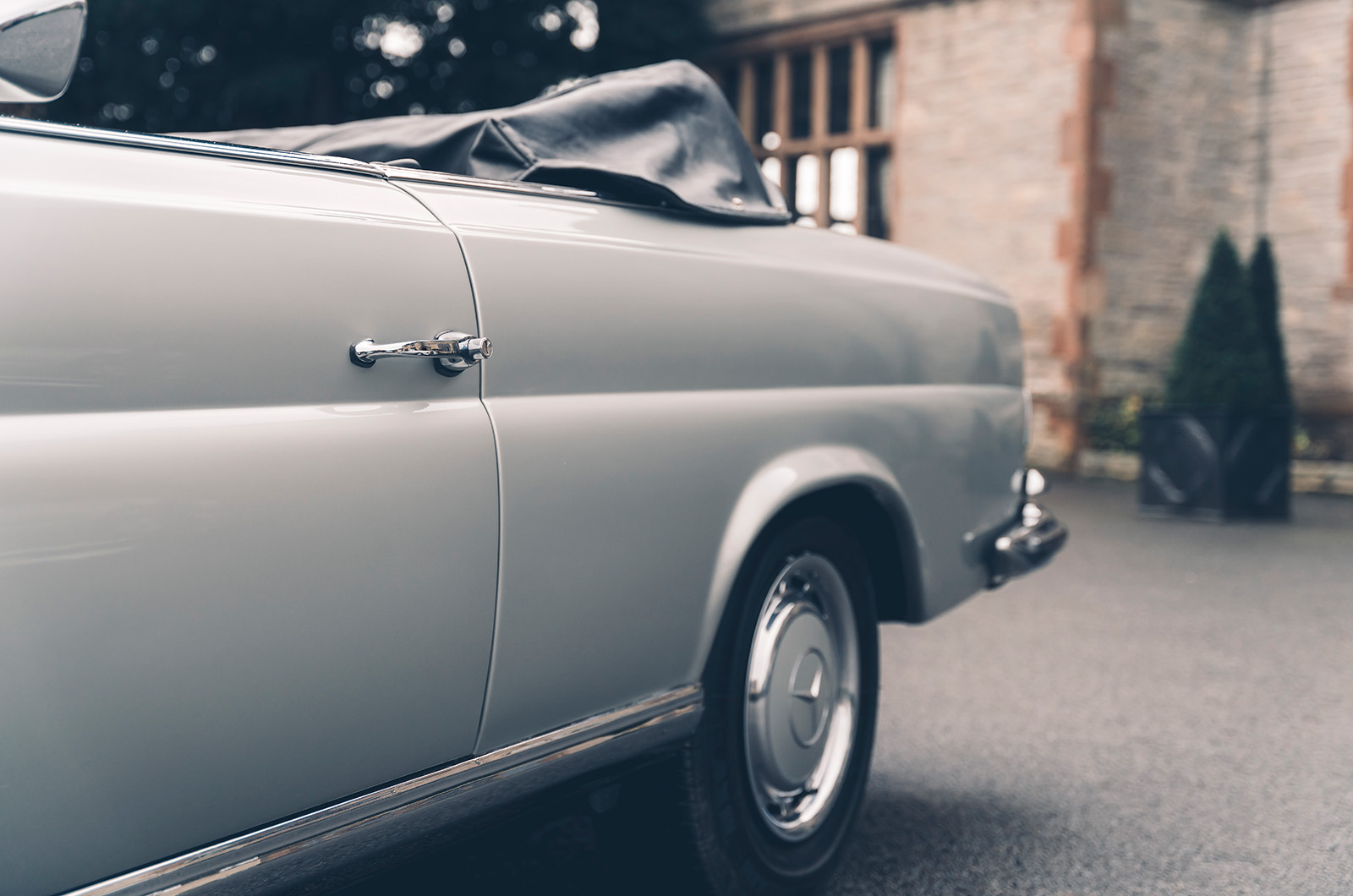
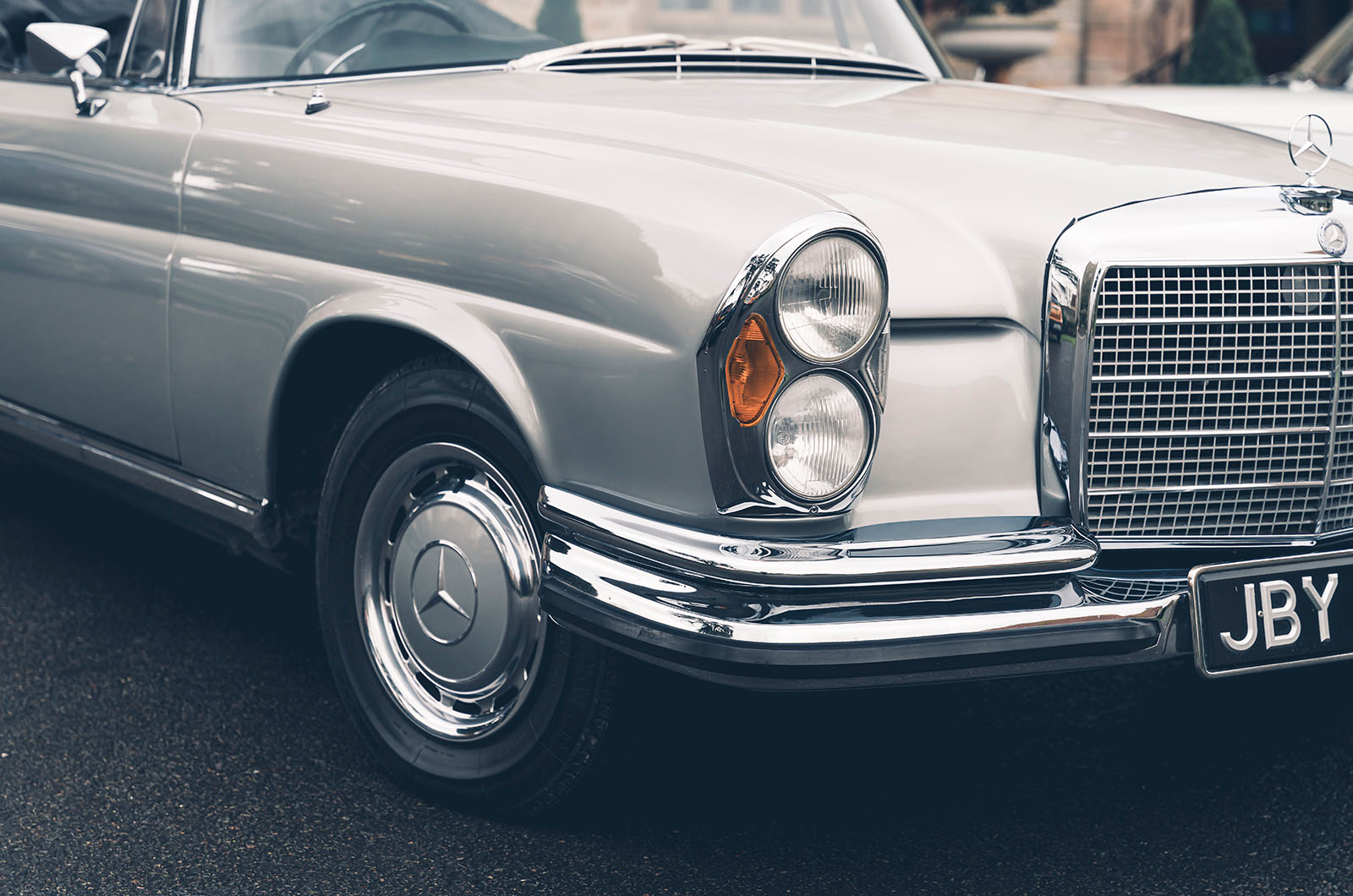
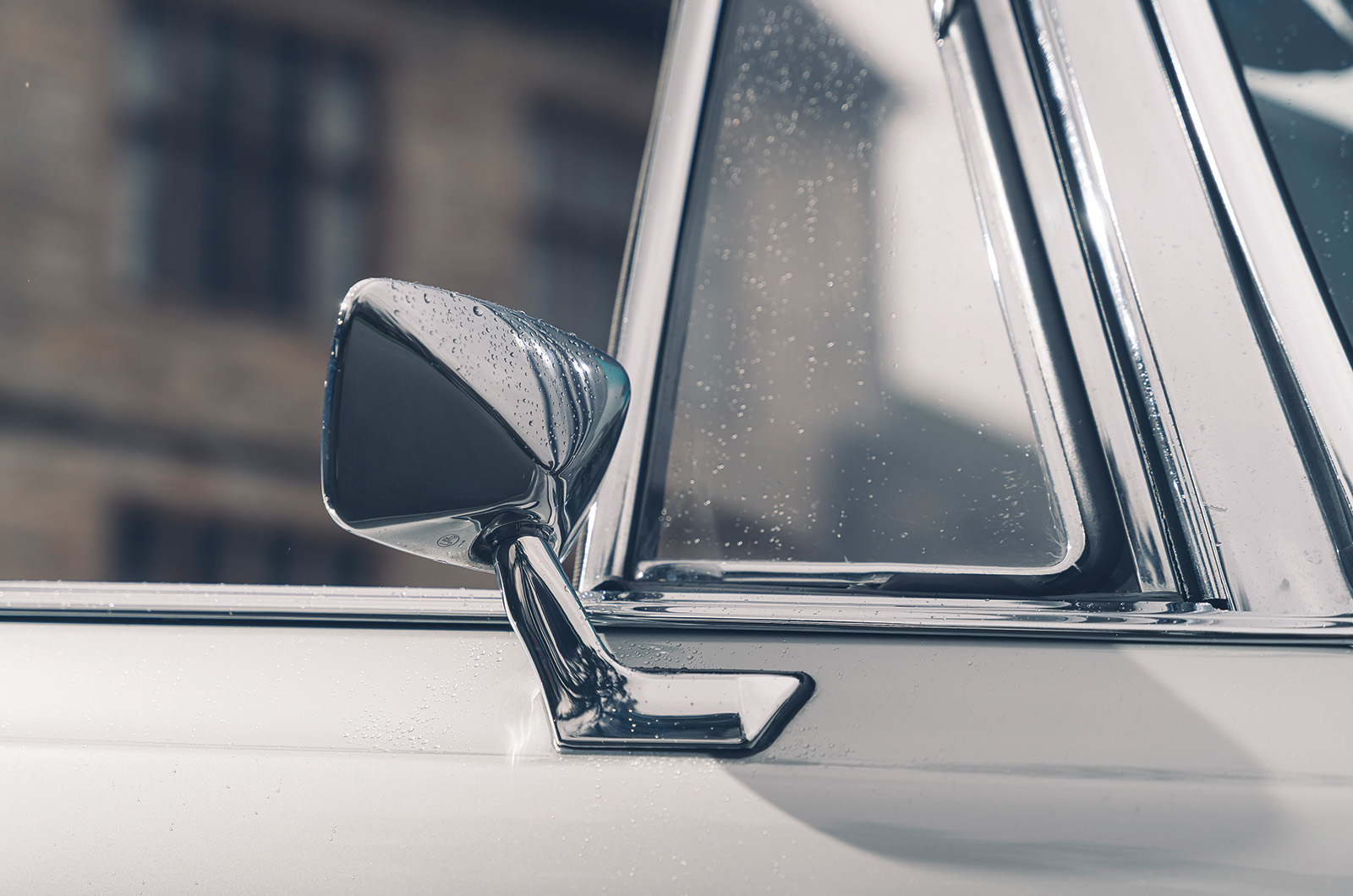
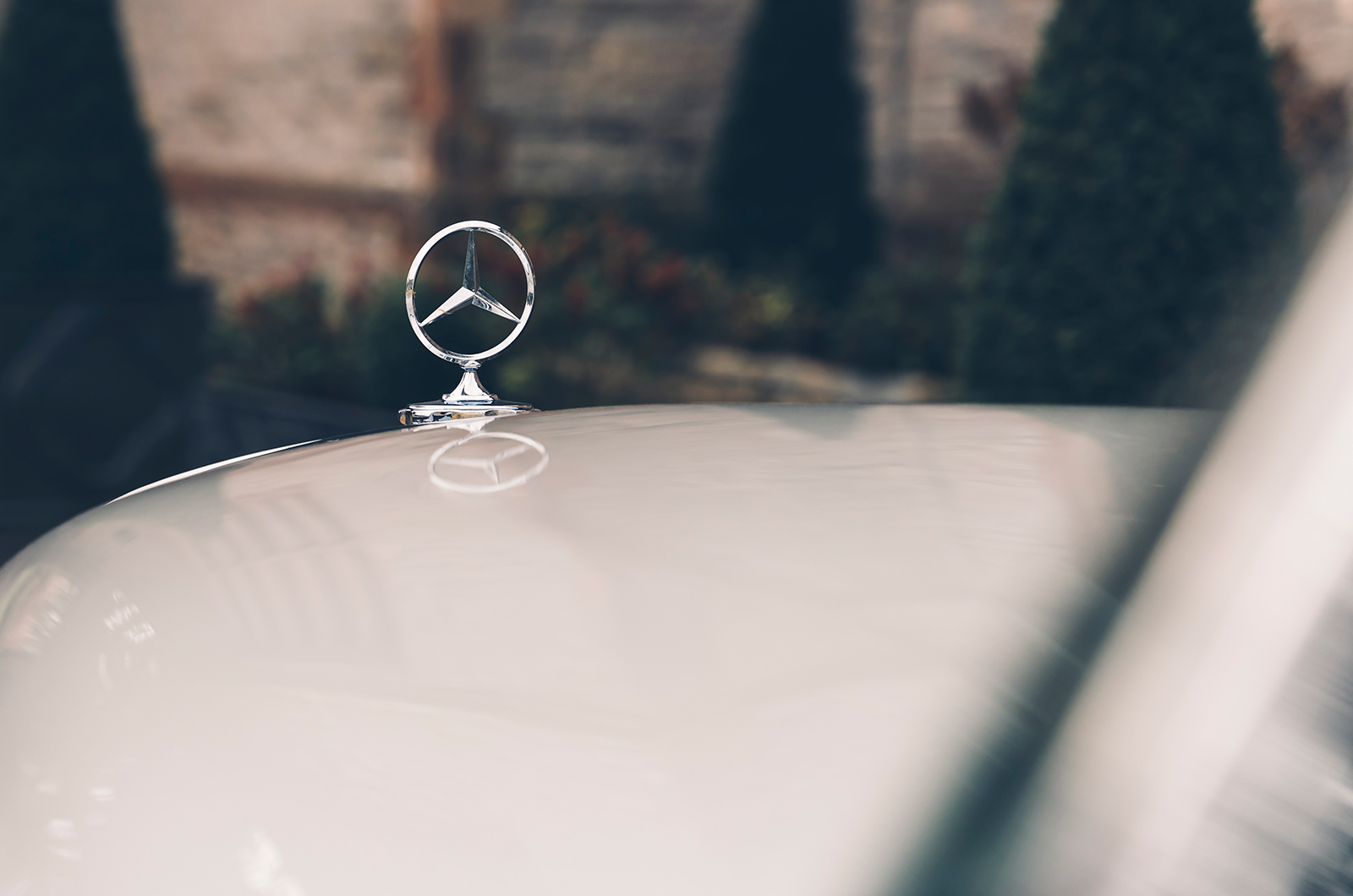
The Mercedes-Benz 280SE 3.5 Cabriolet’s chrome trim was executed tastefully without resorting to over-stylised excess
It’s a mechanical port type, featuring twin injection pumps with a timed distribution, rather than a separate pump for each cylinder as in the Mercedes-Benz 300SL.
The system takes account of ambient temperature for fuel flow and has an overrun cut-off.
The 220SEb was easily the most numerous of Mercedes’ two-door cars, the combined Convertible and Coupé total of 16,902 examples accounting for well over half of six-cylinder W111 and W112 (representing the air-suspended 300) two-door production through to 1967.
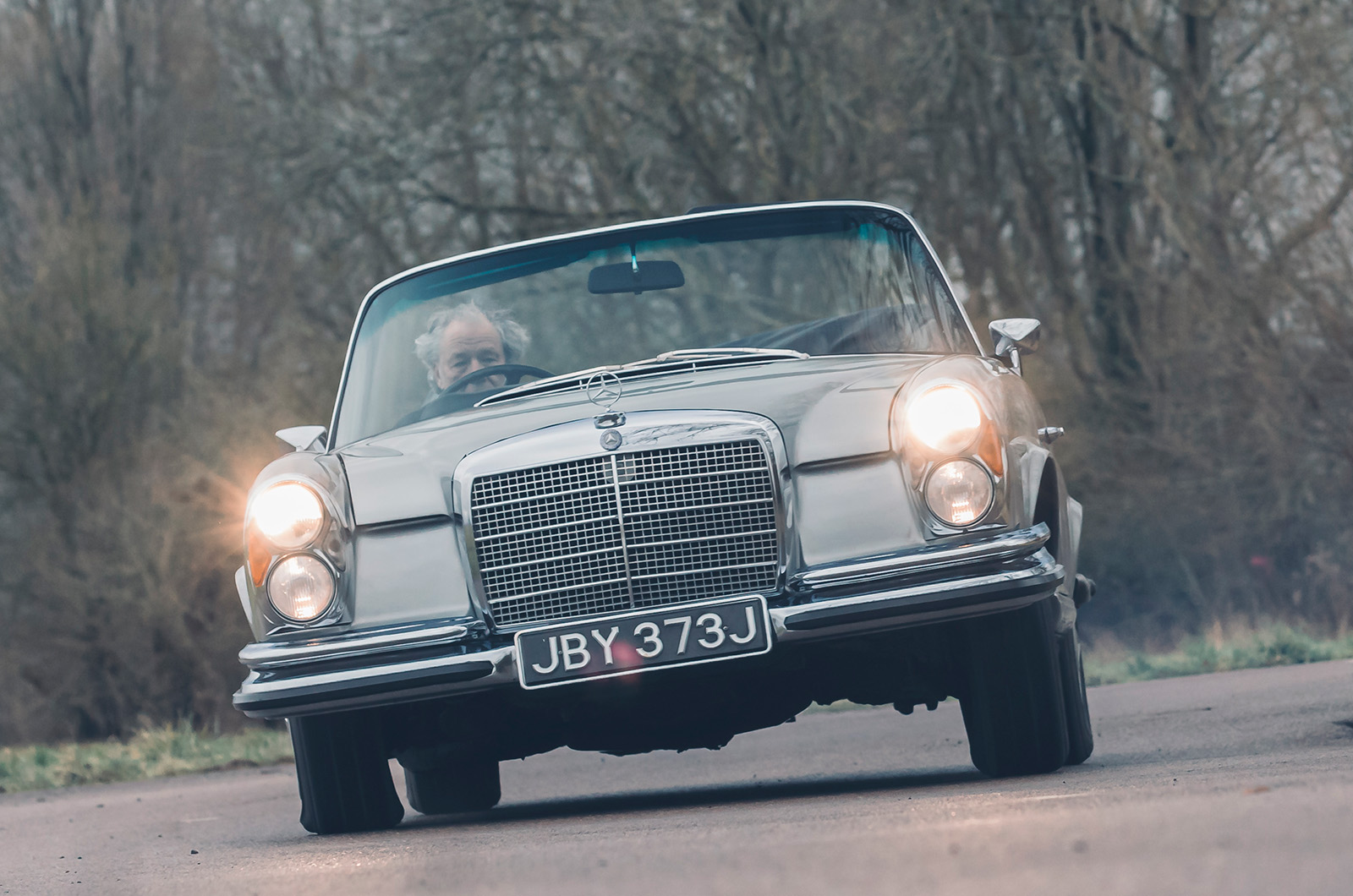
The Mercedes-Benz 280SE 3.5 Cabriolet has a great forward view, but the raised soft-top creates a blind spot to the rear
The 1961-’71 W111 Coupés almost saw out two generations of the marque’s large saloons before finally being usurped by the SLC range in 1972.
In the corporate line-up, only Mercedes’ 600 and 300SEL 6.3 were more expensive.
That said, it is sobering to think that the nearest equivalent luxury V8 ragtop, the Rolls-Royce Mulliner Park Ward Drophead, sold for nearly double the price of the W111 Cabriolet.
The Rolls-Royce Corniche undoubtedly soaked up, for years afterwards, buyers who looked in vain for a 3.5 drop-top replacement in showrooms.
The Mercedes-Benz W111 became synonymous for fine looks and impeccable quality
That they were still greatly in demand secondhand says a lot for the timelessness of Paul Bracq’s W111 shape; the fact that the flagship model gained two cylinders (and 80bhp) during its 10-year run only whetted wealthy buyers’ appetites for a vehicle with a discreetly majestic appeal that no subsequent big Benz range-topper has quite recaptured.
Being the fastest (if not quite the rarest) of the W111 Mercedes-Benzes, it’s no surprise that the 1969-’71 280SE 3.5 V8s are still the most hotly pursued by collectors: that is only human nature.
However, if you accept that these four-seater cabrios are really about making their owners look and feel good (rather than outright performance), then the value offered by the six-cylinder car is hard to ignore.
I can think of a small garage full of cars I would choose before either of these Teutonic dream machines, but they are still immensely desirable for their looks, engineering and driver appeal.
Images: Max Edleston
Thanks to: SL Shop; Billesley Manor Hotel and Spa
Factfiles
Mercedes-Benz 220SEb Cabriolet
- Sold/number built 1961-’65/16,902 (Coupé and Cabriolet)
- Construction steel monocoque
- Engine iron-block, alloy-head, sohc 2195cc straight-six, Bosch fuel injection
- Max power 120bhp @ 5400rpm
- Max torque 132lb ft @ 5400rpm
- Transmission four-speed automatic, RWD
- Suspension independent, at front by unequal-length wishbones, anti-roll bar rear low-pivot swing axles; telescopic dampers, coil springs f/r
- Steering power-assisted recirculating ball
- Brakes discs front, drums rear, with servo
- Length 16ft ¼in (4883mm)
- Width 6ft ¾in (1848mm)
- Height 4ft 8in (1422mm)
- Wheelbase 9ft ¼in (2750mm)
- Weight 3104lb (1408kg)
- 0-60mph 12.4 secs
- Top speed 108mph
- Mpg 18-26
- Price new £4414
- Price now £70-150,000*
Mercedes-Benz 280SE 3.5 Cabriolet
- Sold/number built 1969-’71/4502 (Coupé & Cabriolet)
- Construction steel monocoque
- Engine iron-block, alloy-heads, sohc-per-bank 3499cc 90° V8, Bosch fuel injection
- Max power 200bhp @ 5800rpm
- Max torque 211lb ft @ 4000rpm
- Transmission four-speed automatic, RWD
- Suspension independent, at front by unequal-length wishbones, anti-roll bar rear low-pivot swing axles; telescopic dampers, coil springs f/r
- Steering power-assisted recirculating ball
- Brakes discs, with servo
- Length 16ft ¼in (4883mm)
- Width 6ft ¾in (1848mm)
- Height 4ft 8in (1422mm)
- Wheelbase 9ft ¼in (2750mm)
- Weight 3460lb (1569kg)
- 0-60mph 9.4 secs
- Top speed 125mph
- Mpg 14-29
- Price new £7249
- Price now £250-300,000*
*Prices correct at date of original publication
Enjoy more of the world’s best classic car content every month when you subscribe to C&SC – get our latest deals here
READ MORE
Mercedes-Benz 220S: Ponton perfection
Glamour models: Mercedes-Benz 280SE 3.5 Coupé vs Rolls-Royce Silver Shadow MPW
Mercedes-Benz 170S Cabriolet B: hidden in plain sight
Martin Buckley
Senior Contributor, Classic & Sports Car