Porsche 914 1.7 vs Matra M530 LX: anything but ordinary

| 20 Feb 2025
Classic & Sports Car – Porsche 914 1.7 vs Matra M530 LX: anything but ordinary

In the years between Jack Brabham’s Formula One World Championship victory in his mid-engined Cooper T51 in 1959 and today, we have become used to the idea that engines mounted behind the driver are reserved for specialist sports cars and supercars.

Yet no such assumption existed when the configuration first appeared.

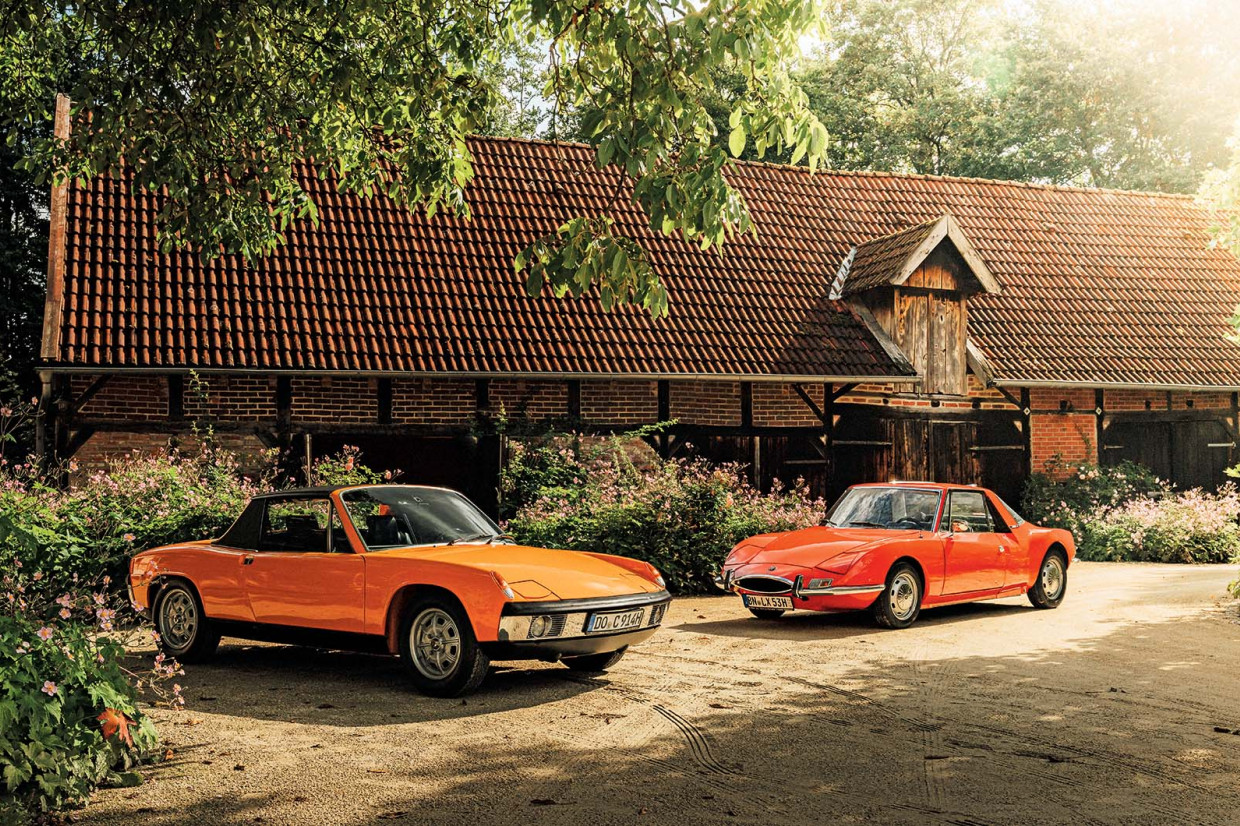
In the late 1960s, Porsche and Matra, both storied names in motorsport, quickly attempted to broaden ownership in the genre by shoving low-power, saloon-car drivetrains into new, mid-engined bodies to create the 914 and M530.

Classic & Sports Car – Porsche 914 1.7 vs Matra M530 LX: anything but ordinary

Porsche and Matra gave it their best with the 914 and M530, but the late-1960s fashion for mid-engined everyday cars never quite took off

Matra had been the first to react to what was happening on the race track; more correctly, it was down to René Bonnet, who built the mid-engined Djet from 1962.

Matra, a maker of aircraft, rockets and electronics, took over after Bonnet went bust in late 1964.

That car went through a baffling succession of names as a result, but it was three years before the Lamborghini Miura, and a year ahead of the ATS 2500 GT.

But while the Djet was far cheaper than those Italian exotics, it was relatively unrefined and only 1492 were built.

Classic & Sports Car – Porsche 914 1.7 vs Matra M530 LX: anything but ordinary

The Matra M530 LX was the first in a short line of mid-engined 2+2s

Jean-Luc Lagardère, managing director of Matra, knew that for a car to sell in greater numbers it had to be much more comfortable – and that meant starting again from the ground up.

An everyday sports car for younger buyers was the idea, so Matra decided to make the new mid-engined model a 2+2 – another first, and one rarely repeated.

The Maserati Merak, Ferrari Mondial and Lamborghini Urraco spring to mind, but pub-trivia points surely await for anyone with further answers.

Classic & Sports Car – Porsche 914 1.7 vs Matra M530 LX: anything but ordinary

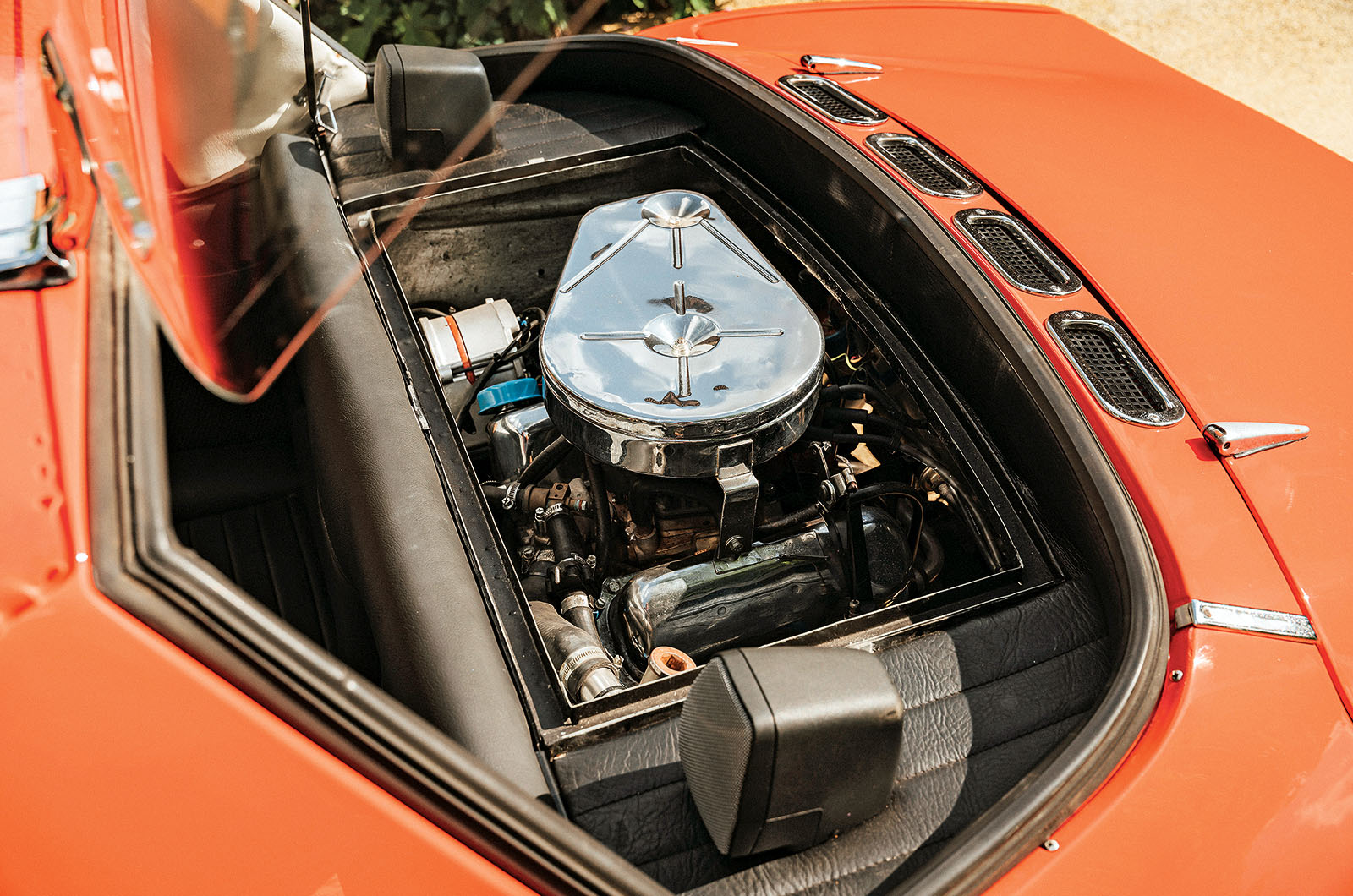
The Matra’s 77bhp V4 is hard to access via an awkward hatch

To fit both an engine and back seats while keeping the car compact, Matra chose for a powertrain the Ford Taunus V4 and its accompanying transaxle, as mounted in the front-wheel-drive Taunus P4 and P6.

Early plans were to use the BMW M10 four-cylinder unit, but the lack of a suitable transmission ended that tantalising prospect.

More realistic alternatives Matra considered were fairly anaemic Renault and Peugeot ‘fours’, and the expensive Lancia V4.

Using an innovative, sheet-steel platform chassis that looks remarkably similar to the aluminium tub of a Lotus Elise proved to be an effective option.

Classic & Sports Car – Porsche 914 1.7 vs Matra M530 LX: anything but ordinary

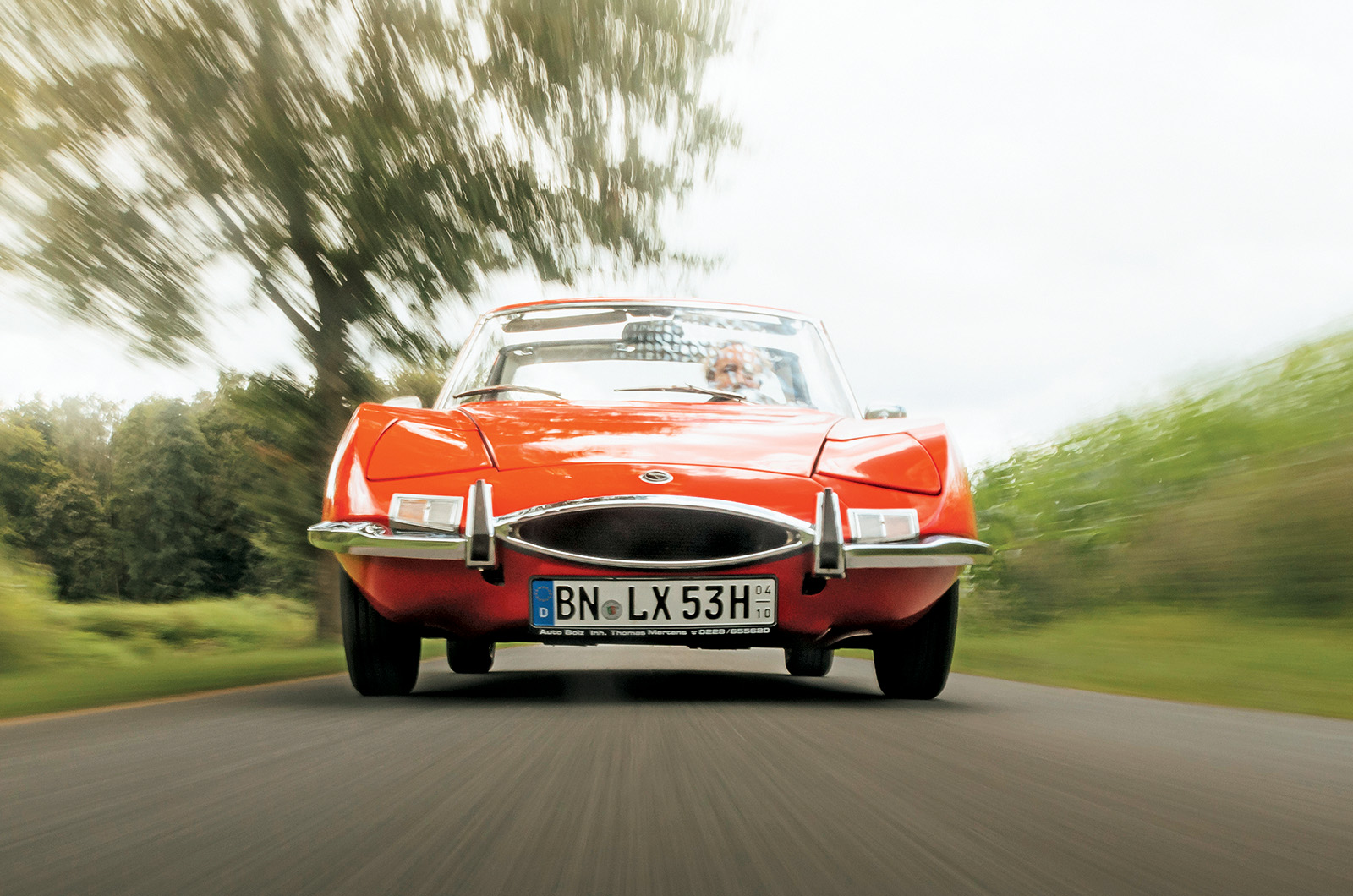
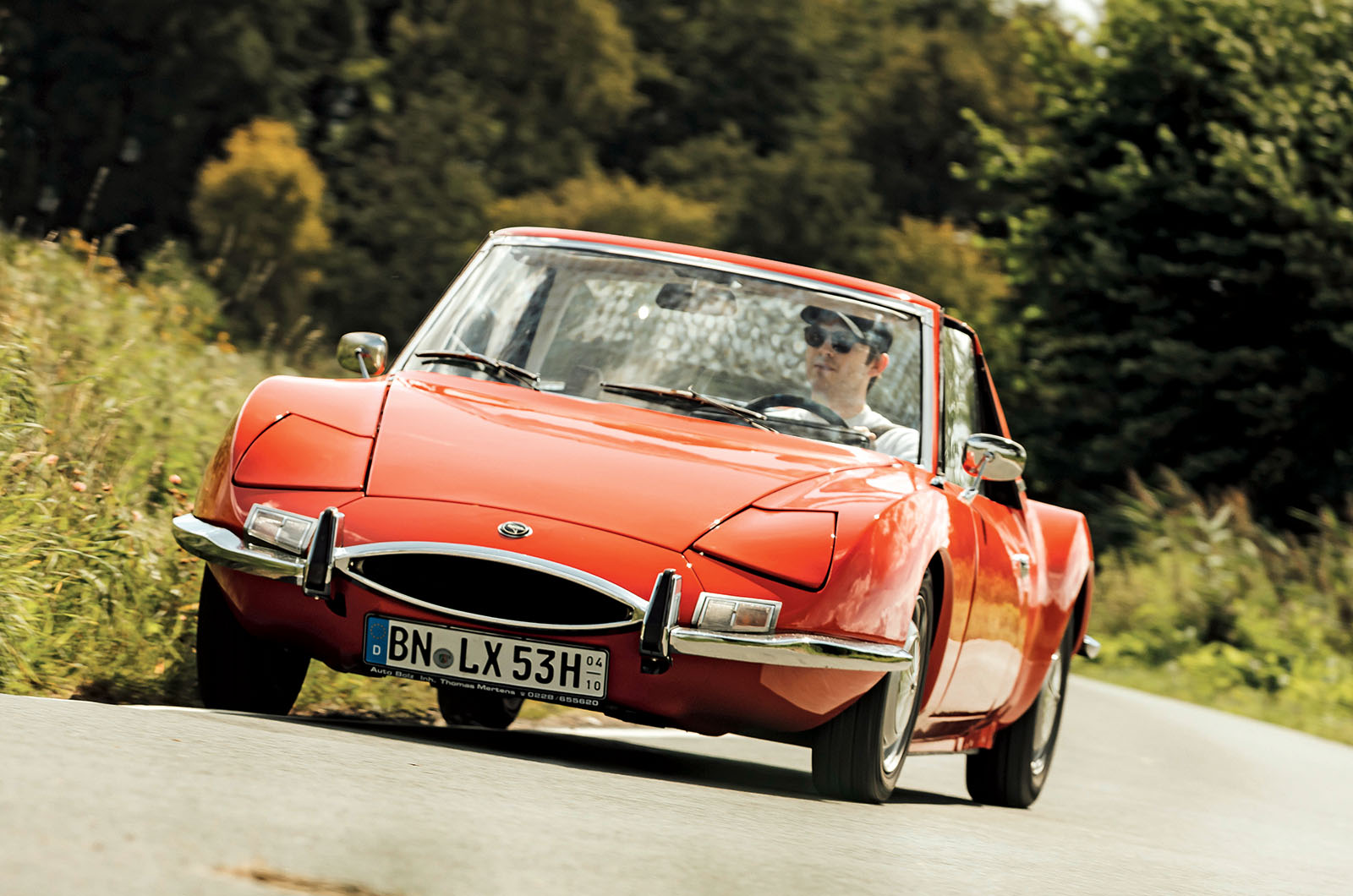
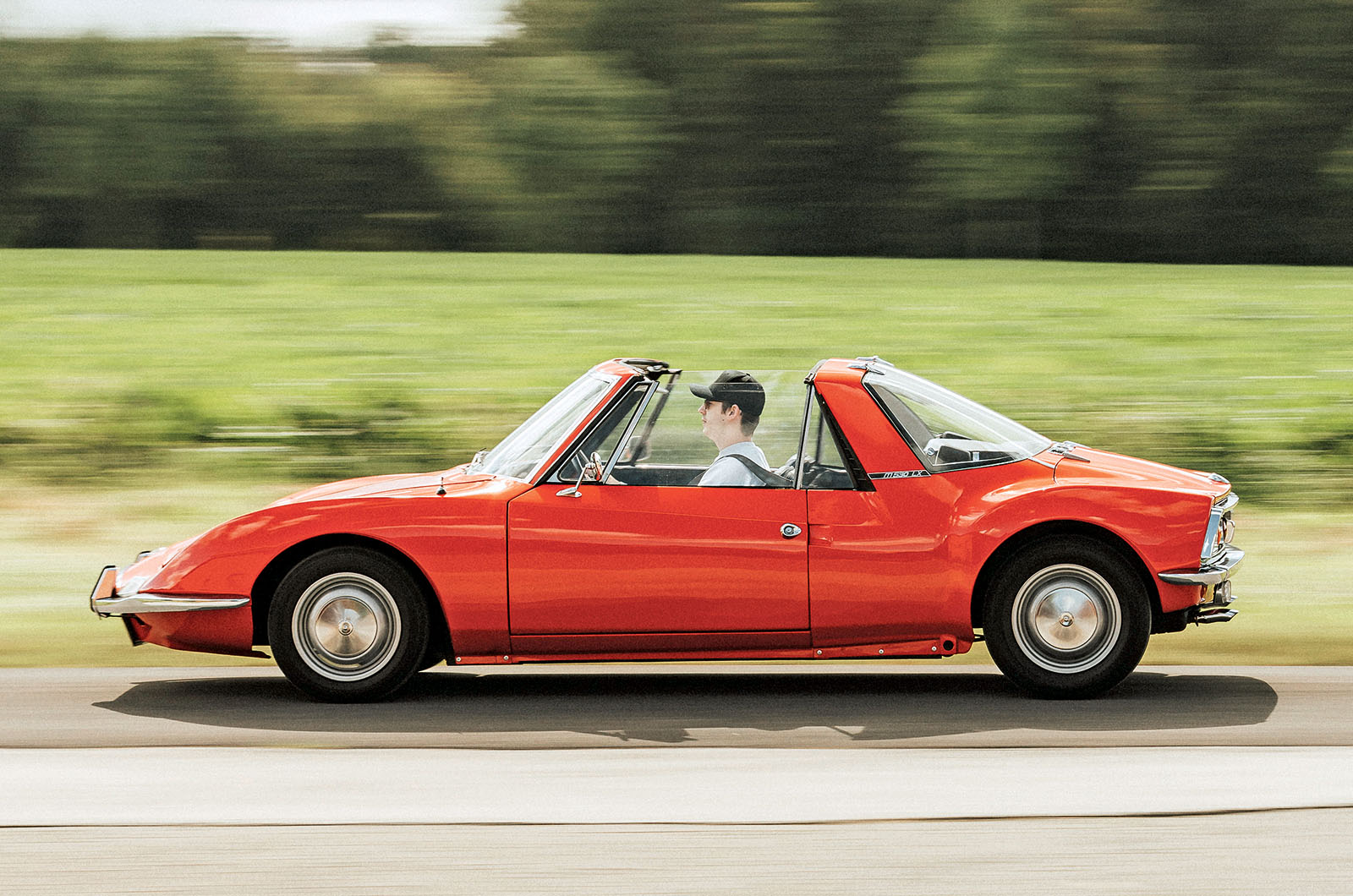
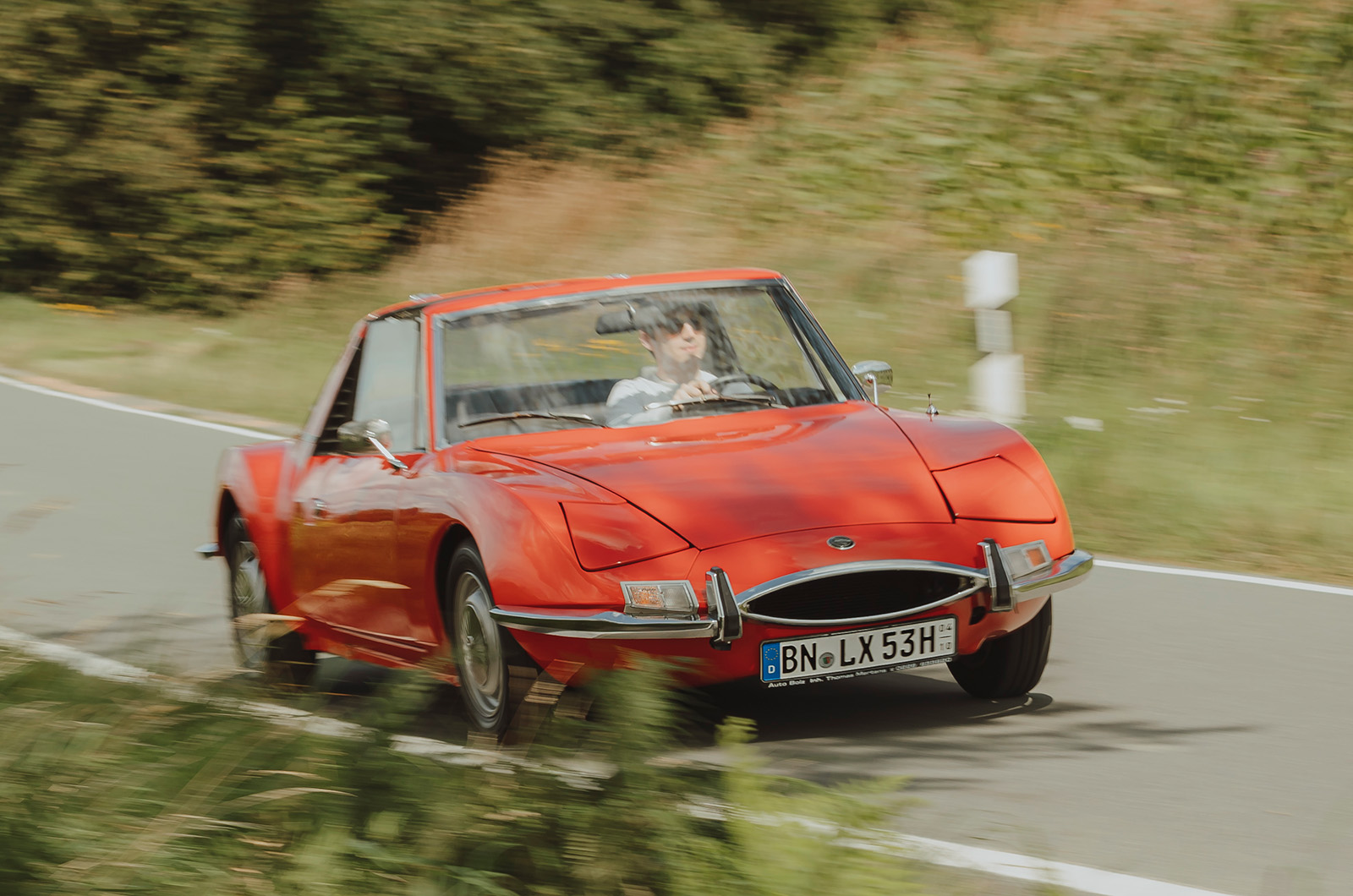
Matra’s M530 LX looks quirky from all angles

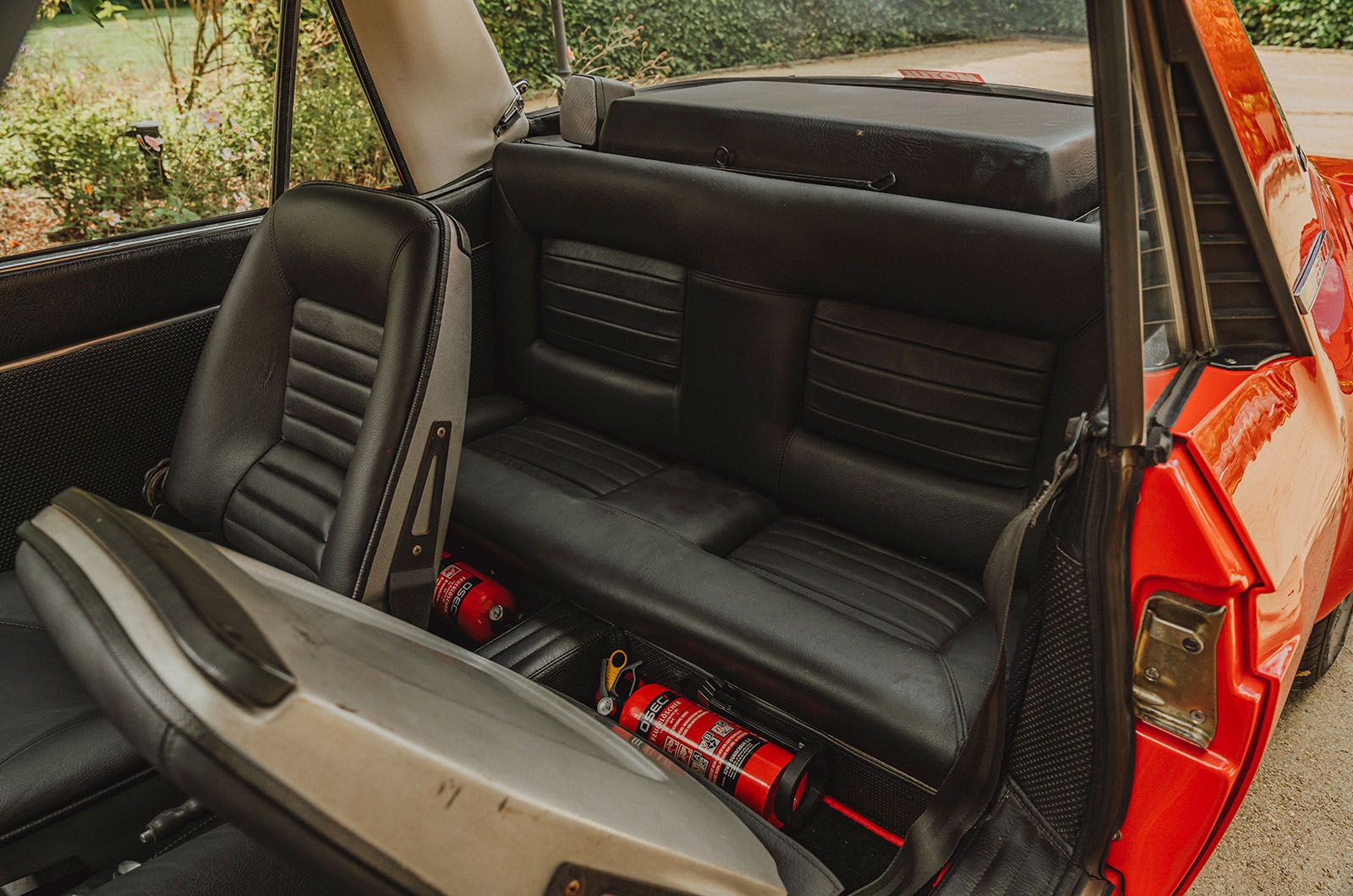
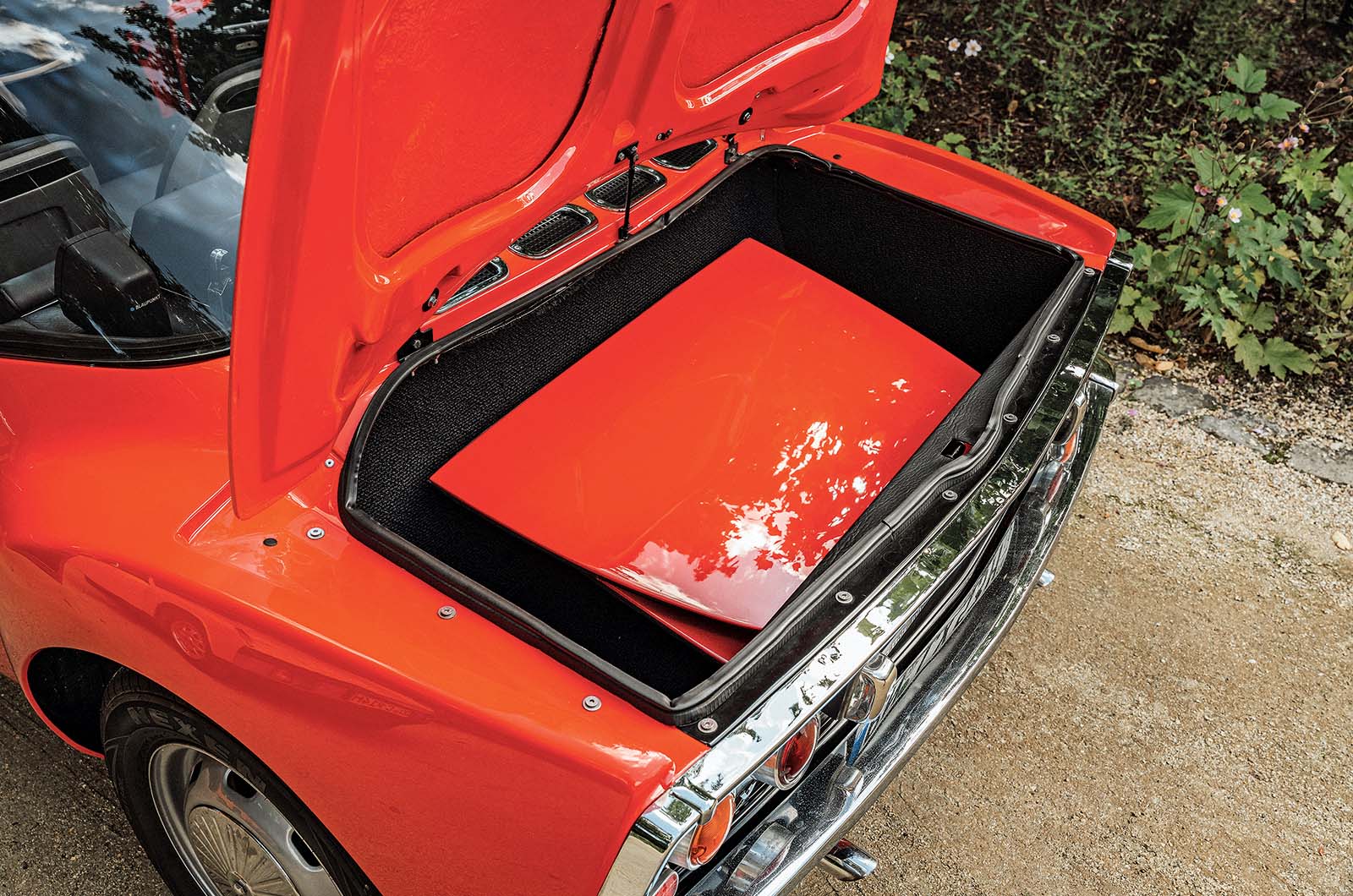
Matra was able to fit two boots, fully independent suspension, four seats and even an integrated roll-over hoop into a 2.56m wheelbase.

Yet you would have to stop short of saying it was a completely flawless piece of packaging.

Its glassfibre bodywork is striking, original and futuristic, but it is also a bit disjointed and unbalanced: it’s too long in the middle where so much has had to be squeezed in between the wheels.

Classic & Sports Car – Porsche 914 1.7 vs Matra M530 LX: anything but ordinary

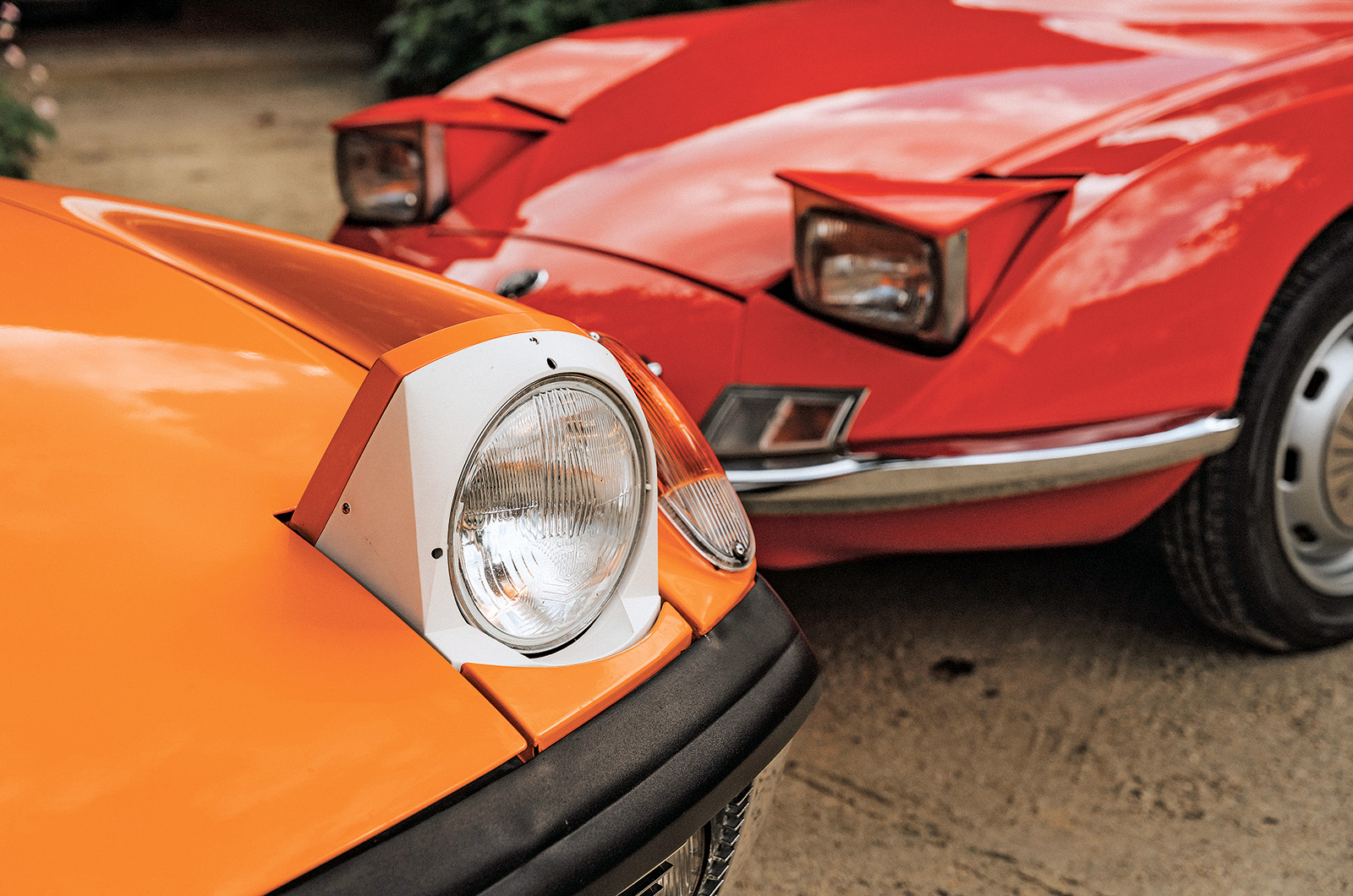
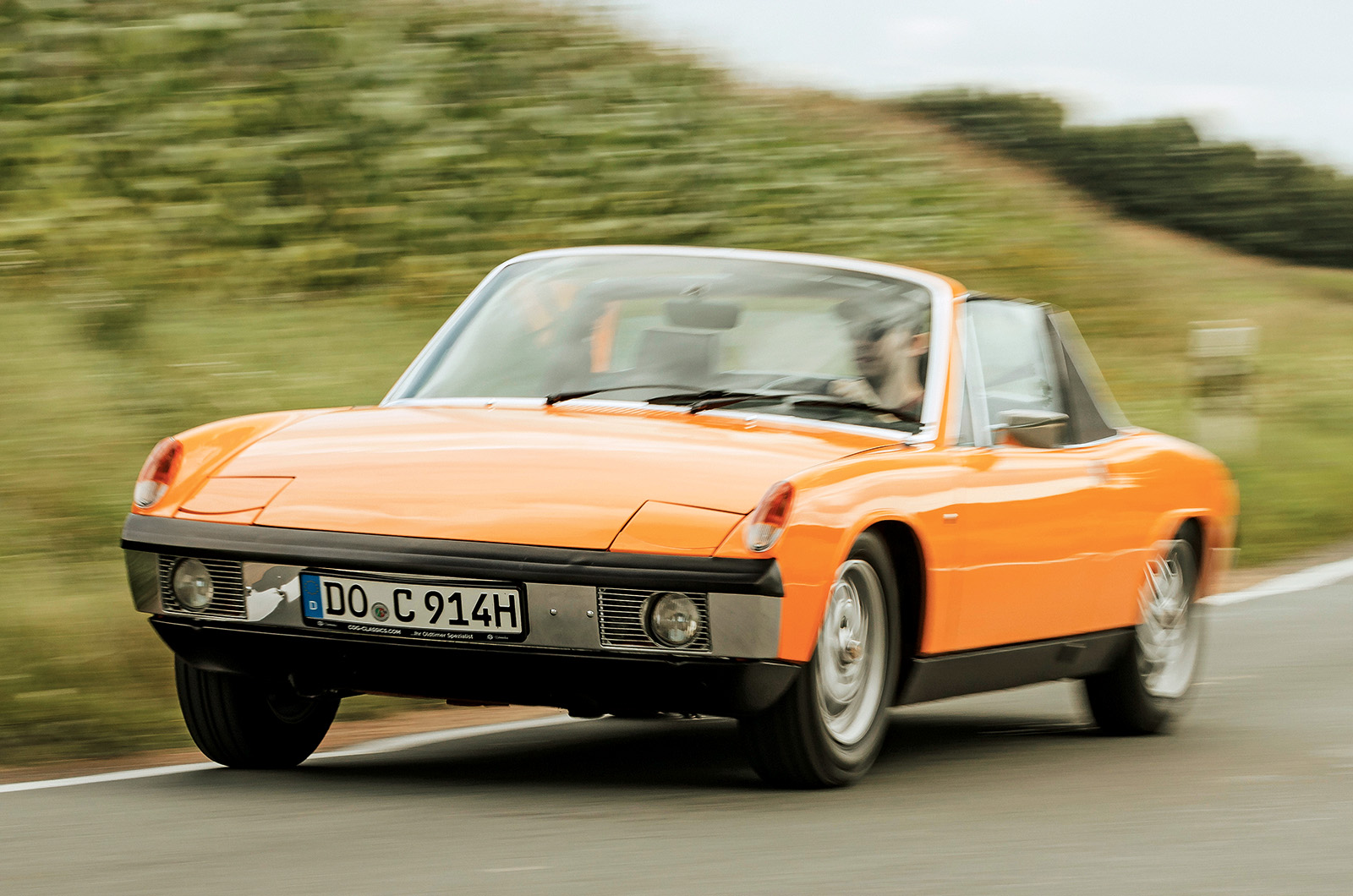
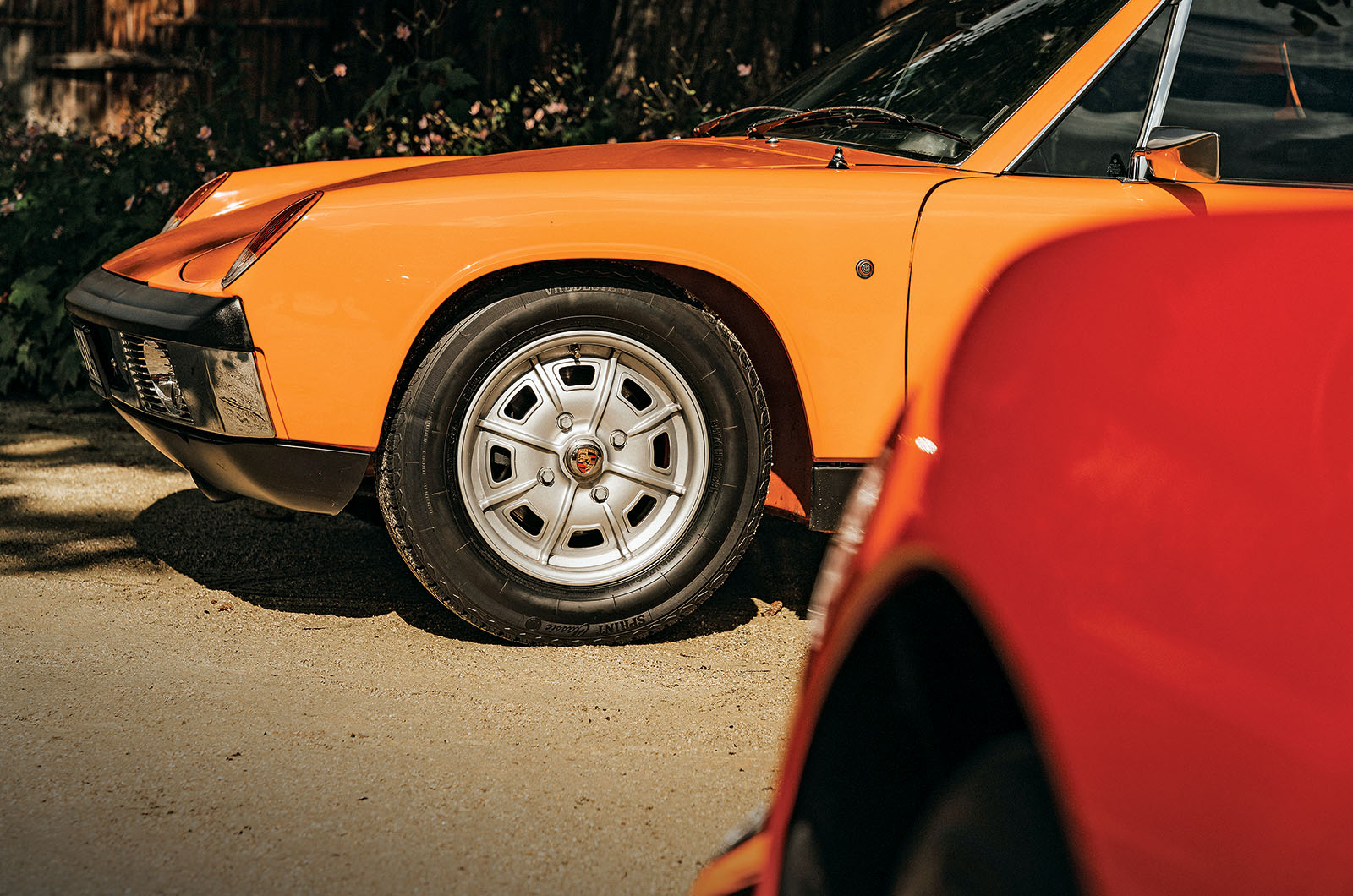
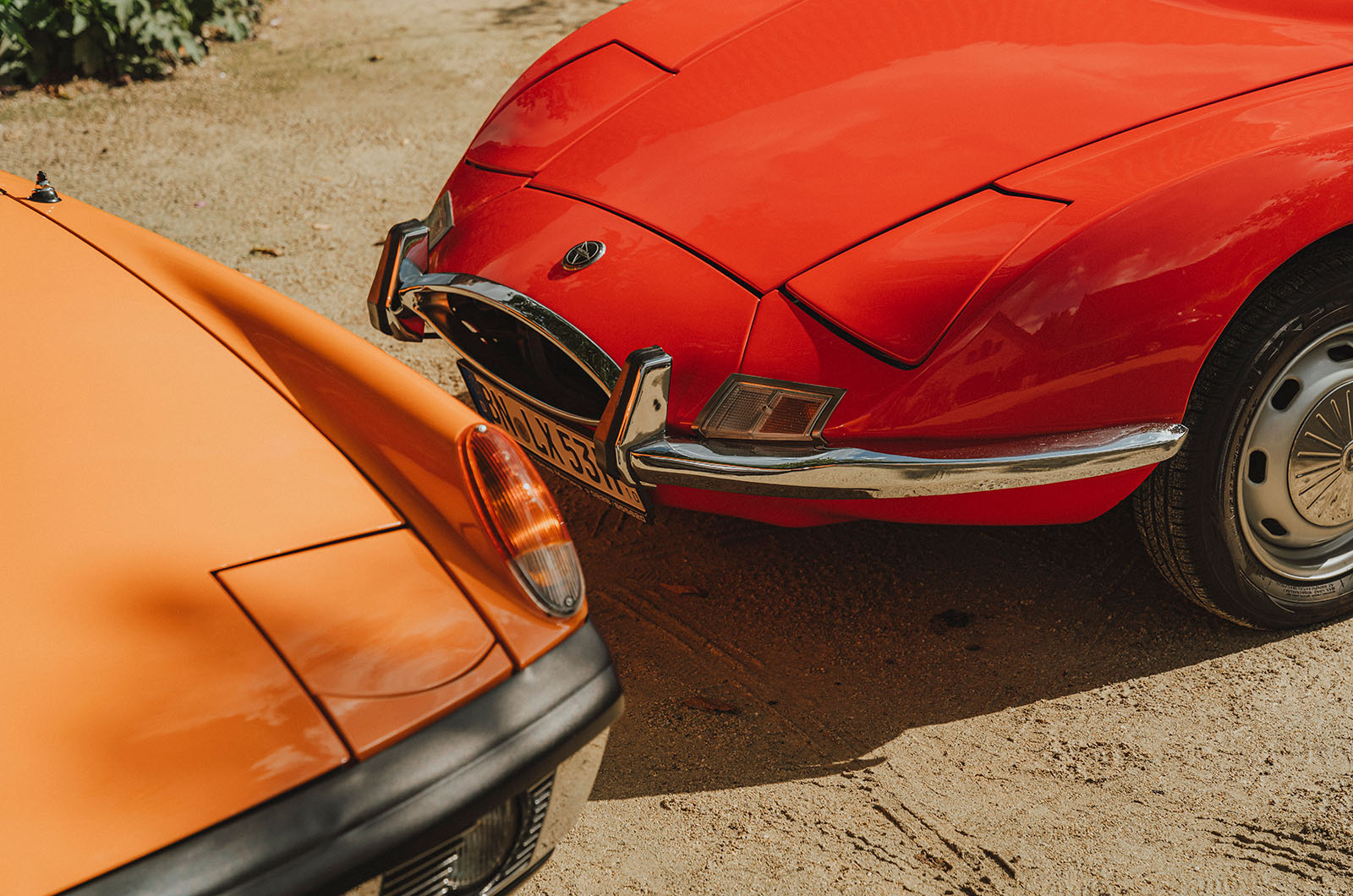
The Porsche (closest) and Matra’s pop-up headlights have emotive charm

Many called it ugly in its time, criticising its rear end for being too short and its front for resembling a depressed catfish.

I don’t see the first point myself, but with the headlights in their raised position, it’s hard to deny the latter. As cool and as quirky as it certainly is, it is not beautiful.

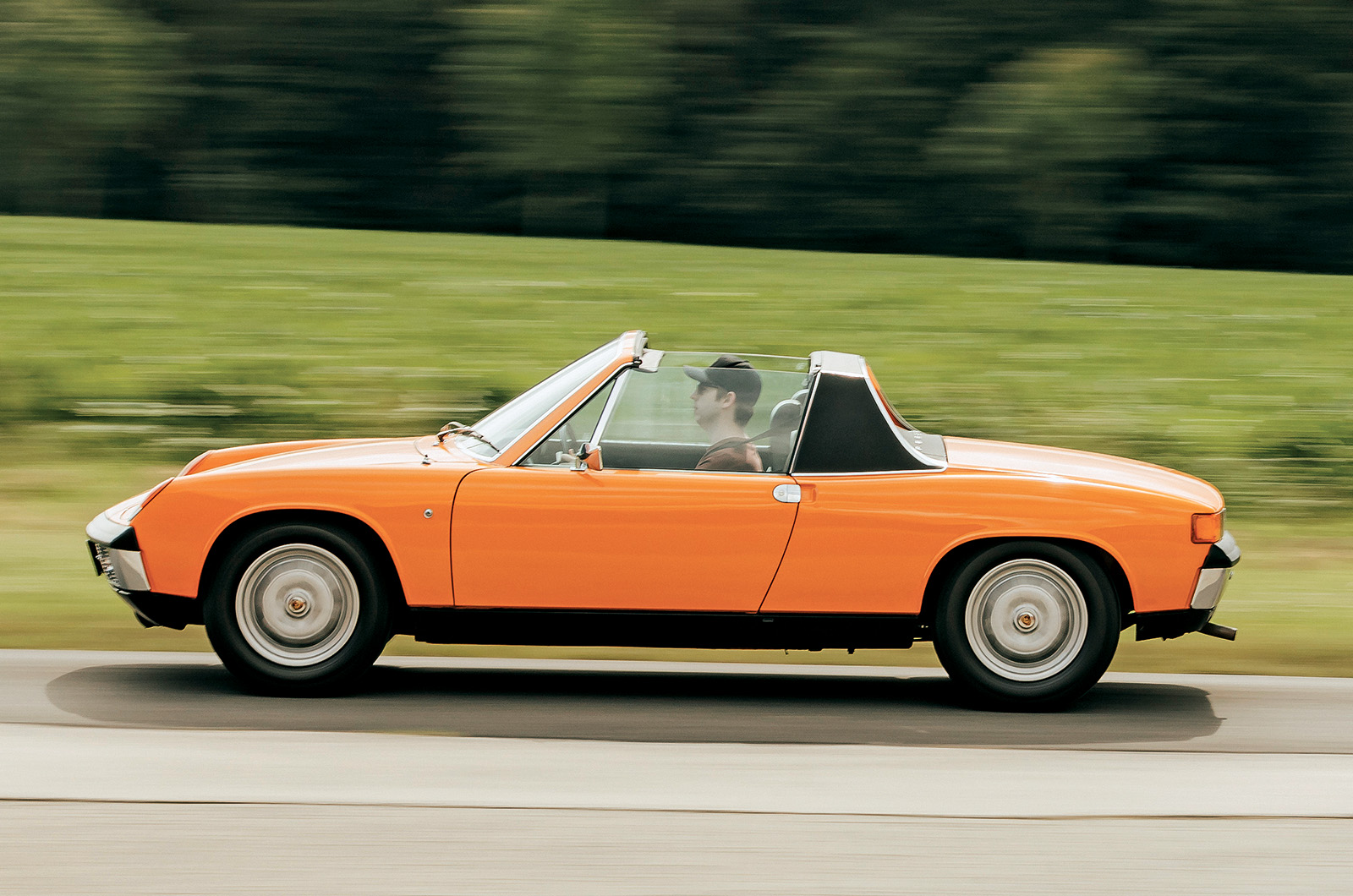
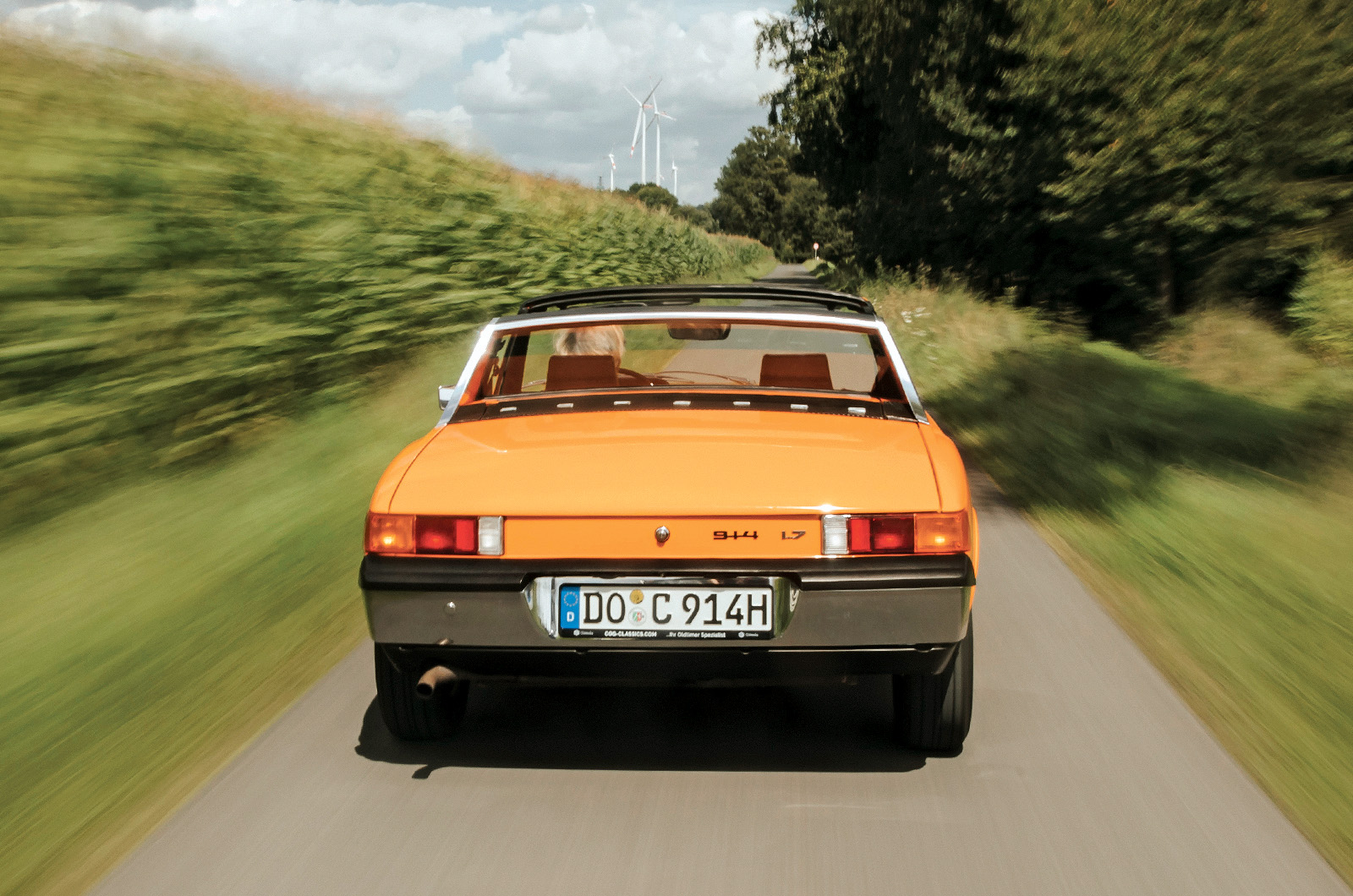
That was also one of the main criticisms levelled at Porsche’s 914. It’s interesting and smart in its detailing, but many find it a bit weird in its proportions.

It’s almost hard to tell which way it’s going from its side profile (much like a Zündapp Janus, another mid-engined 2+2 for those still playing).

Classic & Sports Car – Porsche 914 1.7 vs Matra M530 LX: anything but ordinary

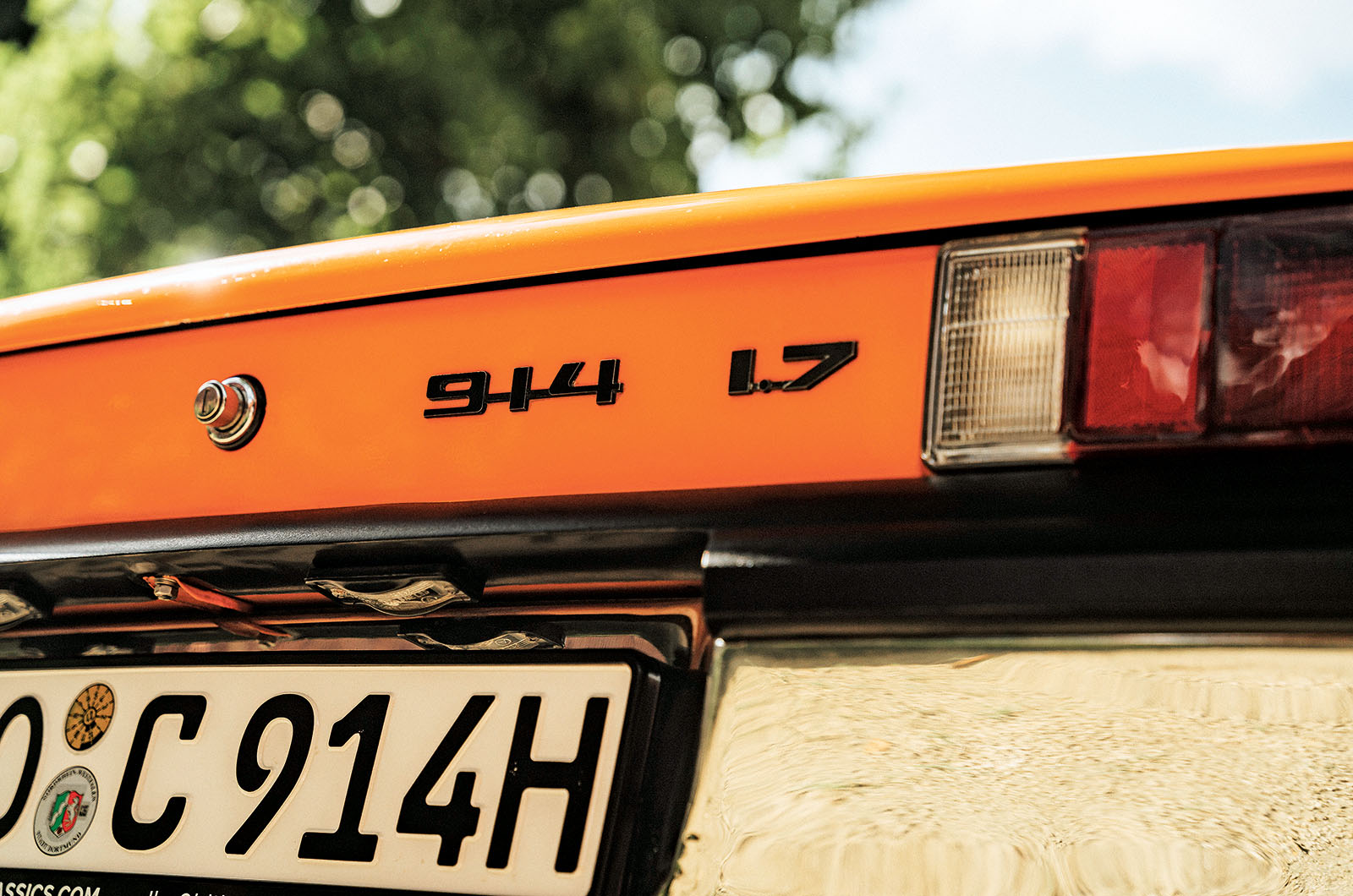
The Porsche 914 1.7’s neat engine vent

A collaboration between Porsche and Volkswagen, and even badged VW-Porsche in the USA, the model aimed to replace both the VW Karmann Ghia and the Porsche 912 in one bodyshell – one that would be made by Karmann once more.

Trailing the Matra by just one year, the 914 was the first time either Volkswagen or Porsche had moved away from a rear-engined set-up on a production car.

Porsche had been building mid-engined racing cars and prototypes for years, stretching as far back as the 1930s Auto Union Type 22, but both companies now recognised that the advanced configuration could bestow impressive handling upon a road car.

It’s an easier leap from making rear-engined cars to designing a mid-mounted one than if you had spent your entire history producing front-engined models.

Classic & Sports Car – Porsche 914 1.7 vs Matra M530 LX: anything but ordinary

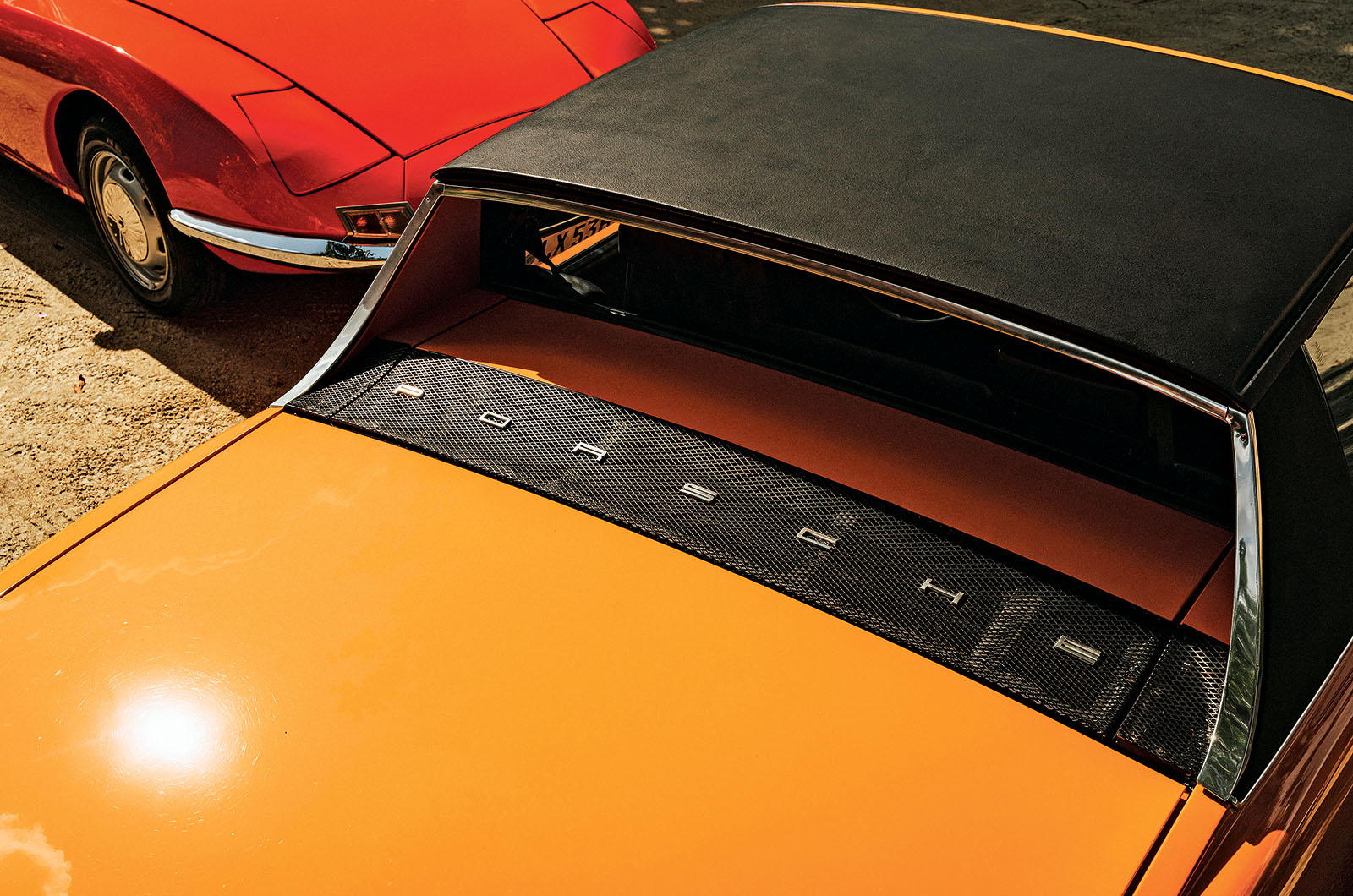
The Porsche 914 1.7’s neat lines contrast with the angular Matra

Porsche was duly efficient with the 914: a switch from torsion bars to coils at the back was all it took to adapt the 911’s basic layout for the new car.

As pioneering as the Porsche may have been, however – and unusually proportioned, too – once these two cars are together the Matra makes it look utterly tame.

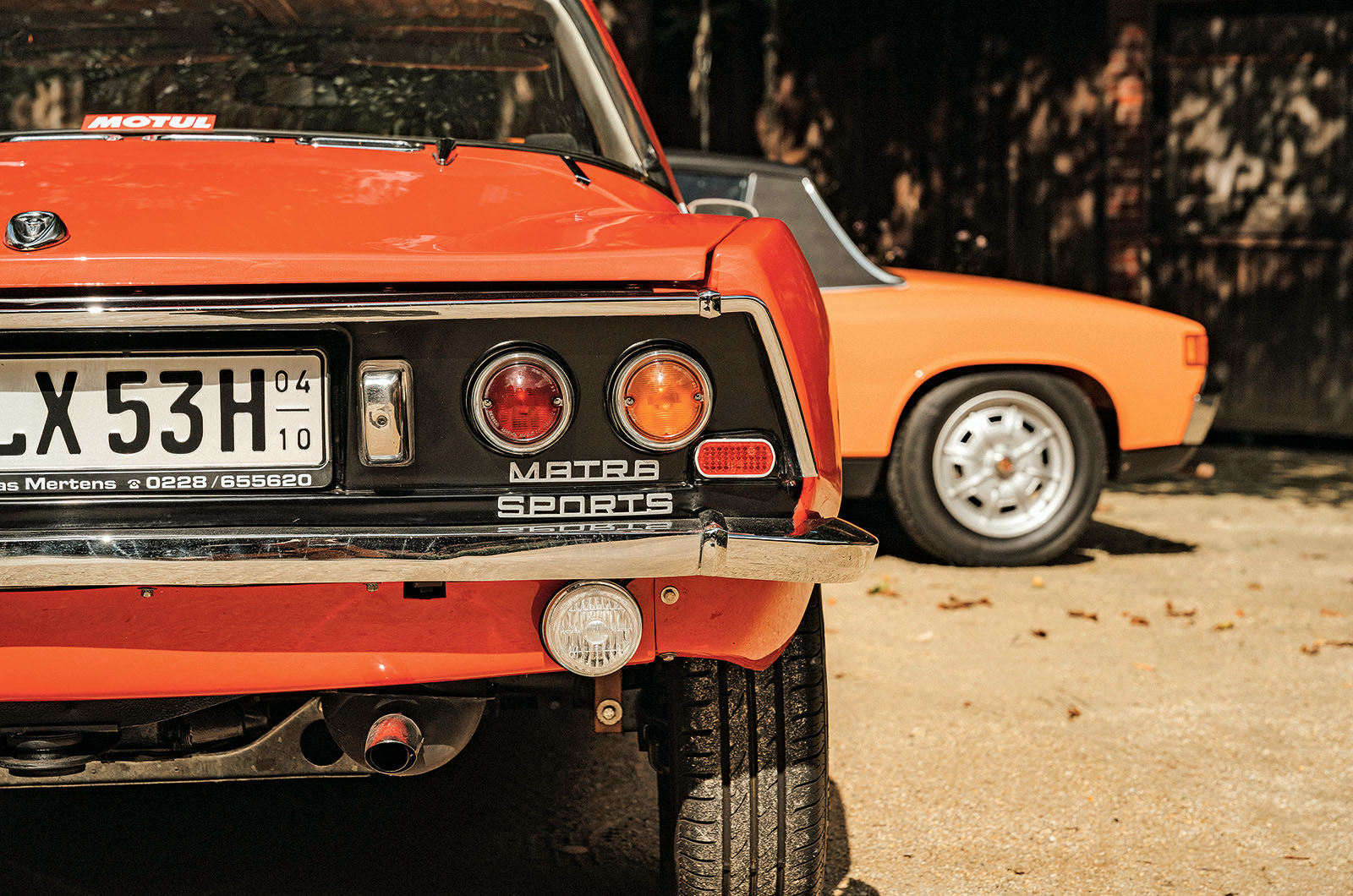
There are endless quirky details on the M530, from its separate bumpers and fussy rear panel to the chromed hinges on top of its opening rear window.

The 914 is brilliantly clean in comparison, whether it’s the integrated chrome bumpers or the cut-outs within them for the foglights.

Classic & Sports Car – Porsche 914 1.7 vs Matra M530 LX: anything but ordinary

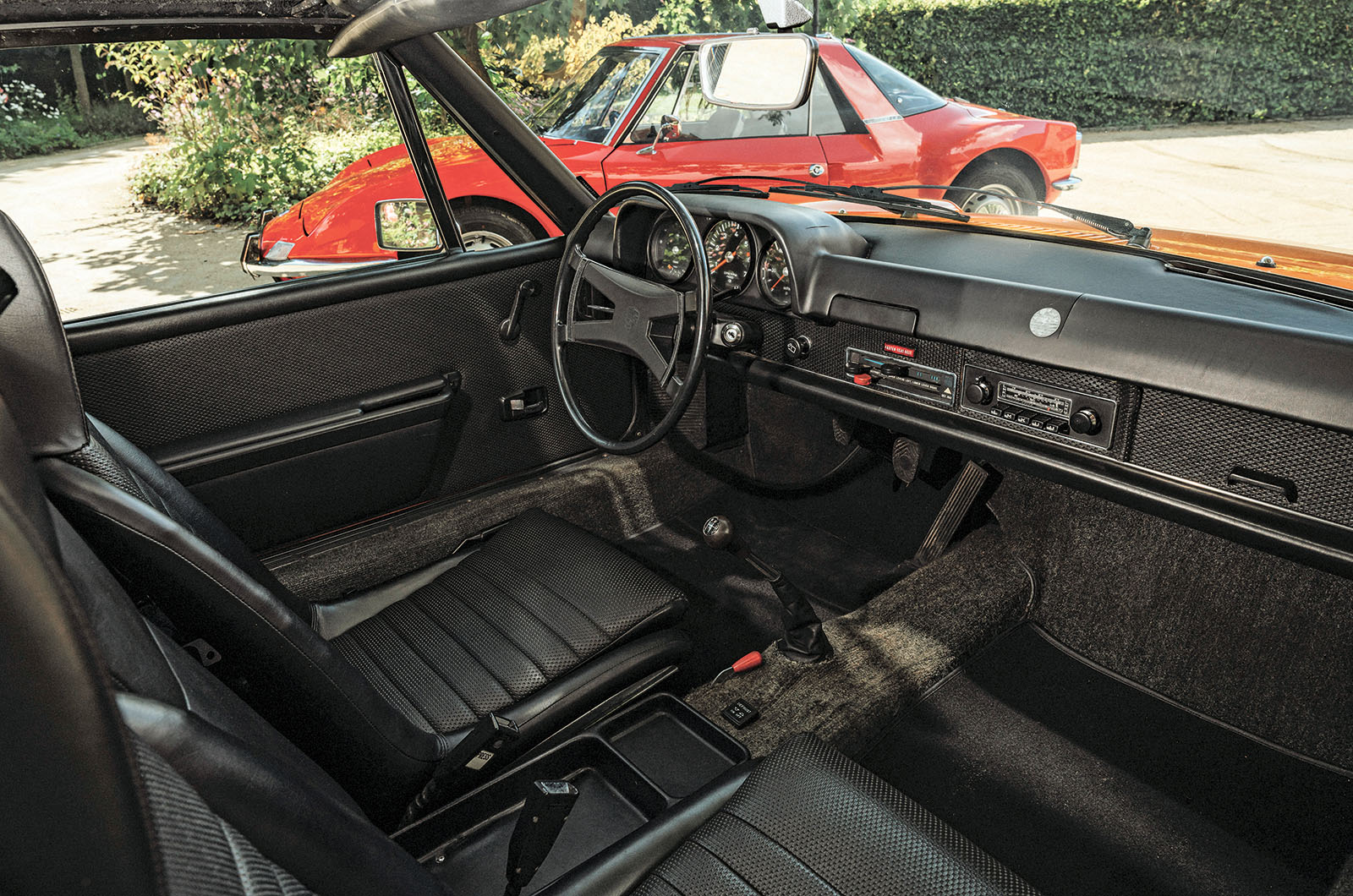
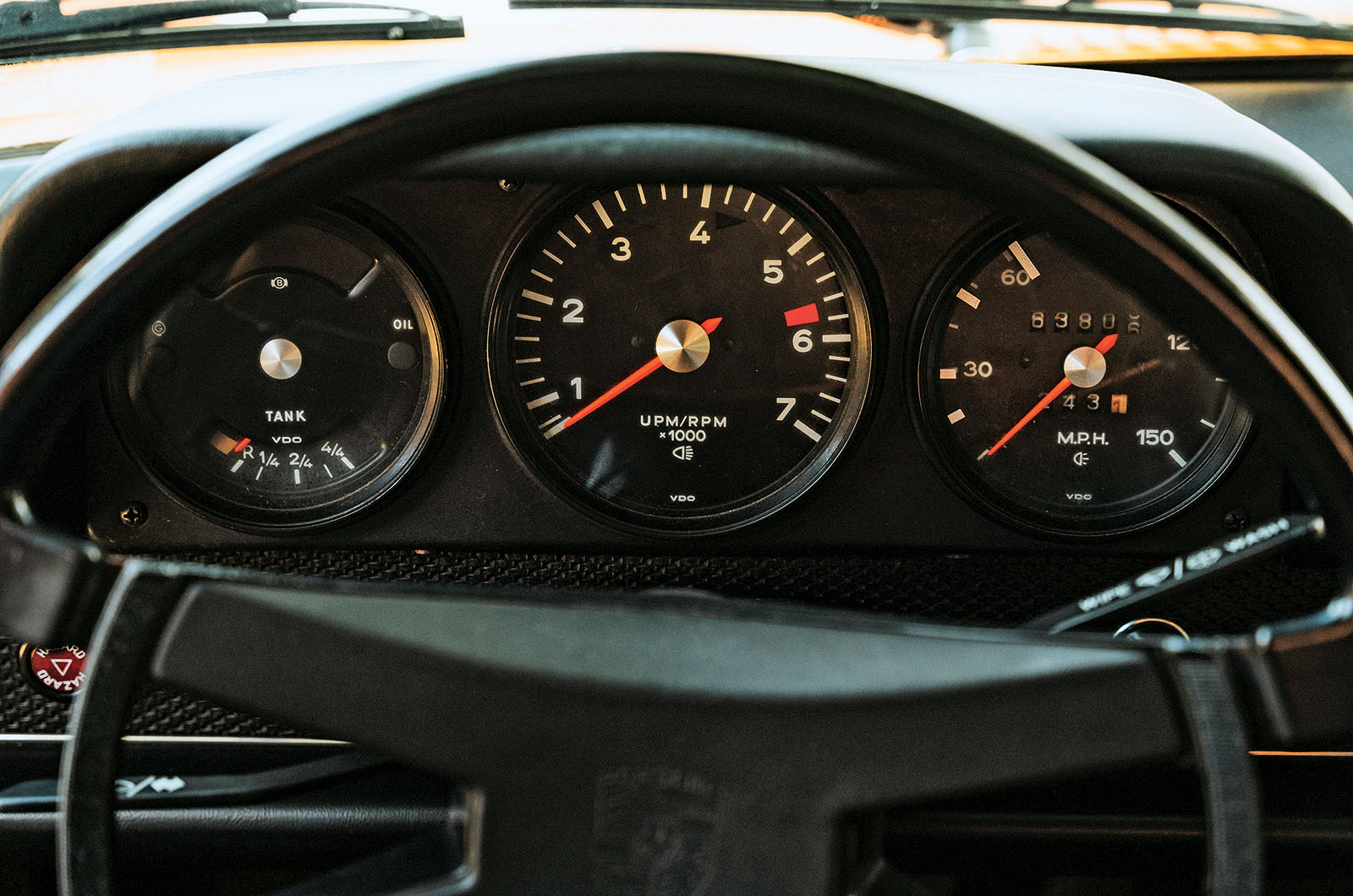
The Porsche 914 1.7 is roomy but dark inside

That continues inside. The 914’s interior is impressively wide and spacious thanks to the car’s flat floor.

Yet it is sombre, a big black hole of vinyl.

It all feels well put together, which is no surprise, but it’s not exactly expressive.

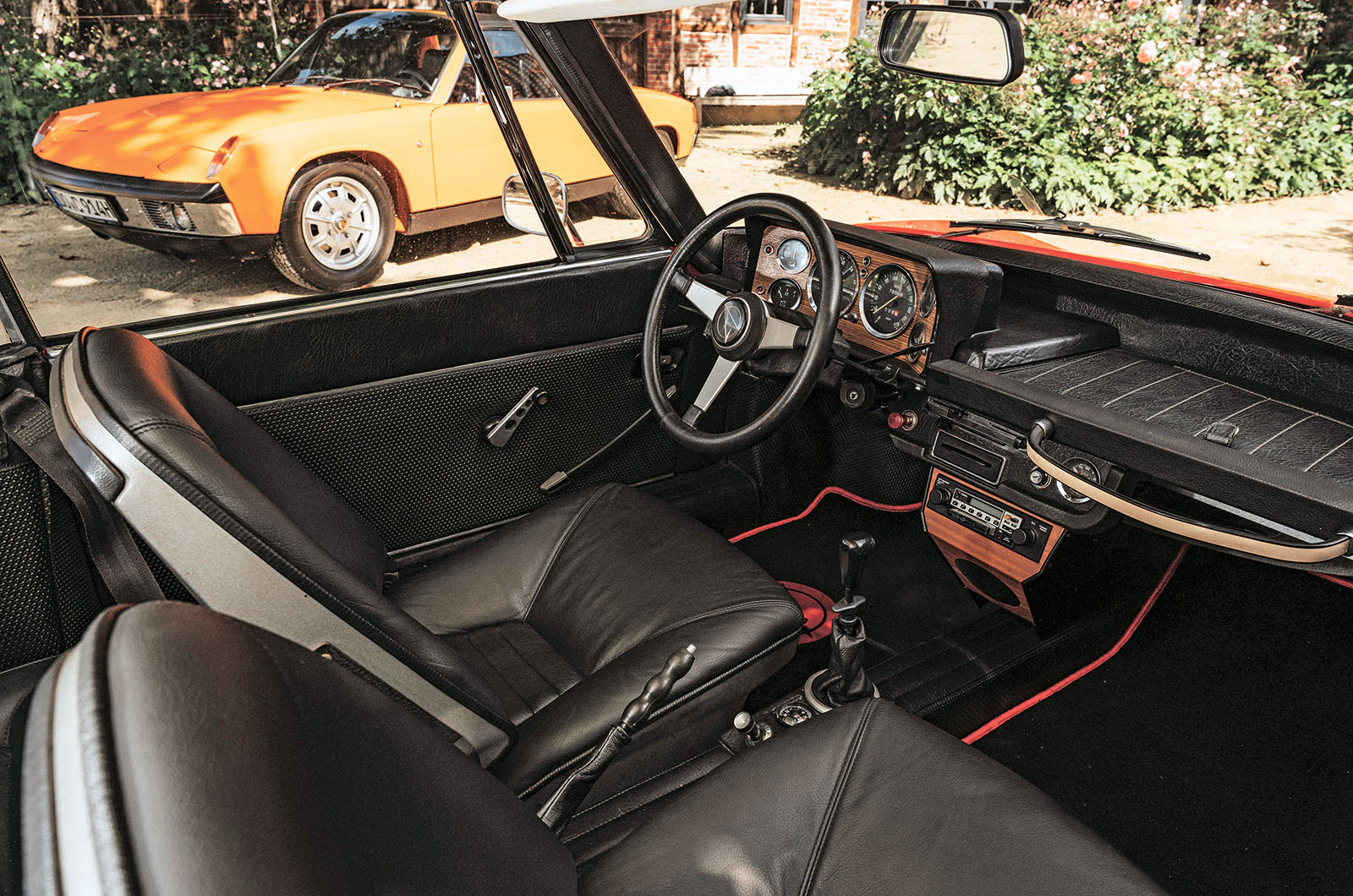
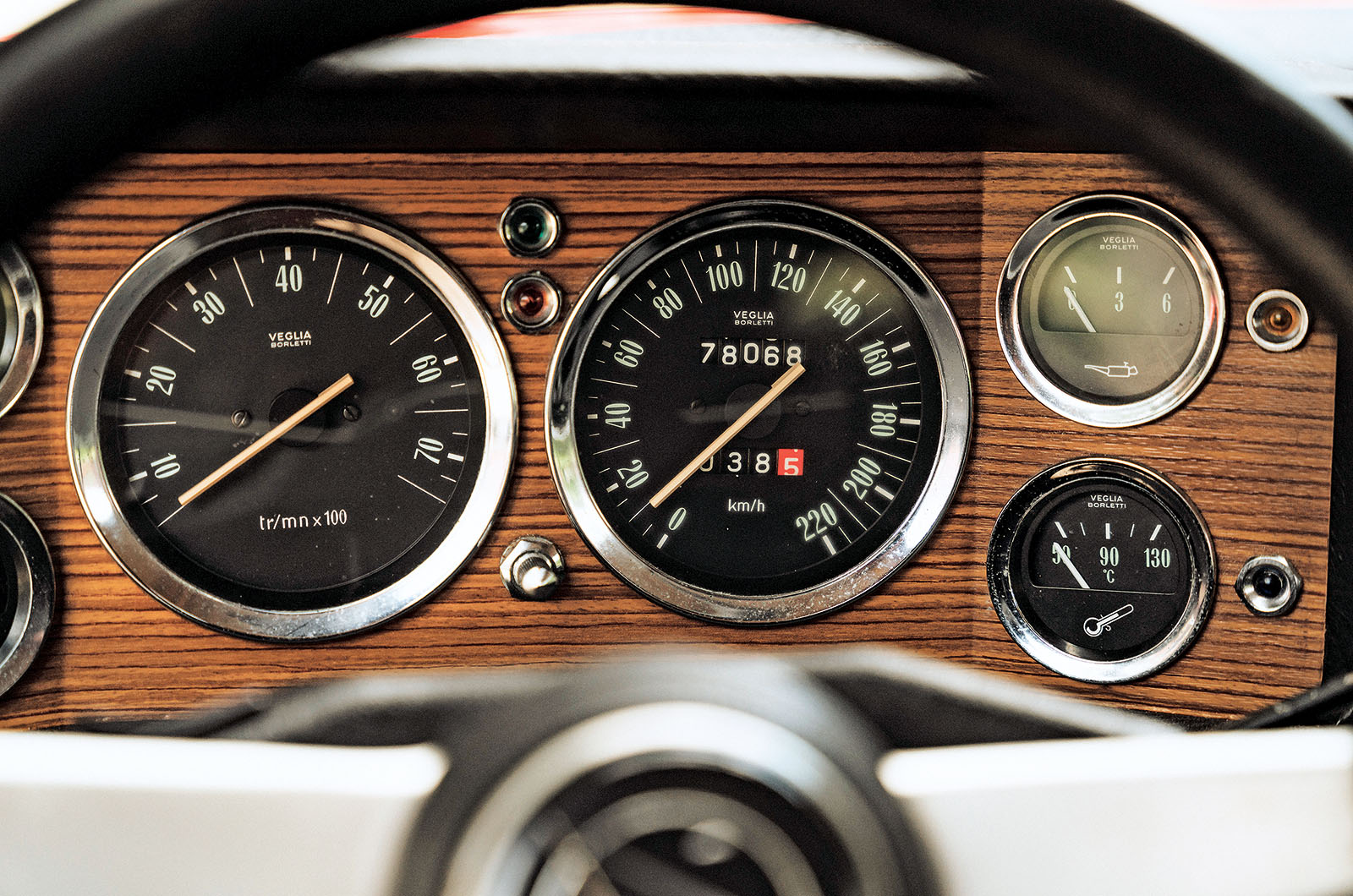
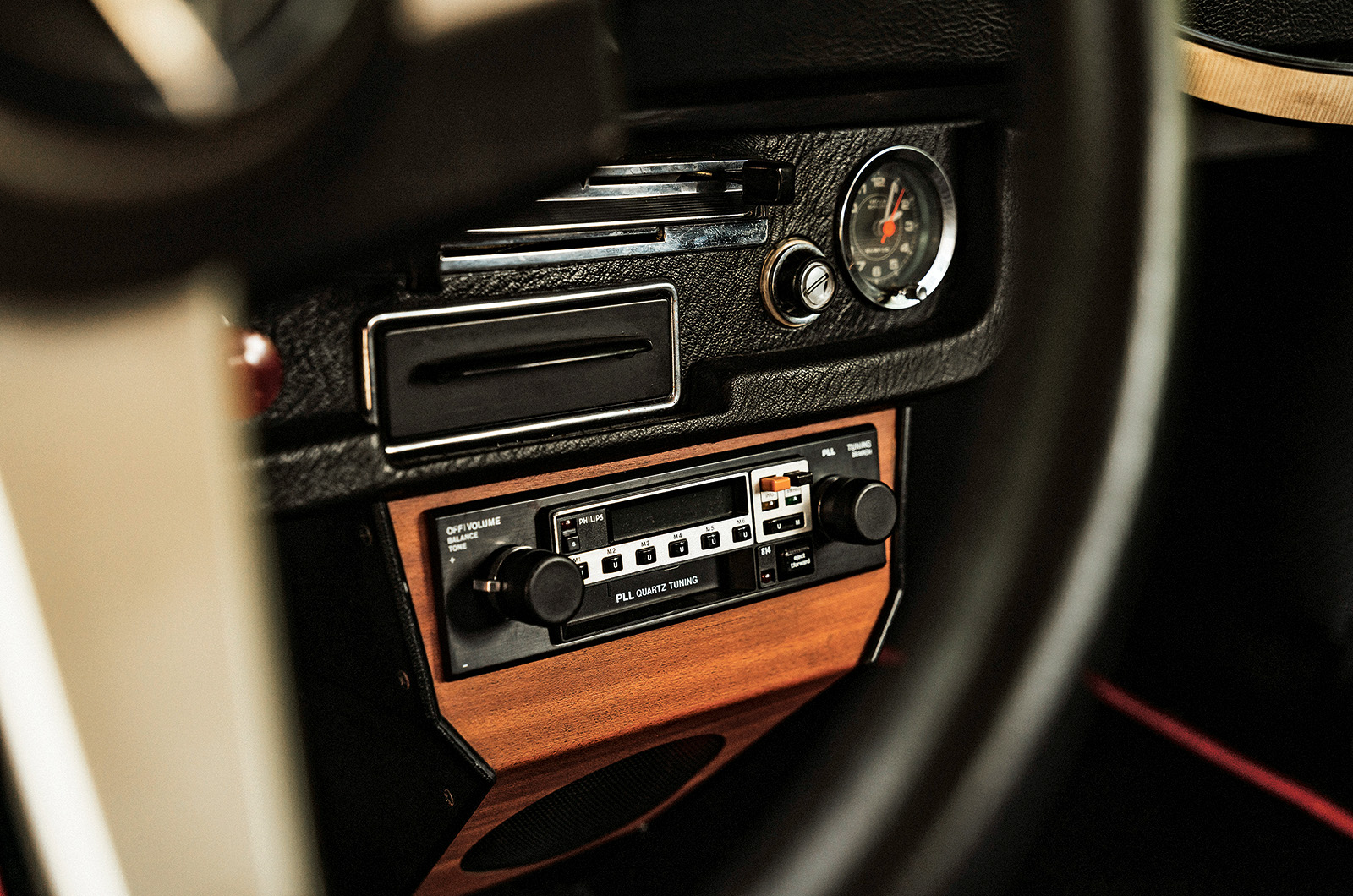
The French car is much wackier. There’s an interesting glovebox lid that closes to form a shelf across the Matra’s dashboard, but in contrast the wood-veneered binnacle is stocked with very traditionally designed instruments and appears completely at odds with the avant-garde exterior.

Classic & Sports Car – Porsche 914 1.7 vs Matra M530 LX: anything but ordinary

The Matra M530 LX lacks rigidity with its roof panels removed

Then there’s the baffling arrangement of the M530’s ancillary controls.

Nothing demonstrates this – or French automotive eccentricity more generally – better than the process for raising and lowering the headlights.

You pull down an unmarked stalk coming off the steering column to raise the lights – so far, so normal.

But pulling it again, in any direction, does nothing. Instead, to lower the lights you depress a hidden fourth pedal, which is high up under the dash, further to the left than the clutch.

Classic & Sports Car – Porsche 914 1.7 vs Matra M530 LX: anything but ordinary

The Matra M530 LX’s driving position has a saloon-car feel to it

It’s not a manoeuvre for those lacking mobility in their hips, although it is exactly the sort of peculiarity you would hope for in a car that looks the way the Matra does.

There’s further strangeness when you try to get into the engine bay. It doesn’t take long to notice the upside-down baking tray wrapped in vinyl sitting on the parcel shelf.

To get to that with any meaningful access, however, you have to unclip two fasteners, on either corner of the inside of the rear window, lift it from the outside, prop it open and then undo the two clips on the engine cover.

There’s enough space for servicing, but I wouldn’t want to have to replace an alternator through there.

Classic & Sports Car – Porsche 914 1.7 vs Matra M530 LX: anything but ordinary

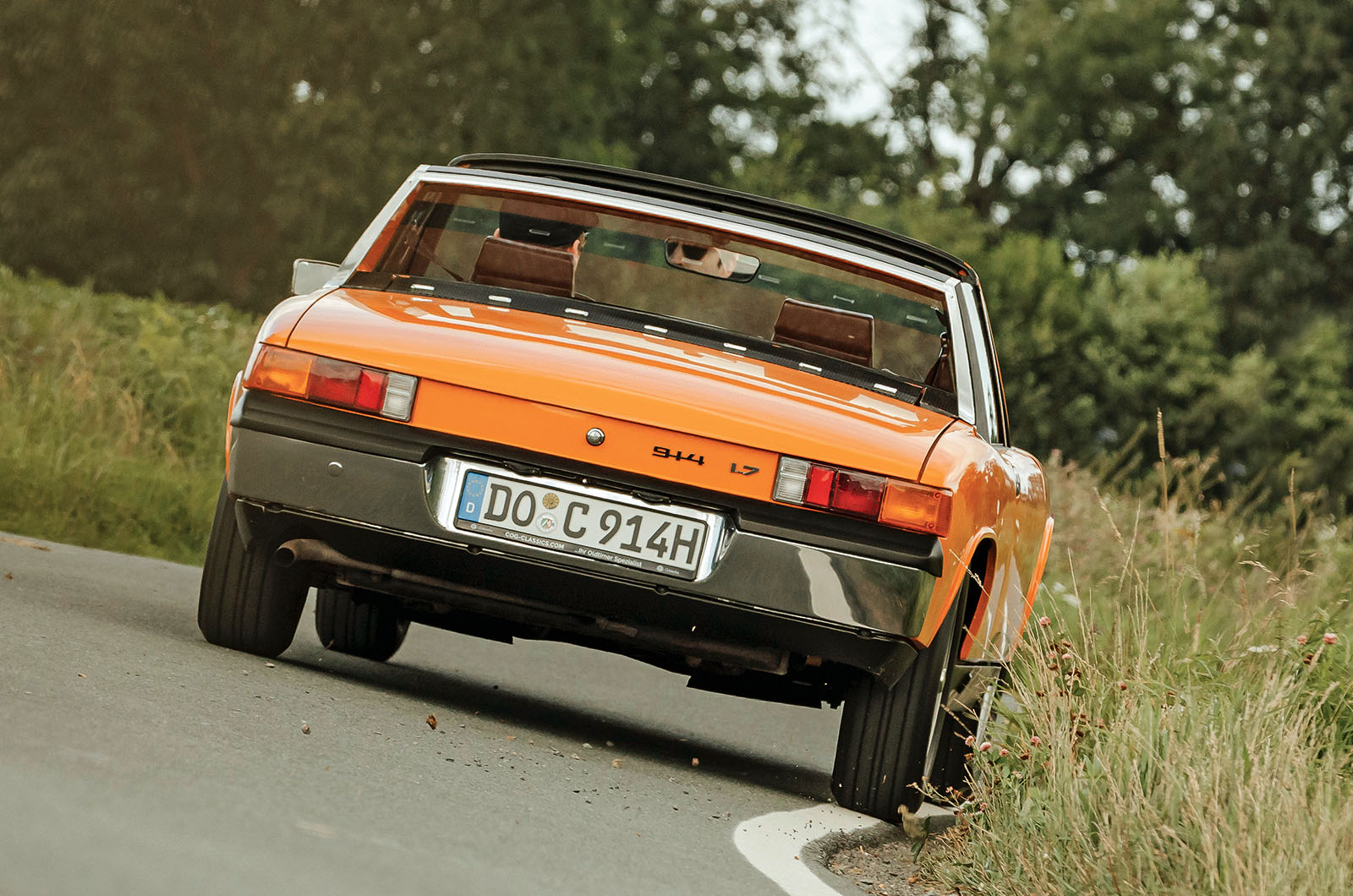
The Porsche 914 1.7 inspires confidence, especially in faster turns (left); roof stores easily

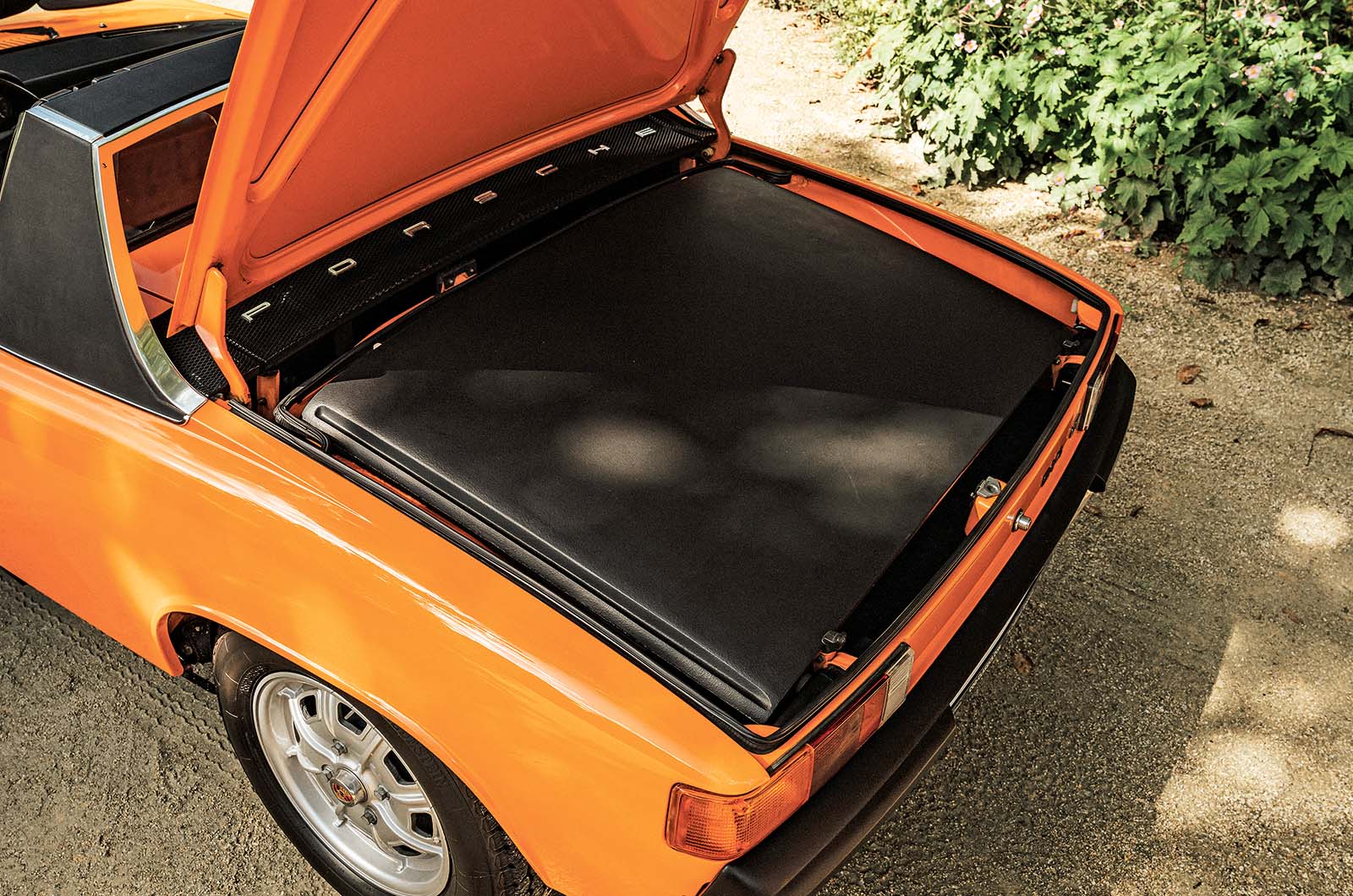
The Porsche, predictably, is much more sensible when it comes to such things, although engine access is only slightly better despite the absence of back seats.

Hatches open how you expect them to, and even the roof is simpler, coming off in one piece and stowing in the rear boot, as opposed to the Matra’s two-piece item.

Once you start driving, however, the 914 does reveal idiosyncrasies of its own.

Porsche wasn’t a company known for making great gearboxes in its early days, and the dogleg five-speeder here requires practice to use it efficiently.

Classic & Sports Car – Porsche 914 1.7 vs Matra M530 LX: anything but ordinary

The Matra M530 LX’s wheelbase looks out of proportion (left); the Matra’s two-piece roof

The neutral point appears to be between fourth and fifth, not second and third as you might expect, which makes an accidental change into fifth a very easy thing to do.

It’s only after an hour or so at the wheel that I’m reliably getting the gear I want at any given moment, and the occasional mistake when trying to navigate to third is persistent.

Slightly offset pedals that hinge from the floor, in typical Porsche fashion, take time to get comfortable with, too.

Once all of this is negotiated, however, the 914 surpasses its unkind reputation.

Classic & Sports Car – Porsche 914 1.7 vs Matra M530 LX: anything but ordinary

The Porsche 914 1.7’s steering wheel is on the large side

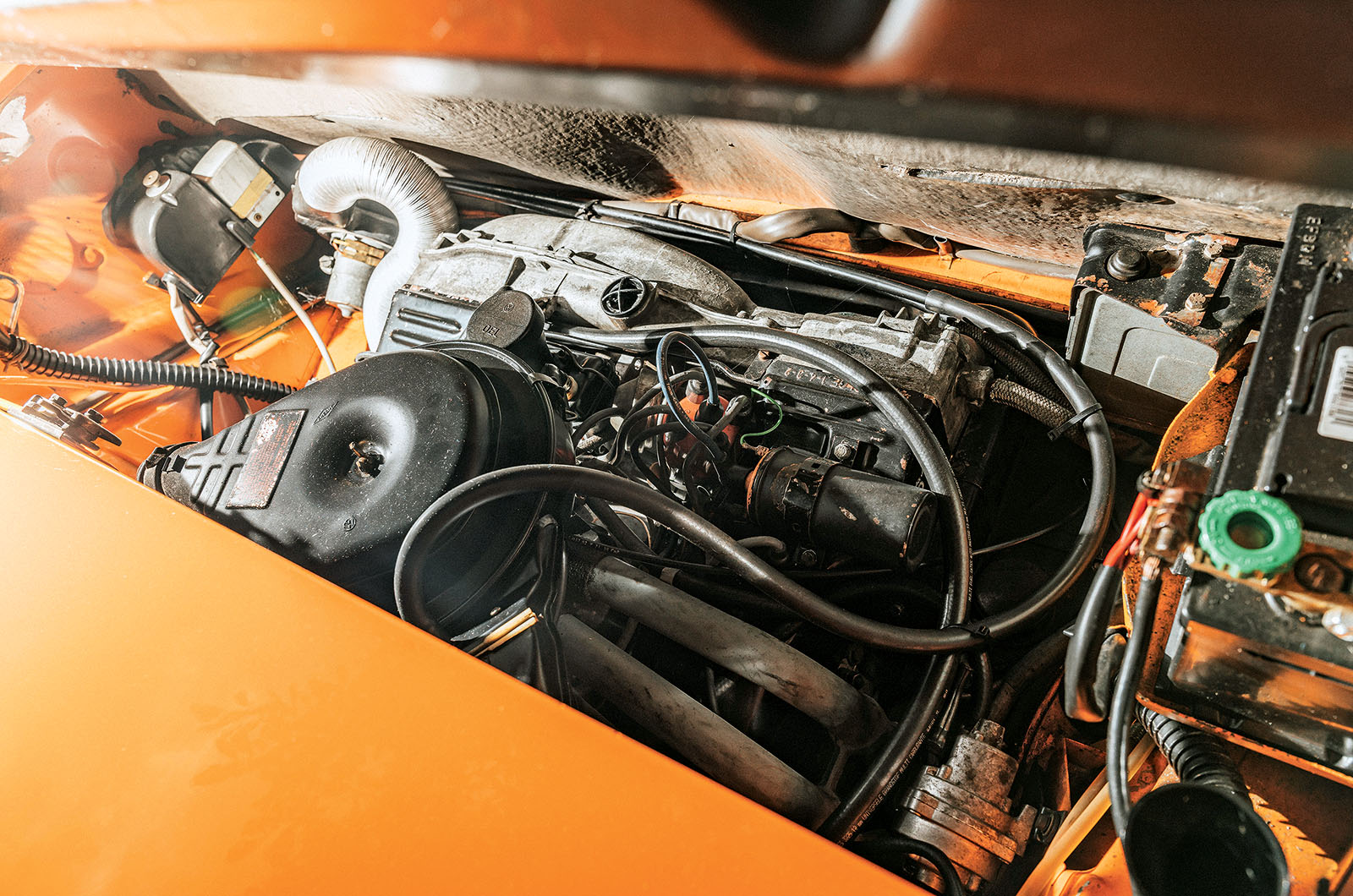
I’m surprised by just how strong this ’72 VW’s engine feels – a fuel-injected 1.7-litre nicked from the 411.

It has good mid-range torque, but it’s also happy to keep revving to its redline.

Once spinning it sounds like a miniature Porsche unit with a proper howl, rather than a Beetle-like chug.

Certainly it feels faster than its 13 secs 0-60mph time suggests.

Classic & Sports Car – Porsche 914 1.7 vs Matra M530 LX: anything but ordinary

‘The Porsche is firm, solid and predictable in the same high-speed corners that made the Matra feel uneasy’

The low driving position no doubt exaggerates the acceleration, while short gearing in first and second gives a zesty in-gear feel but actually steals time on 0-60mph tests due to the extra gearchanges, especially considering the difficulty selecting third.

On tight, twisty roads where a budget sports car should thrive, it doesn’t feel desperate for power.

The later, 100bhp 2-litre 914 would be an improvement, for sure, but you shouldn’t avoid a nice 1.7.

Classic & Sports Car – Porsche 914 1.7 vs Matra M530 LX: anything but ordinary

The Matra’s abrupt tail is shorter than the Porsche’s

This particular Matra is a 1970 M530 LX, reflecting an update that year which brought a glass (rather than Perspex) rear window and a twin-choke Solex carb boosting power by a heady 5bhp.

That said, the Taunus V4 is still very much of the mid-century Ford mould: noisy valvegear makes high revs feel highly unsympathetic, but it offers real punch from very low revs.

It feels keener off the line than the 914 as a result, while its transmission is simple to use.

Only the pedals compromise the experience, a bit offset to the centre of the car and very tightly packed together – so tight against the steering column, in fact, that you can feel it rotating between your feet.

Classic & Sports Car – Porsche 914 1.7 vs Matra M530 LX: anything but ordinary

The Matra’s dials (left); veneer lifts the mood

That torquey engine, the better vision and quicker steering make the Matra the more agile of the pair at low speeds.

Its much more saloon-car-like driving position means it’s easy to get into and out of, and you’d pick the French car for trips around town dispatching errands every time.

A fast, open route reveals its flaws, however. With the roof panels removed, the lack of rigidity is unpleasant, with not only significant scuttle shake but also the front wings wobbling around.

Each bump in the road sends a rattle through the whole car, despite moderately soft springs, and it rolls more than you’d expect from a sports car as a result.

Classic & Sports Car – Porsche 914 1.7 vs Matra M530 LX: anything but ordinary

The Porsche 914 1.7 has 15in wheels; the Matra rides on 14in items

The Porsche, meanwhile, is firm, solid and predictable in the same high-speed corners that made the Matra feel uneasy.

You happily rev out every gear in the 914 and turn into each bend with greater vim than the last, pushing the speed at which the little sports car will hold on.

It keeps gripping, with none of the snappy, rear-biased quirks of a short-wheelbase 911.

It’s a beautifully balanced car and, while the steering wheel is a bit too large for my taste, the quality of the feedback is undeniable.

Every control feels sorted and the Porsche 914 makes its relatively modest 80bhp feel thrilling.

Classic & Sports Car – Porsche 914 1.7 vs Matra M530 LX: anything but ordinary

The Porsche 914 1.7’s Volkswagen 411 engine is fuel injected and makes 80bhp in 1.7-litre guise

Veteran road tester John Bolster stepped out of a Matra M530 in 1969 and stated: ‘It proves conclusively that the car of the future will be mid-engined.’

He was wrong on that occasion, and enthusiasts all over will be disappointed that the envisaged proliferation of mid-engined cars didn’t quite come to fruition.

But compare the driving experience of either a Matra M530 LX or a Porsche 914 to one of their conventional contemporaries, such as an MGB GT, and it’s easy to see why he was so excited.

For little lost practicality, here are two cars that handle with agility close to that of a go-kart.

Classic & Sports Car – Porsche 914 1.7 vs Matra M530 LX: anything but ordinary

The Matra M530 LX is agile at low speeds, but relatively softly sprung

Coming into this test, I was most excited for the Matra.

Its quirkiness draws you in, while the promise of a light, fizzing French coupé should keep you entertained.

And it is a fun car. If you live in a city, or are a more gentle driver, the Matra is the more enjoyable steer: when you’re not at ten-tenths it’s more comfortable and effervescent, and it reminds you of its eccentricity whenever you approach it – or operate those sad-eyed headlights.

Classic & Sports Car – Porsche 914 1.7 vs Matra M530 LX: anything but ordinary

The Porsche 914 2.0 was more potent, but the 1.7 is still fun

But the Porsche 914, although slightly earnest, is the one that really delivers on the open road.

Once you get over the typical mid-century Porsche peculiarities of weird pedals, a large steering wheel and an iffy gearchange, it’s a telepathic joy.

It best demonstrates the virtues of the mid-engined layout, too. Where the Matra tries to do a little too much, the 914 focuses on what a middie is good at and, as a result, is surely the best fun you can have with just 80bhp.

That’s how you bring mid-engined fun to the masses, and it’s a fact reflected by both the Porsche’s production run being more than 10 times greater than the Matra’s, and that the Stuttgart firm still builds a successor today.

Images: Max Edleston

Thanks to: COG Classics of Düsseldorf, Germany


Factfiles

Classic & Sports Car – Porsche 914 1.7 vs Matra M530 LX: anything but ordinary

Porsche 914 1.7

  • Sold/number built 1969-’76/118,978 (all)
  • Construction steel monocoque
  • Engine iron-block, alloy-heads, ohv 1679cc flat-four, Bosch fuel injection
  • Max power 80bhp @ 4900rpm
  • Max torque 109lb ft @ 2900rpm
  • Transmission five-speed manual, RWD 
  • Suspension independent, at front by struts, torsion bars rear semi-trailing arms, coil springs, telescopic dampers
  • Steering rack and pinion
  • Brakes discs, with servo
  • Length 13ft 1in (3985mm) 
  • Width 5ft 5in (1650mm) 
  • Height 4ft (1230mm)
  • Wheelbase 8ft (2450mm)
  • Weight 1982lb (899kg)
  • Mpg 26
  • 0-60mph 13 secs
  • Top speed 110mph
  • Price new £2201 (1970)
  • Price now £13-25,000*


Matra M530 LX

  • Sold/number built 1968-’73/9609
  • Construction steel platform chassis, glassfibre body
  • Engine all-iron, ohv 1699cc V4, twin-choke Solex carburettor
  • Max power 77bhp @ 5000rpm
  • Max torque 104lb ft @ 3000rpm
  • Transmission four-speed manual, RWD
  • Suspension independent, at front by unequal-length wishbones rear trailing arms; coil springs, telescopic dampers f/r
  • Steering rack and pinion
  • Brakes discs, with servo
  • Length 13ft 9in (4197mm) 
  • Width 5ft 4in (1620mm) 
  • Height 3ft 11in (1200mm)
  • Wheelbase 8ft 5in (2560mm)
  • Weight 2061lb (935kg)
  • Mpg 30
  • 0-60mph 11 secs
  • Top speed 111mph
  • Price new £2160 (1969)
  • Price now £15-35,000*

*Prices correct at date of original publication


Enjoy more of the world’s best classic car content every month when you subscribe to C&SC – get our latest deals here


READ MORE

Renault Sport Spider vs Lotus 340R: diet poke

Matra Jet: rocket science

Porsche four all: celebrating the 912E, 912 and 914