When you do reapply throttle, there’s a knack to bringing up the revs smoothly to meet the road speed.
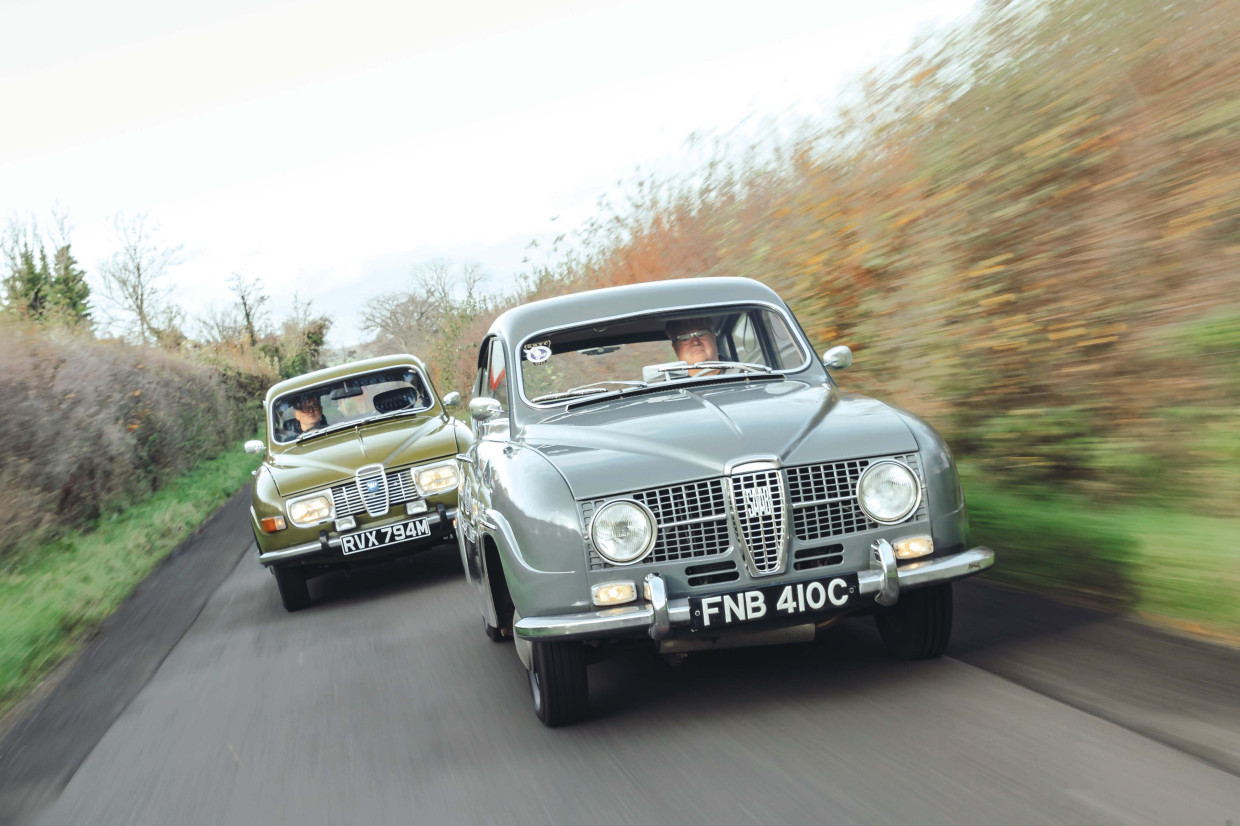
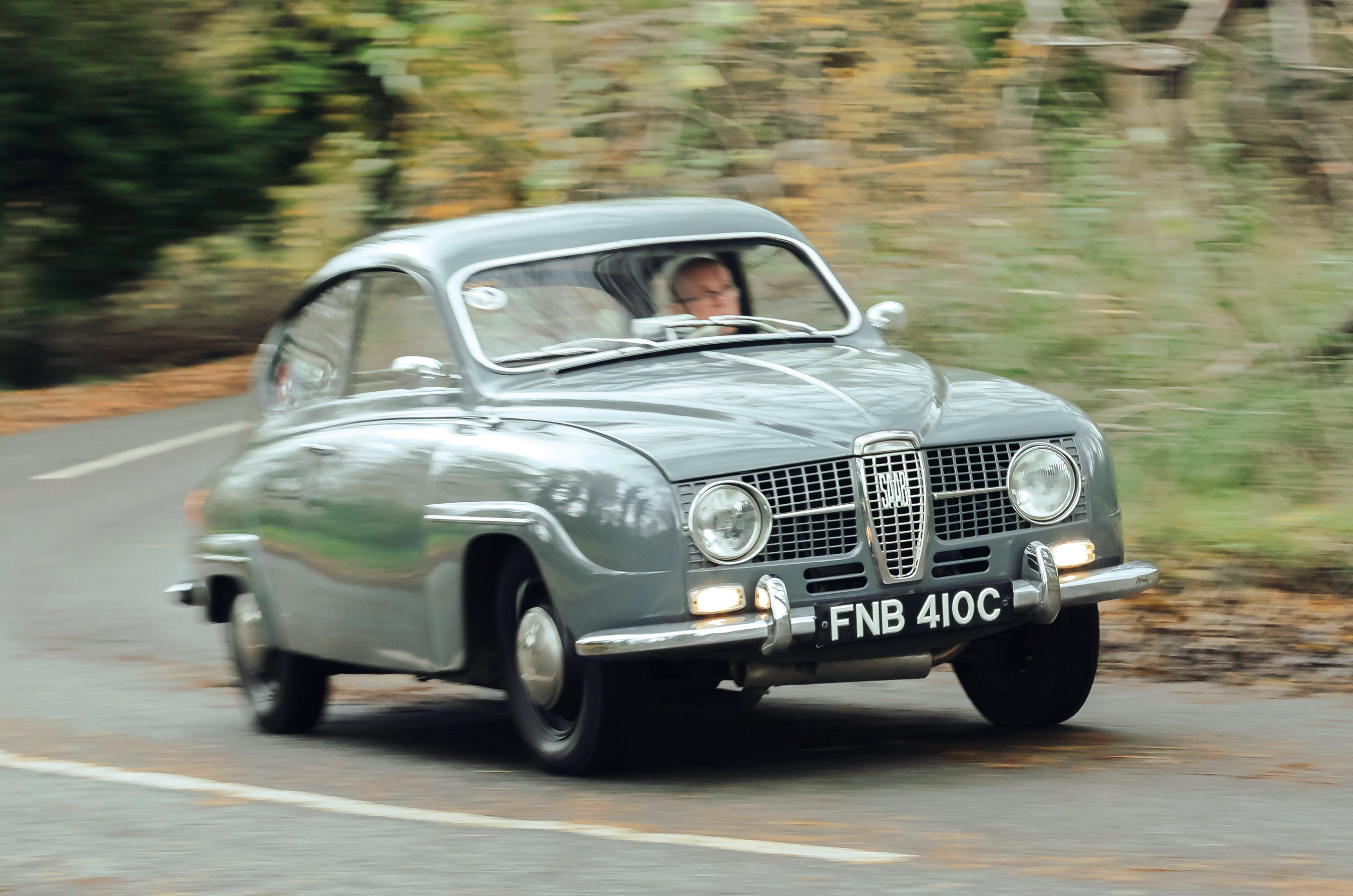
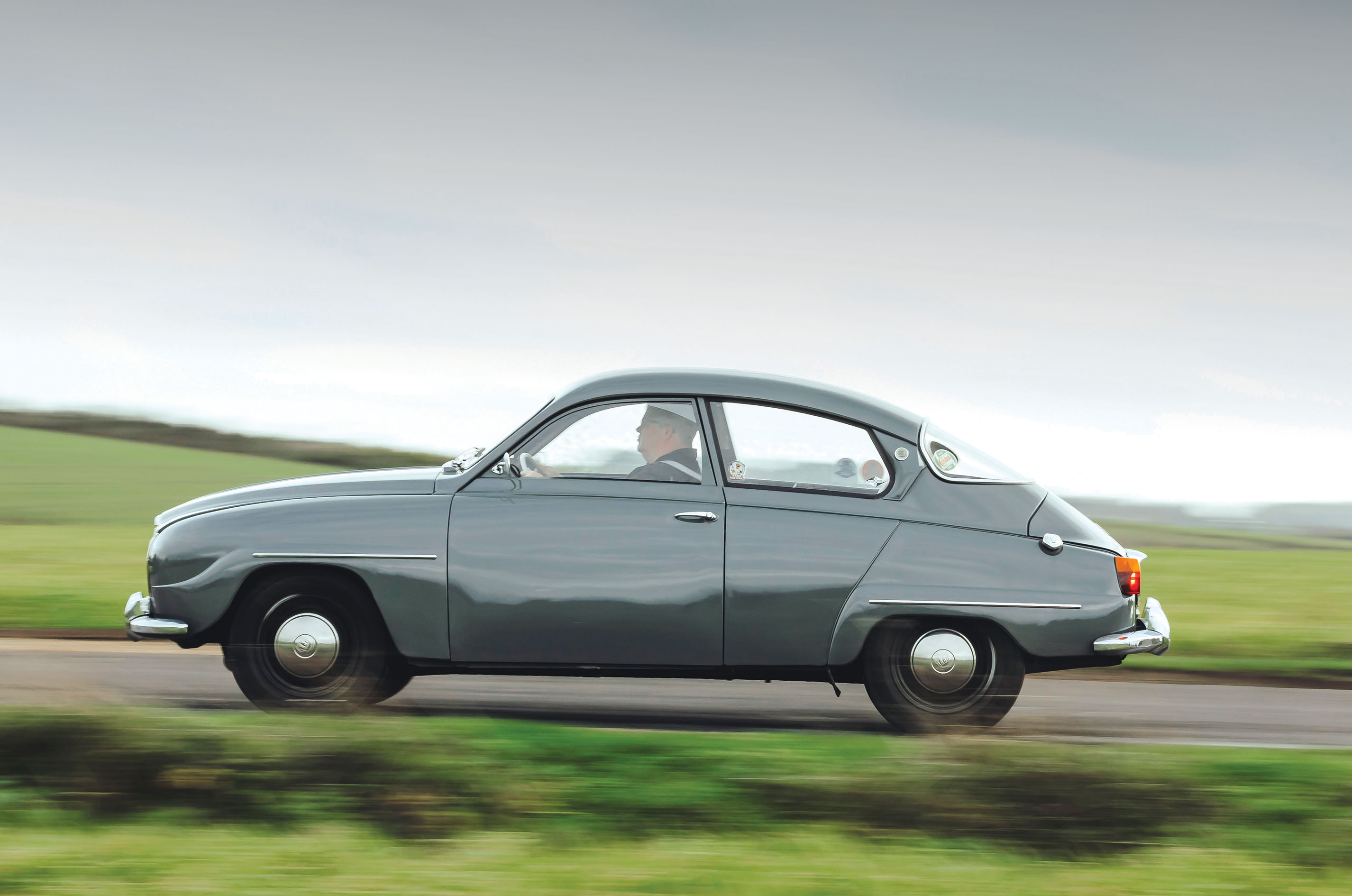
The 96 two-stroke rewards a ‘keeping up momentum’ driving style, but the engine’s frenzied wail alone has you believing you’re driving at twice your actual speed.
It all sounds very charismatic today, but in the early ’60s there were many voices at Saab’s Trollhättan base who felt four-stroke power was the future.
Despite resistance from CEO Tryggve Holm, a team led by senior engineer Rolf Mellde initiated ‘Operation Kajsa’, which tried a number of four-stroke engines in the 96, including a Lancia V4, Volvo’s B18 and Ford’s 1498cc 15M unit.
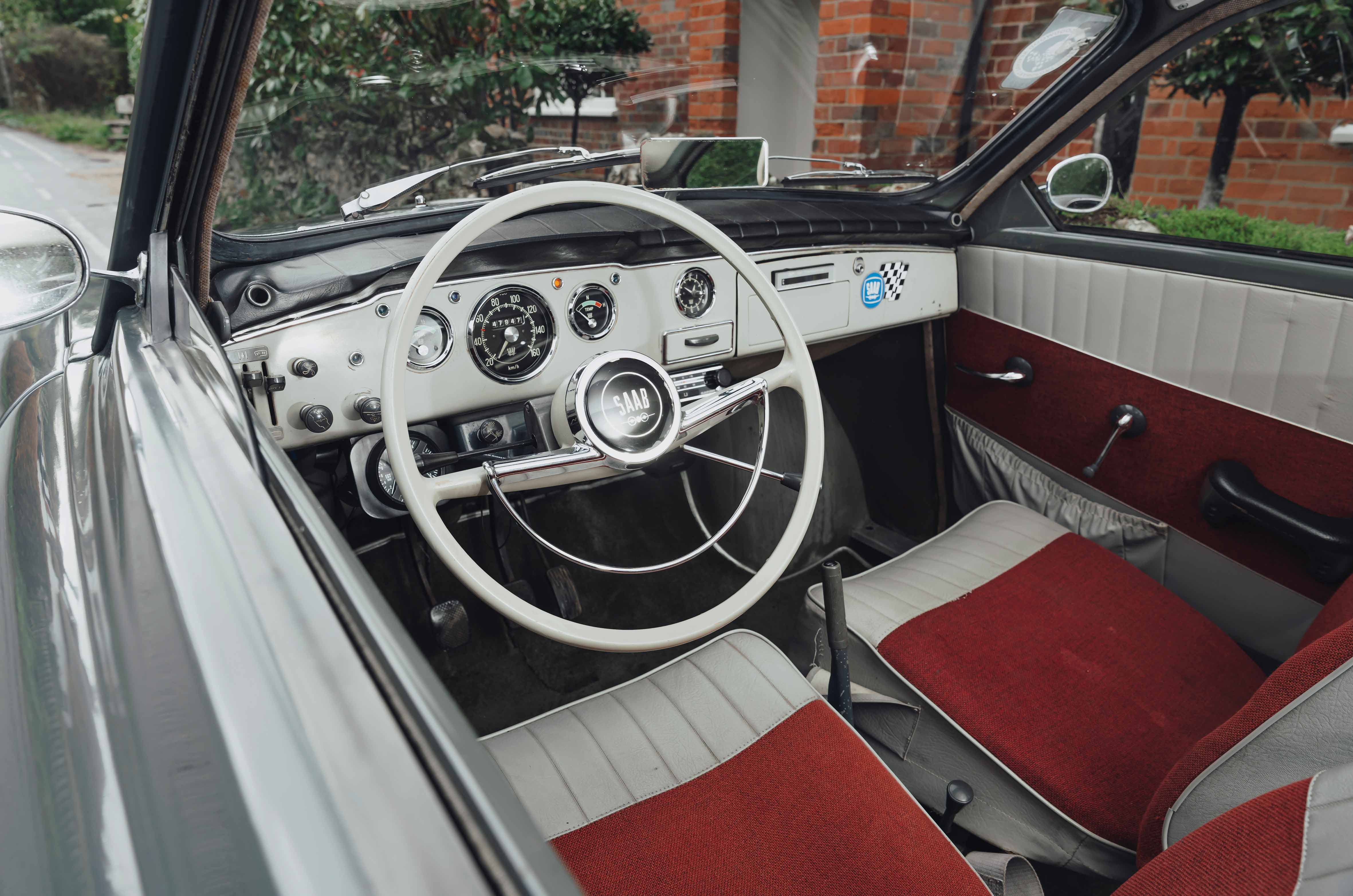
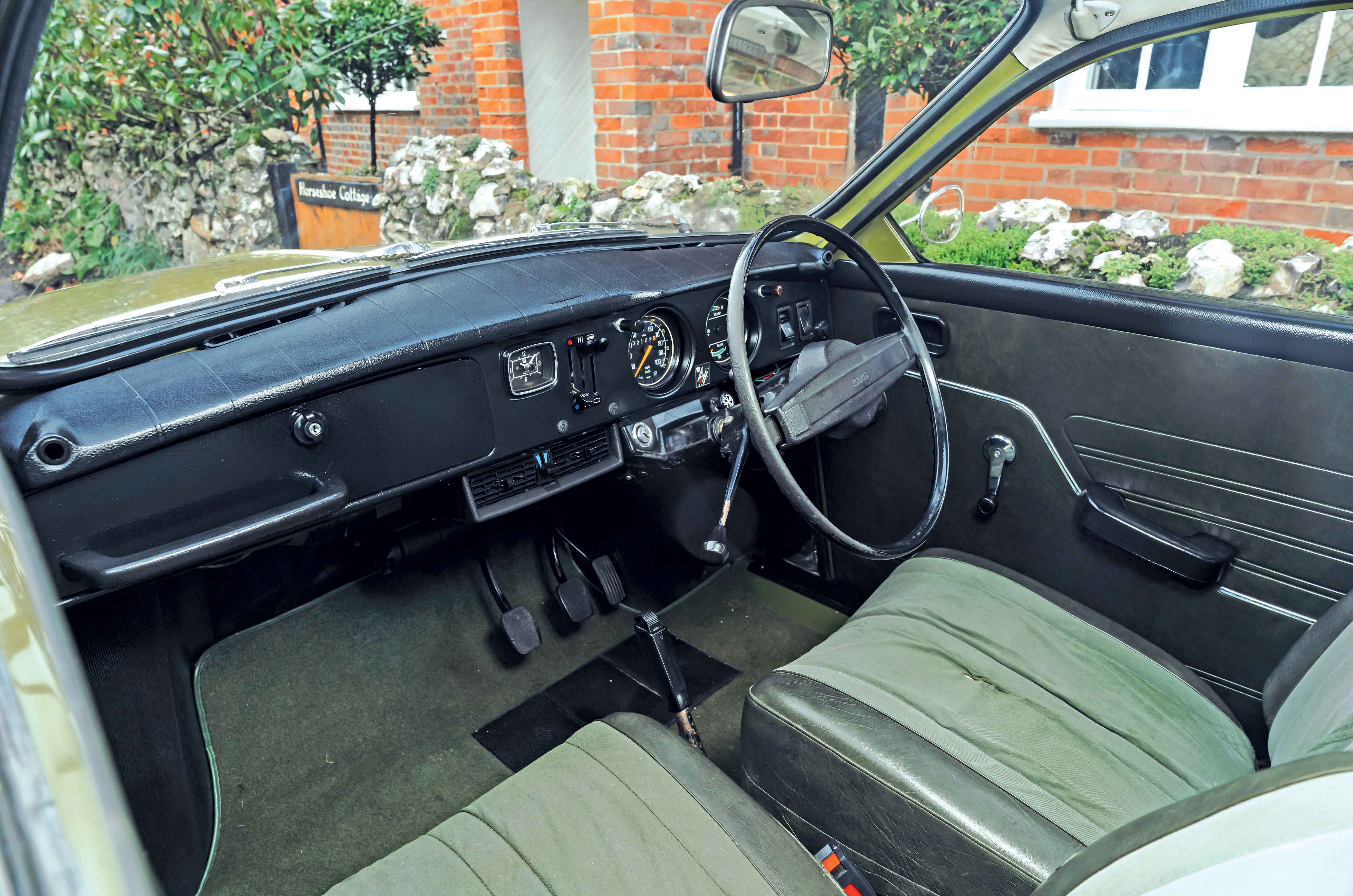
There’s a more modern feel to the 1972 Saab 96 V4’s trim
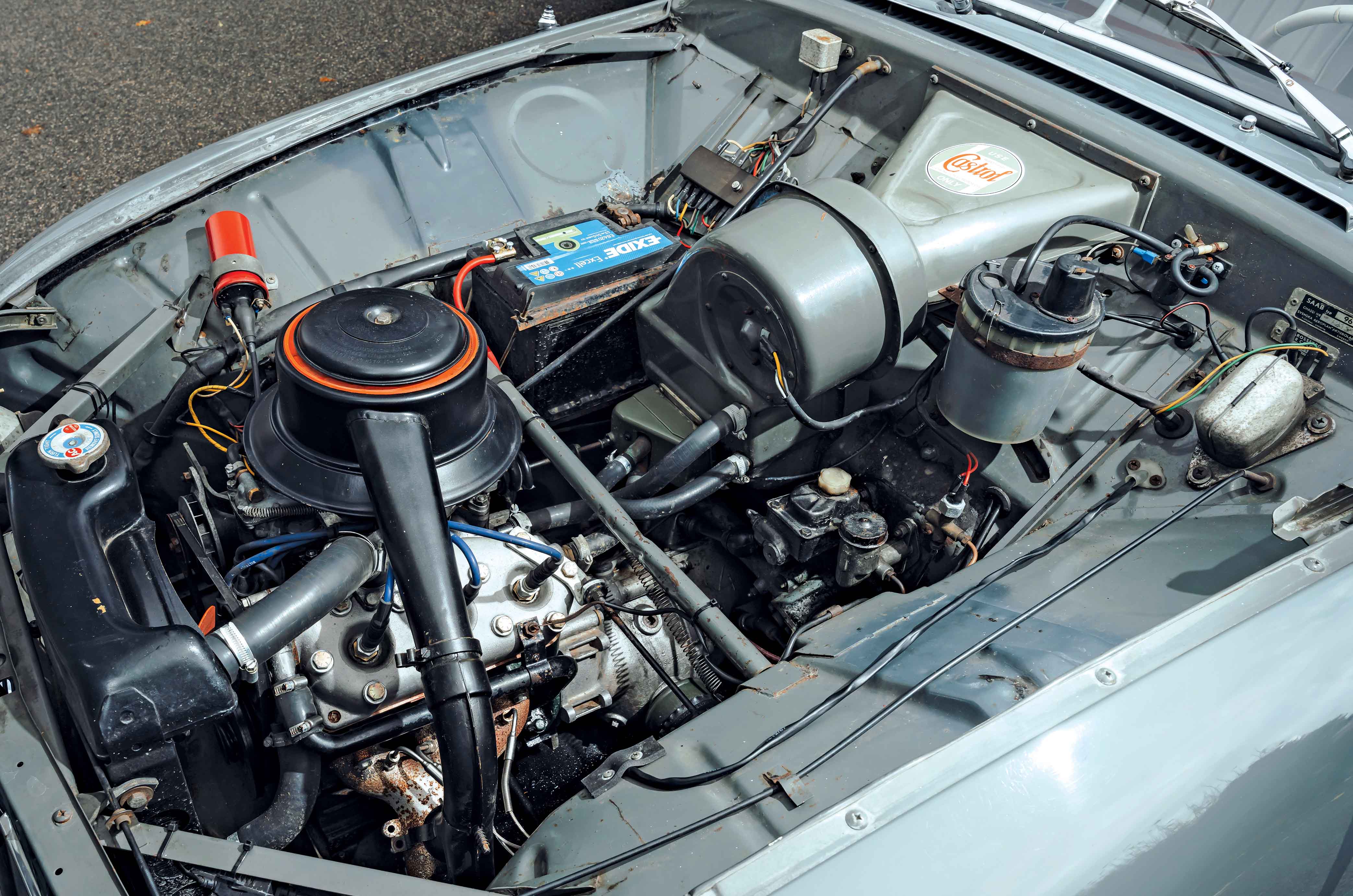
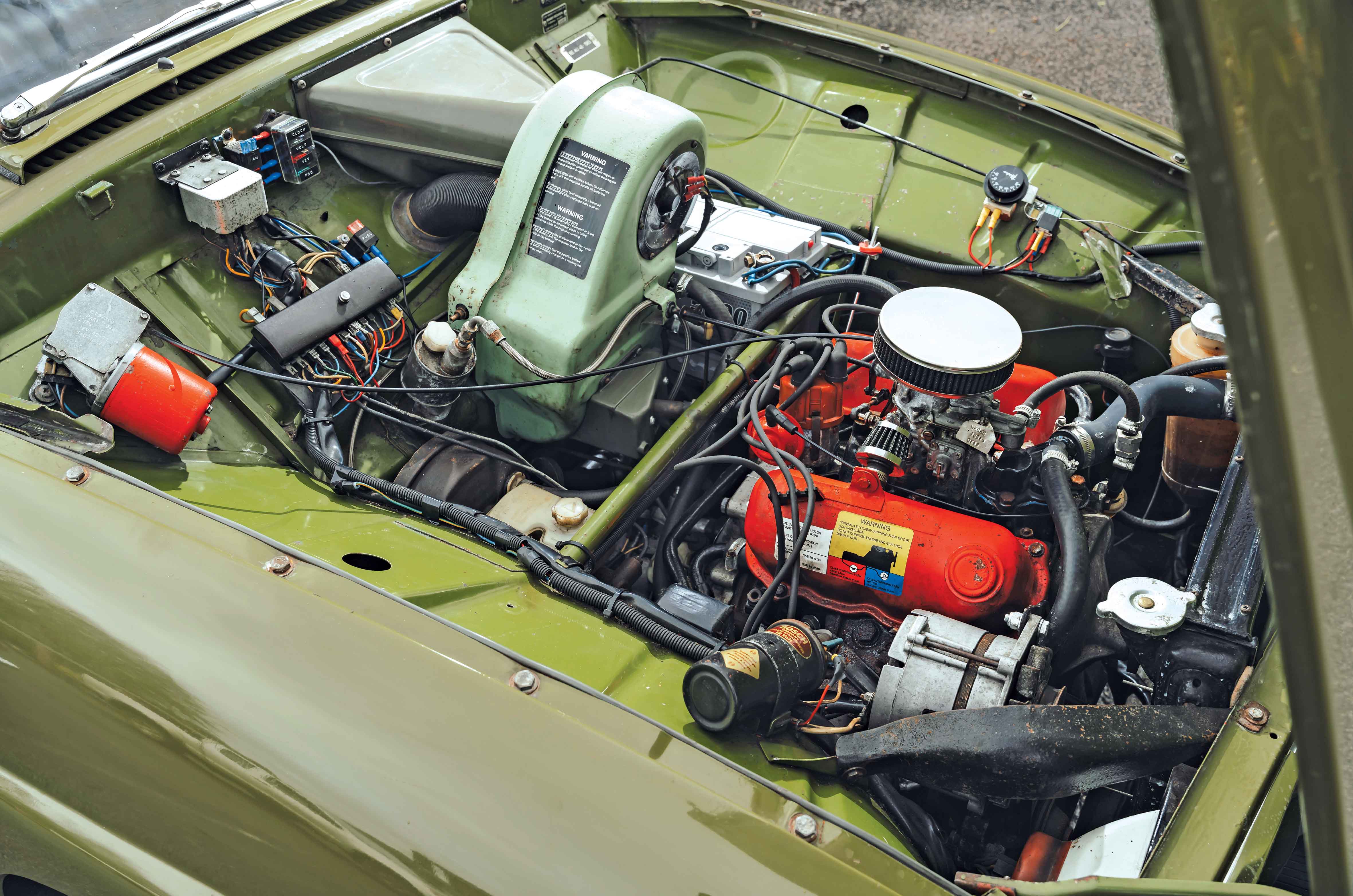
It was Ford’s 60° V4 that made the cut, though, being compact, relatively torque-rich and a good fit in the 96’s engine bay.
The overhead-valve unit brought the desired increase in outputs, raising power from the two-stroke’s by-then 42bhp to 65bhp, while torque was up from 60lb ft at 3000rpm to the V4’s 86lb ft at 2500rpm.
Not only was the new engine cleaner and easier to live with, without the need for an oil/fuel mixture at fill-ups, but performance was also in another league, with the 0-60mph time dropping from 24.1 secs to 16.5 secs, and top speed lifted from 76mph to 92mph.
Fuel consumption improved markedly, with the V4 achieving nearly 30mpg versus the two-stroke’s 22mpg.
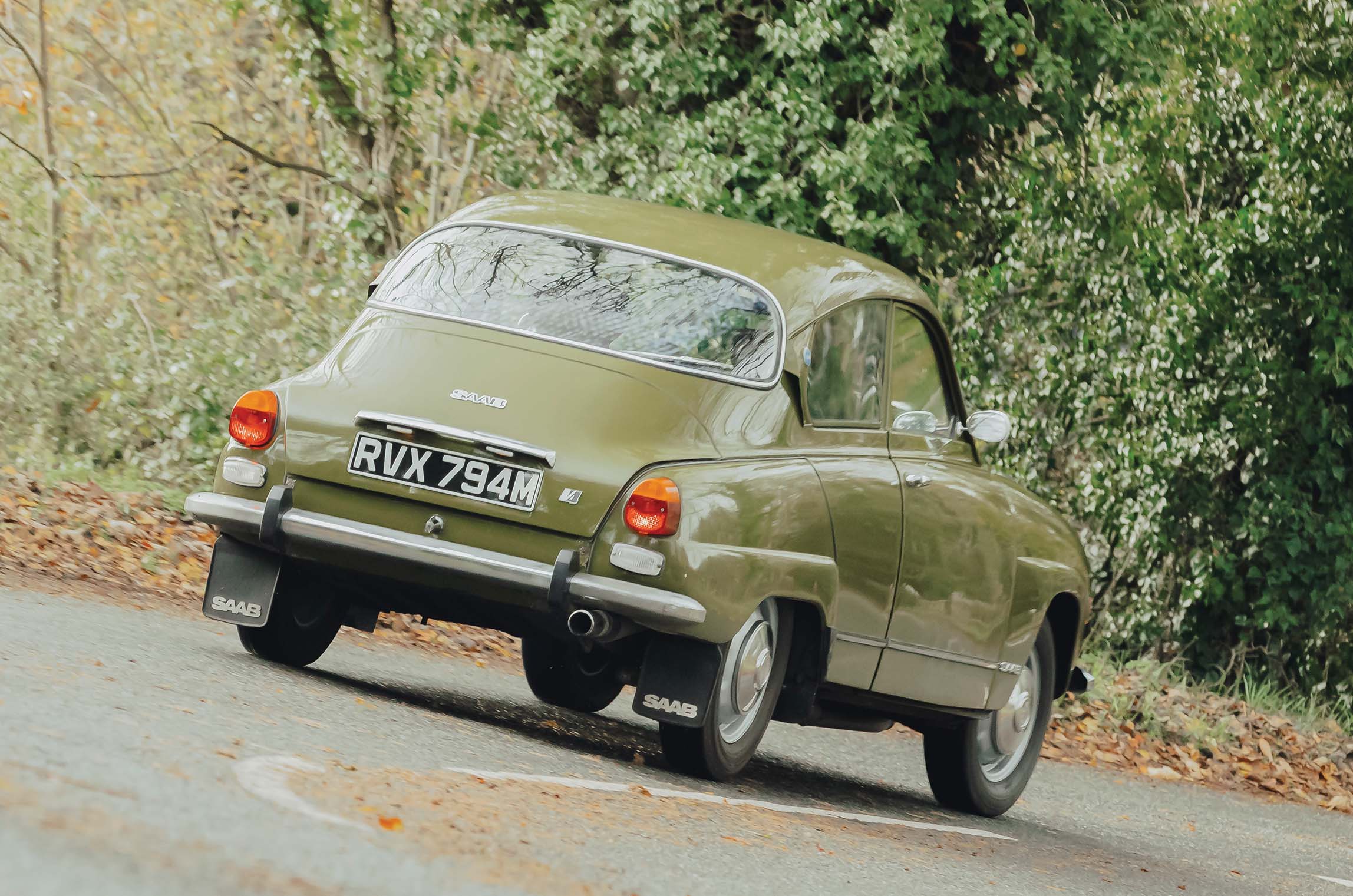
Understeer is noticeable in the Saab 96 V4
For 1967, the 96 was available with both engines, but in ’68 the two-stroke was dropped.
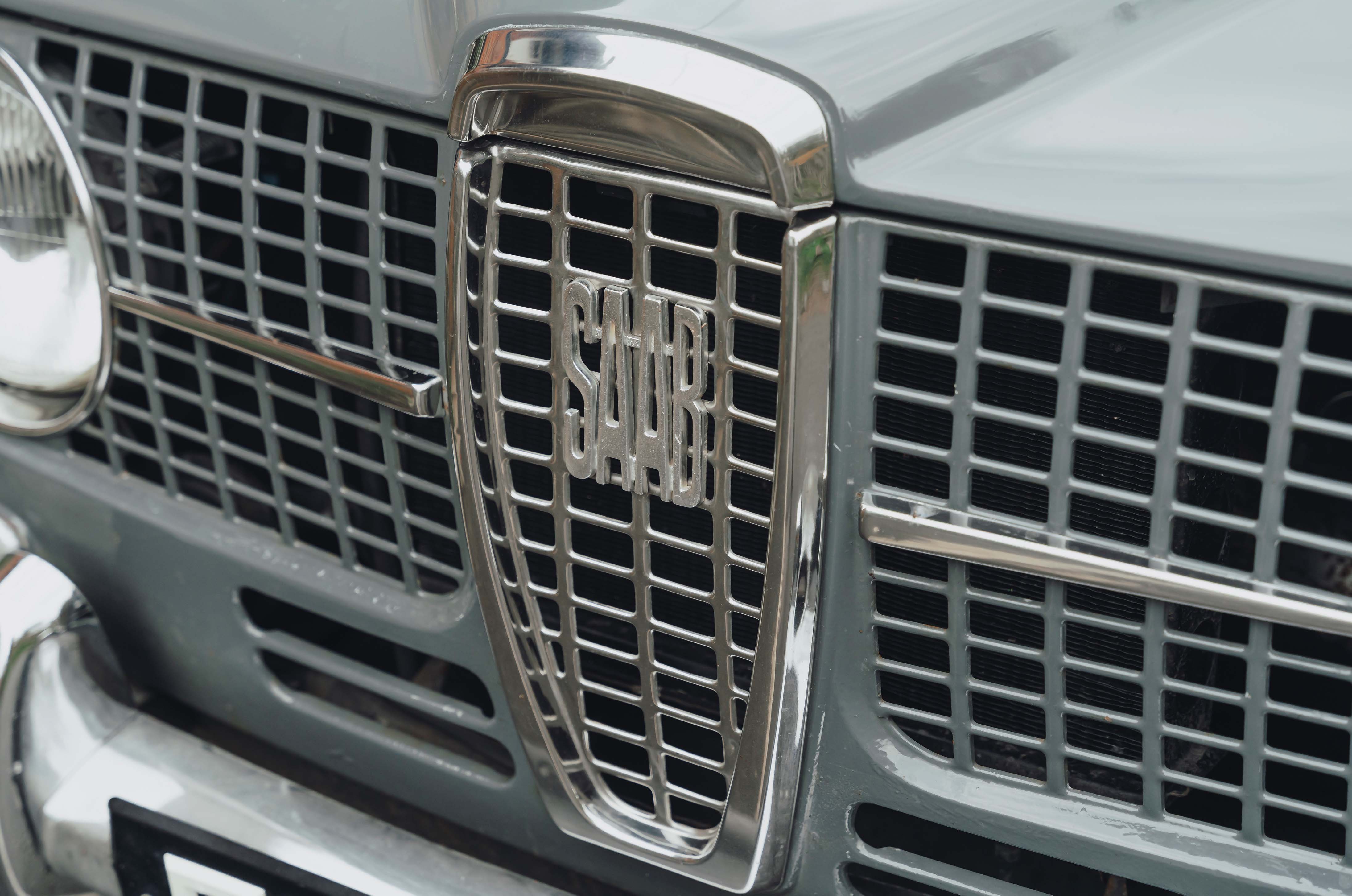
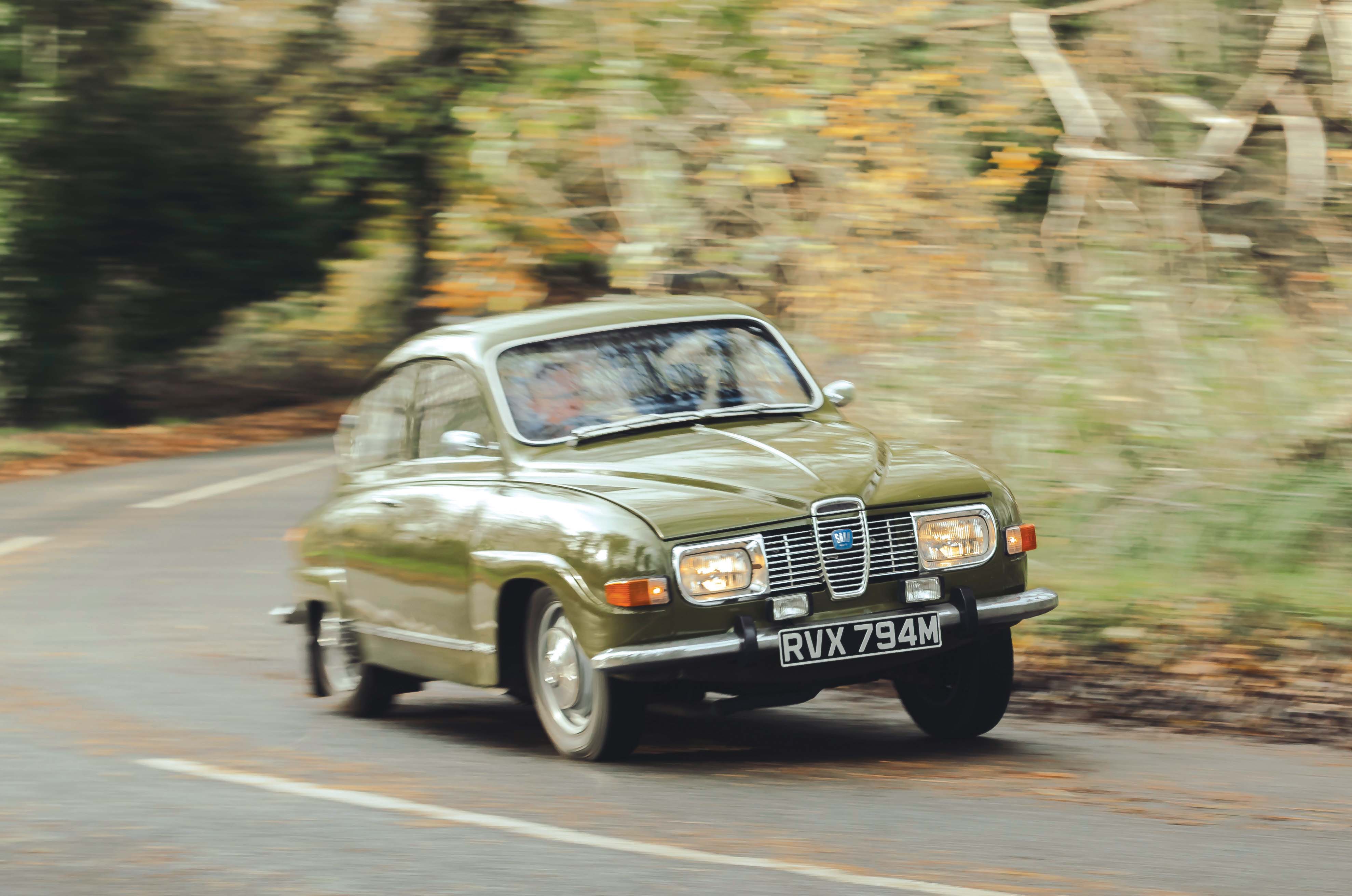
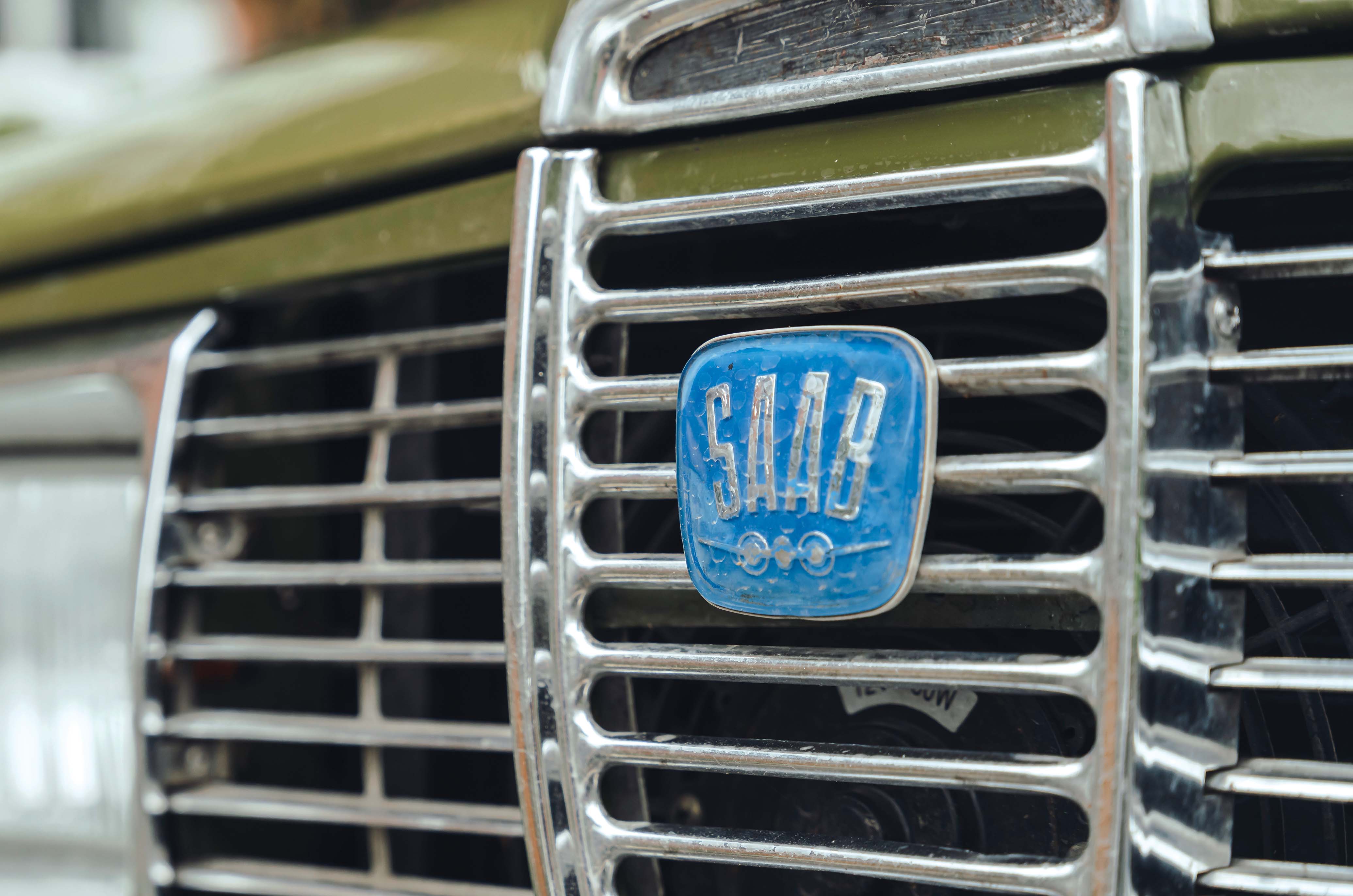
In 1969, Björn Envall’s design team completed the 96’s overhaul, refreshing the exterior with a new, polished-metal slatted grille incorporating rectangular headlights, plus larger front and rear ’screens, while inside was an all-new dash, a padded steering wheel with telescopic column and even an automatically heated driver’s seat.
Engine braking was obviously now possible, supplemented by front discs for the first time, but the 96 retained its freewheel, which could be deployed via a floor-mounted T-handle.
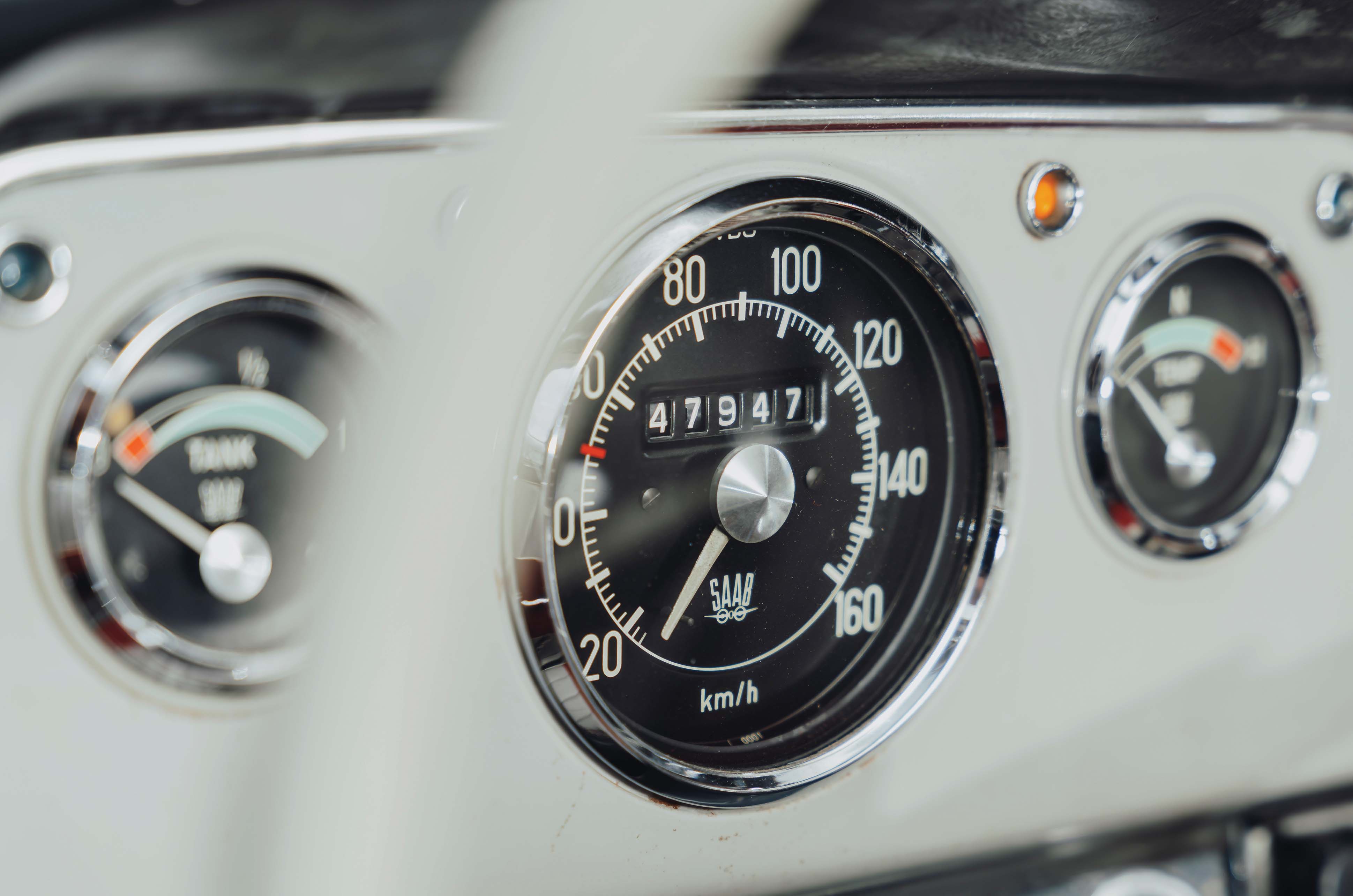
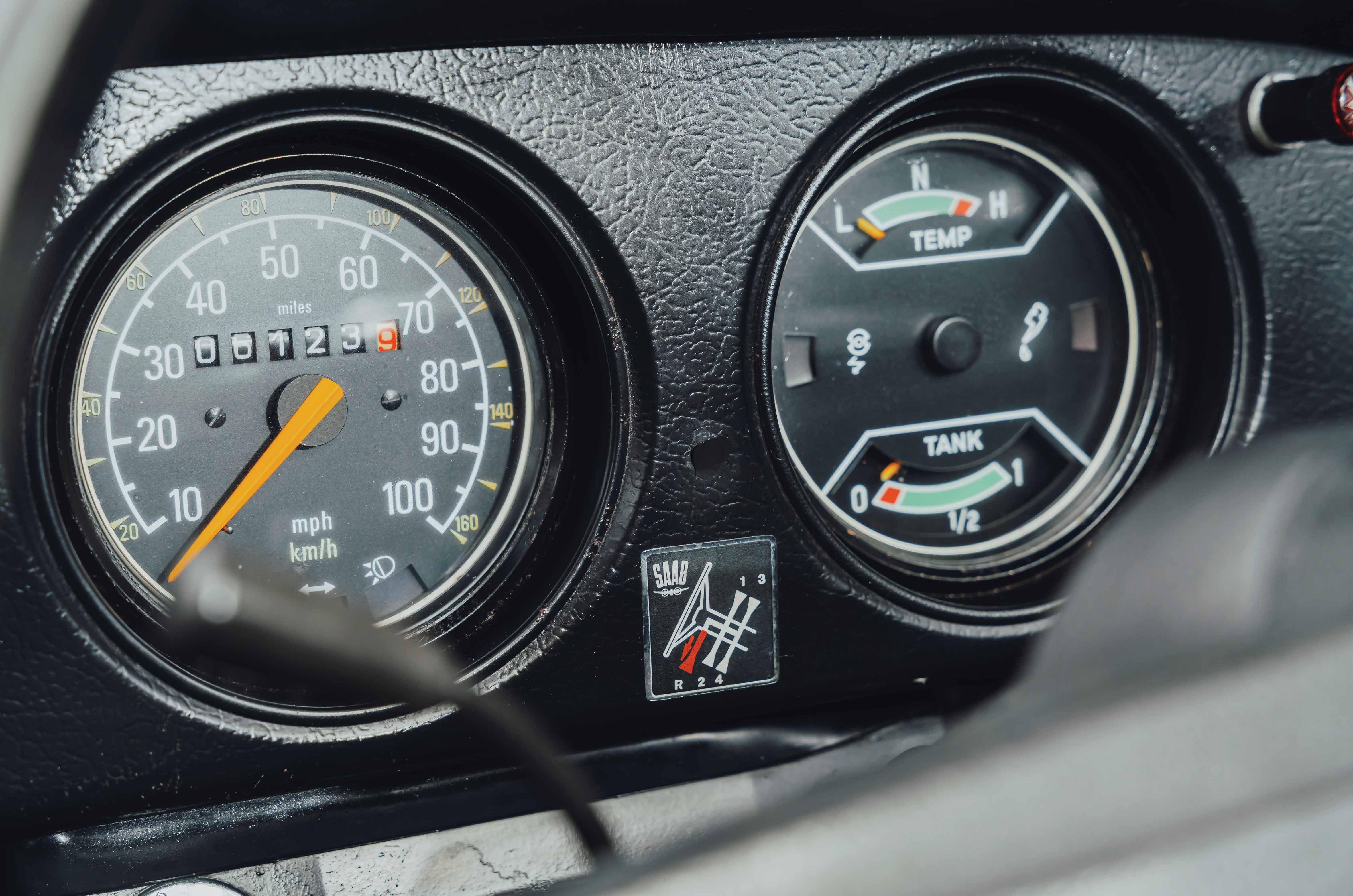
The Saab 96 V4 has a gear map on the dashboard, between the dials
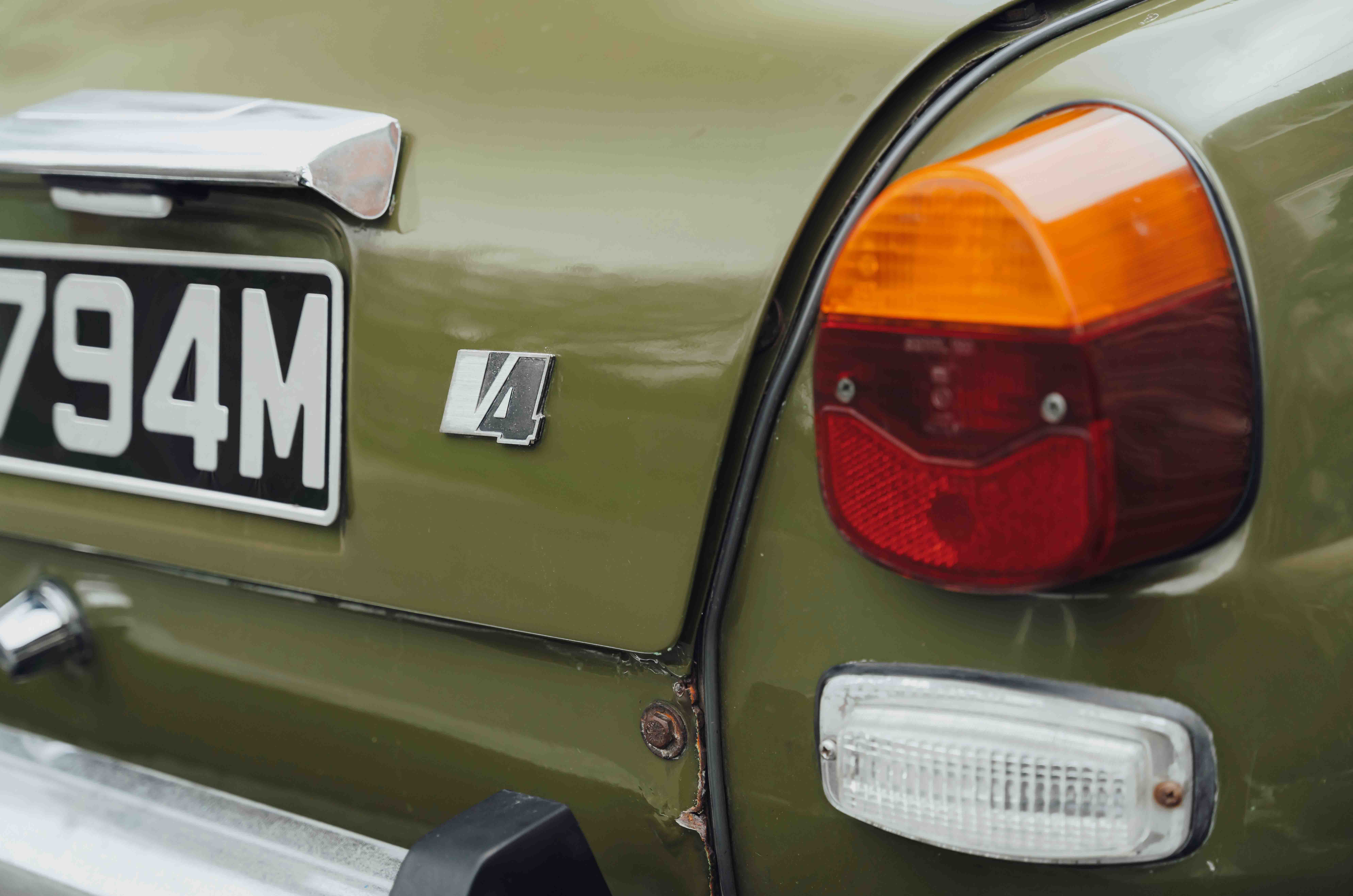
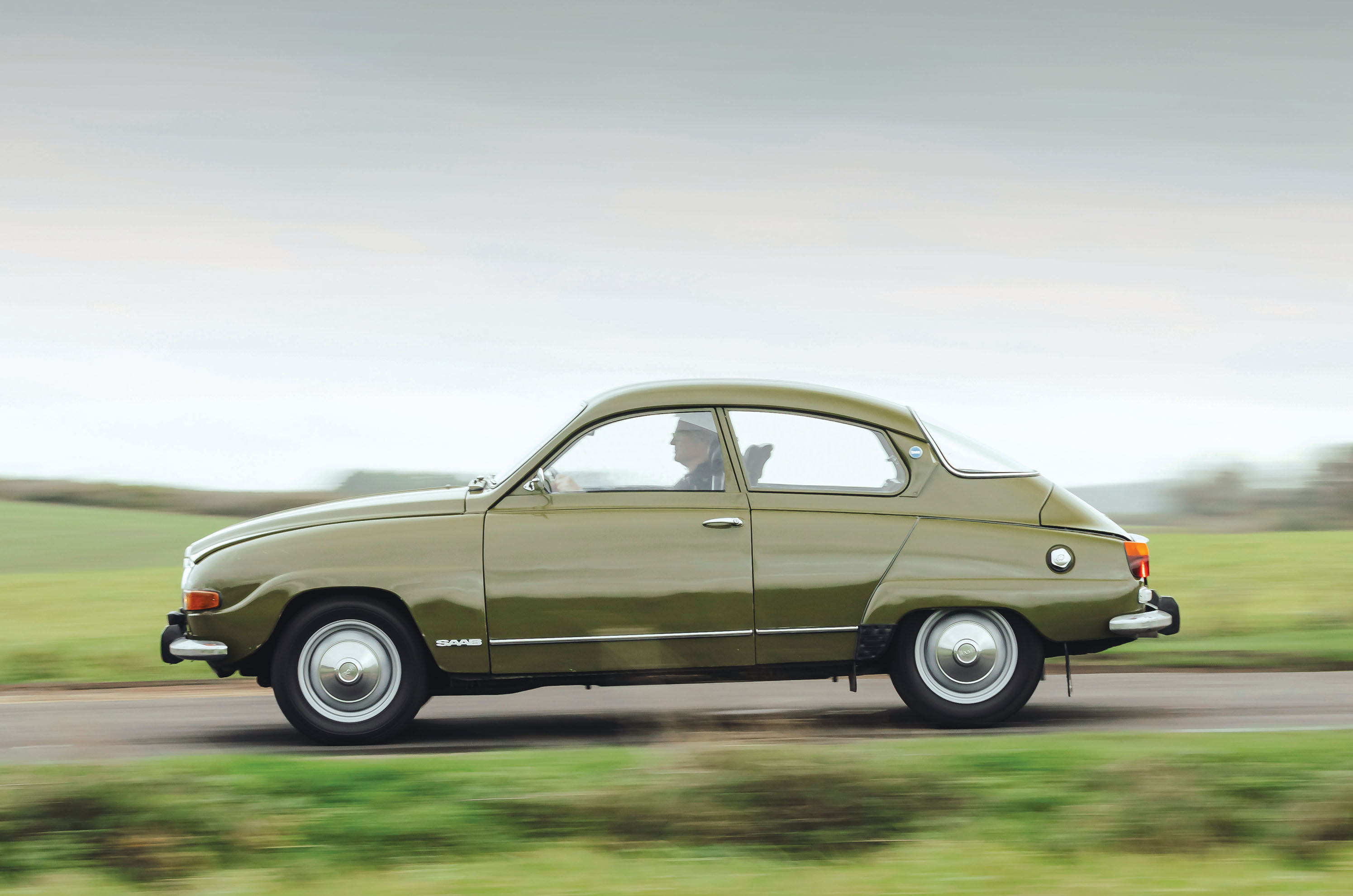
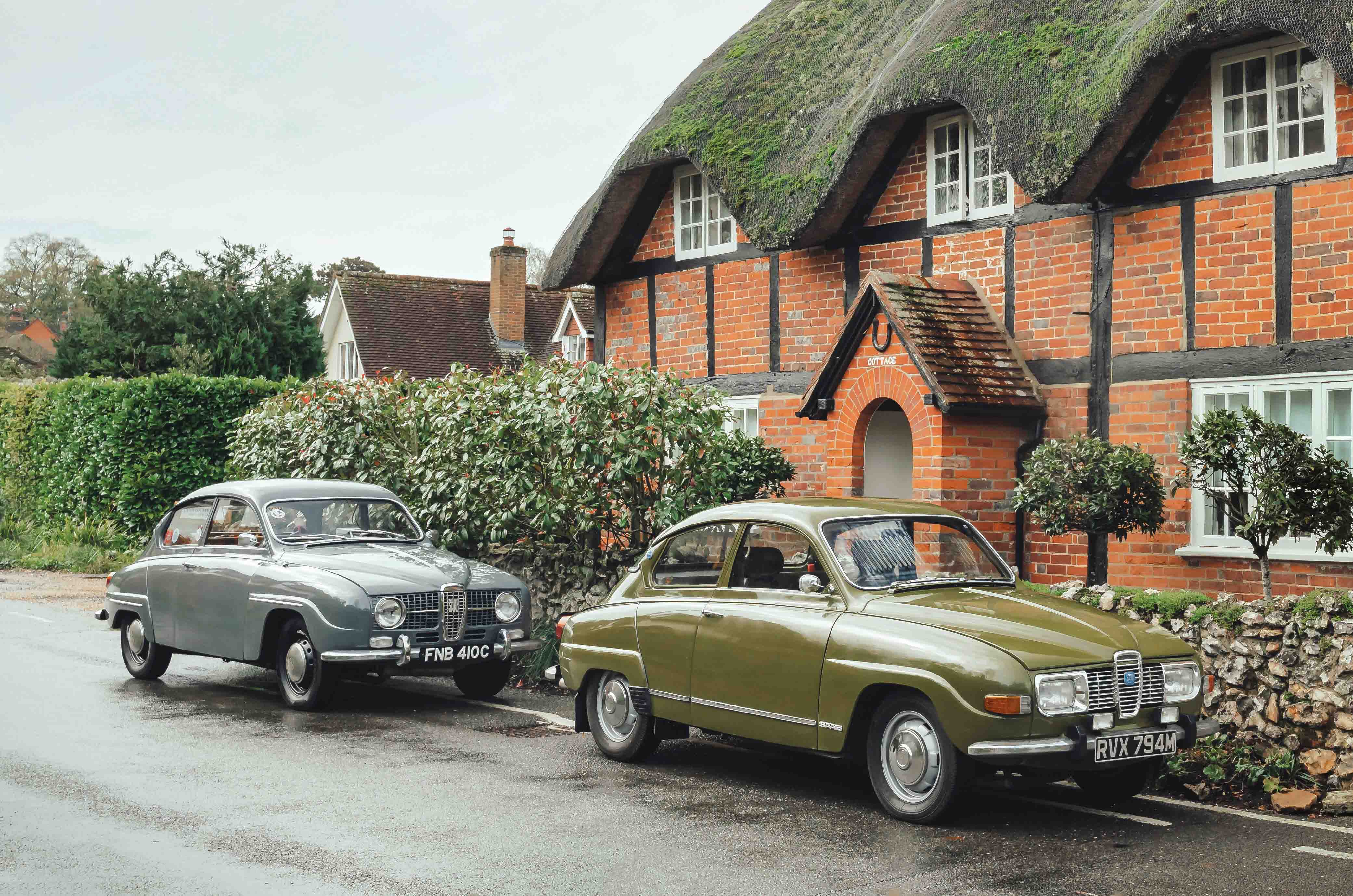
David Parmiter’s Verona Green V4 is the spit of the ’72 car that preceded my two-stroke, and in every respect it’s a more grown-up machine.
Subjectively, the exterior refresh worked well and at the time modernised the car, without making it look like a 1940s design with flares.
The rectangular lights integrate well with the sloping front end, and the new grille makes it look less dowdy.
Inside, the makeover is more radical, with additional padding around the dash and control areas, along with a smaller steering wheel with a textured central bar.
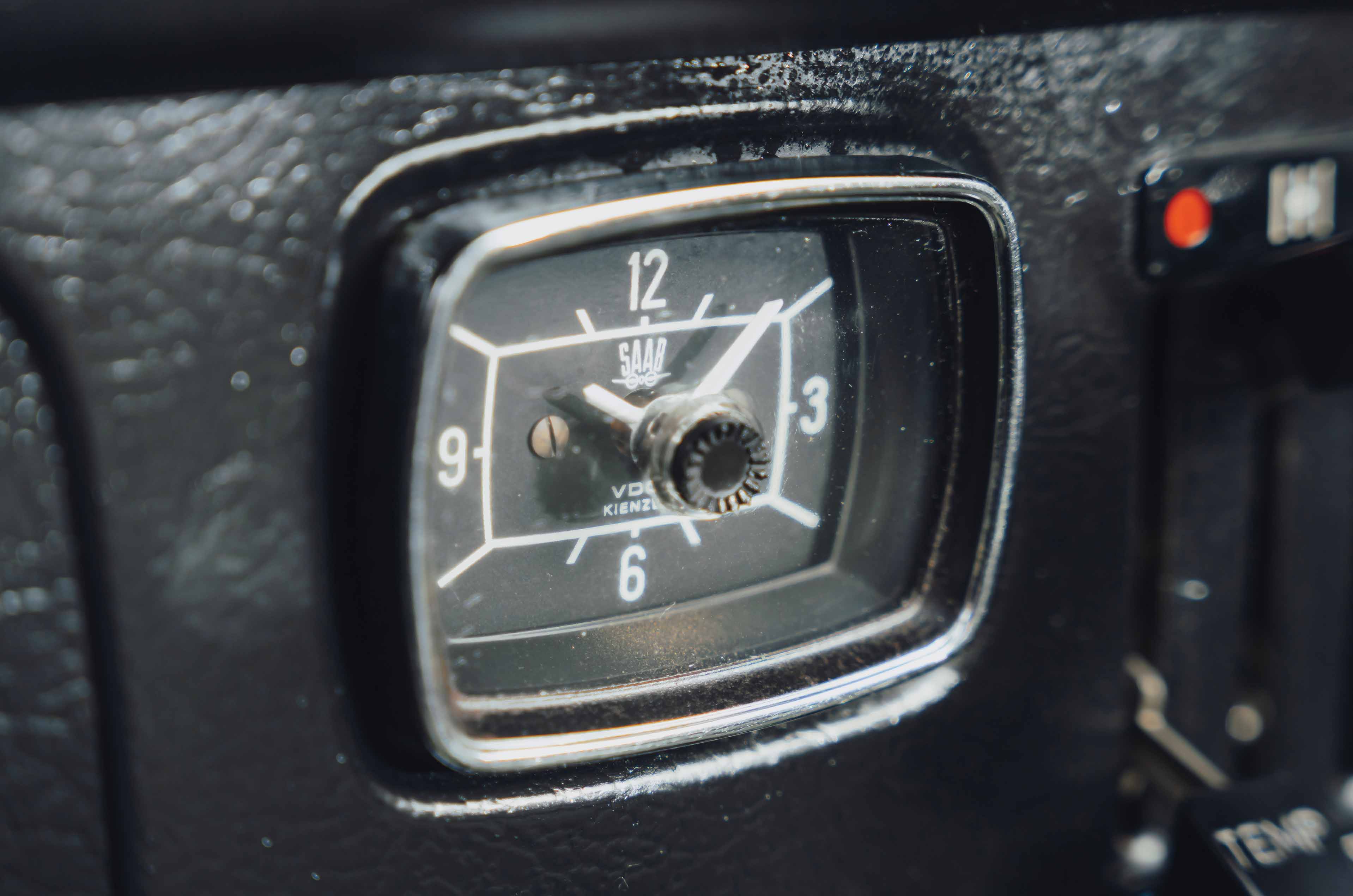
The Saab 96 V4’s stylish interior clock
There couldn’t be a more contrasting noise upon start-up. The Ford V4’s rather lumpen soundtrack plays out before you, but doesn’t excite in the way that the stroker did.
While its offbeat timbre is distinctive, and a balancer shaft is used to tame the configuration’s natural coarseness, you would never say it was the sweetest motor on the block.
Set off and the unassisted steering is heavier, which you would expect in a car carrying 170lb more than its predecessor.
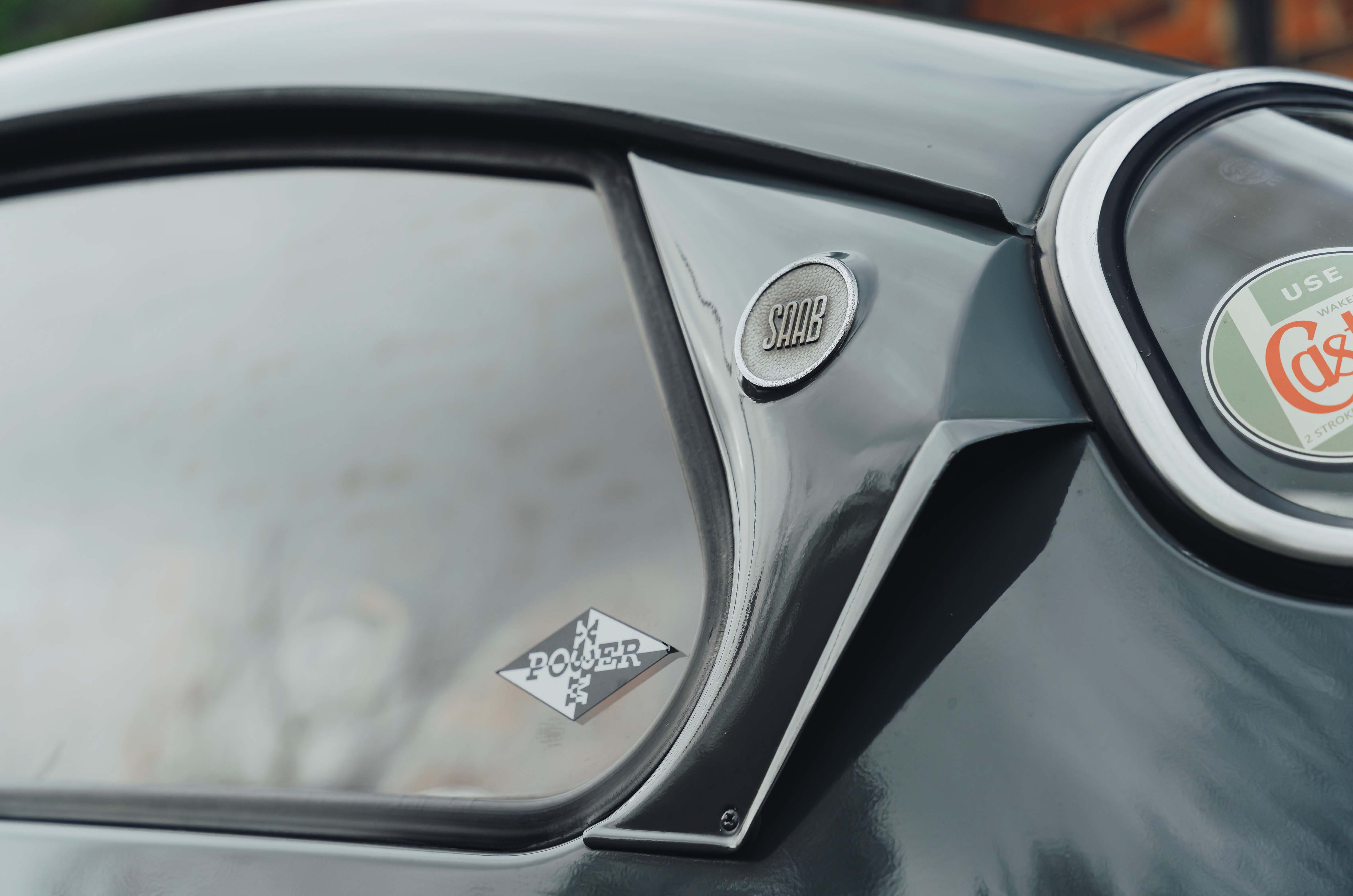
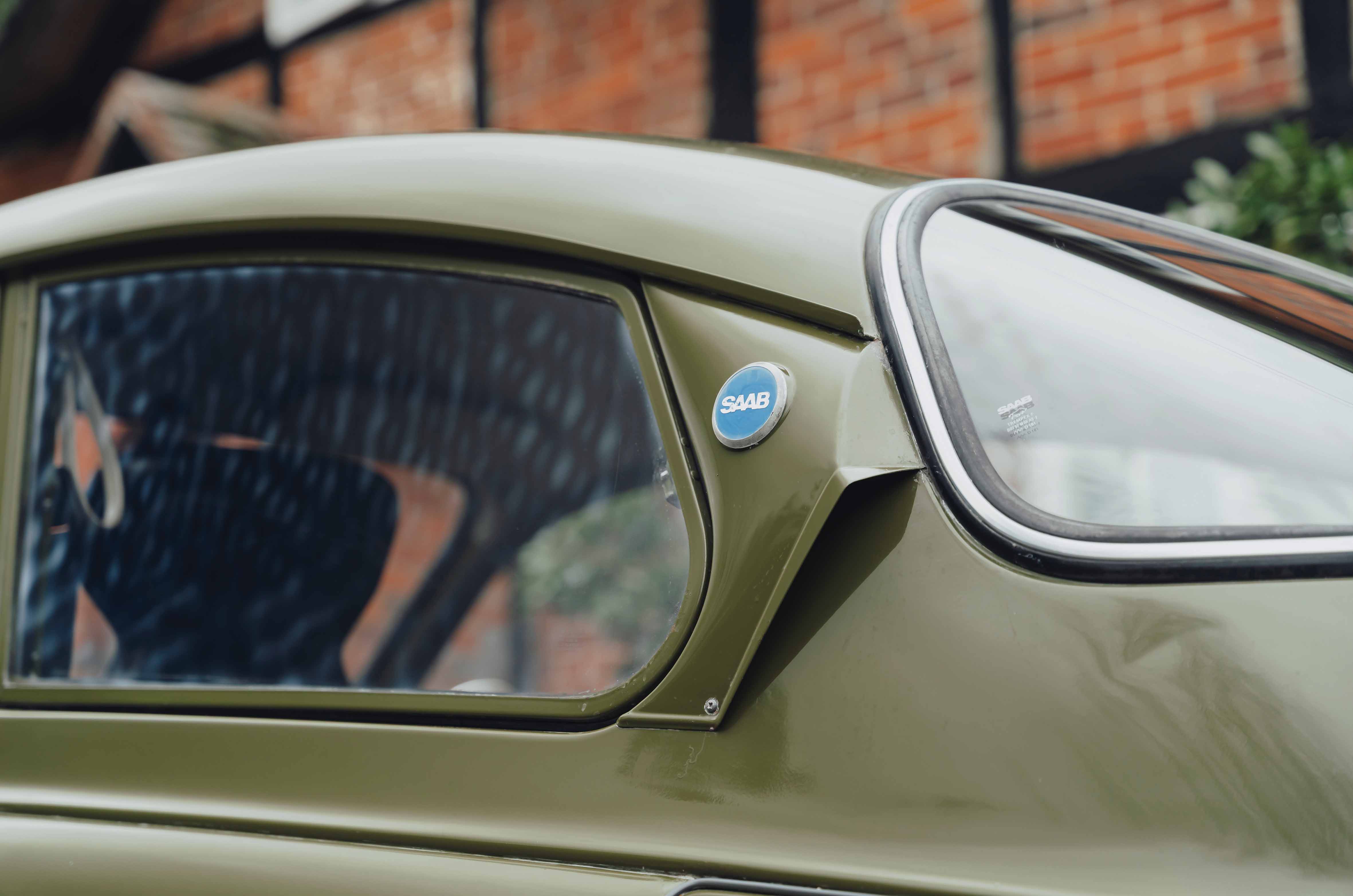
The Saab 96 V4’s rear vent draws air from the cabin
All V4s were fitted with four-speed gearboxes and, thanks to this car’s higher gearing, cruising speeds of around 60mph are not only easier to reach, but also require less effort to maintain.
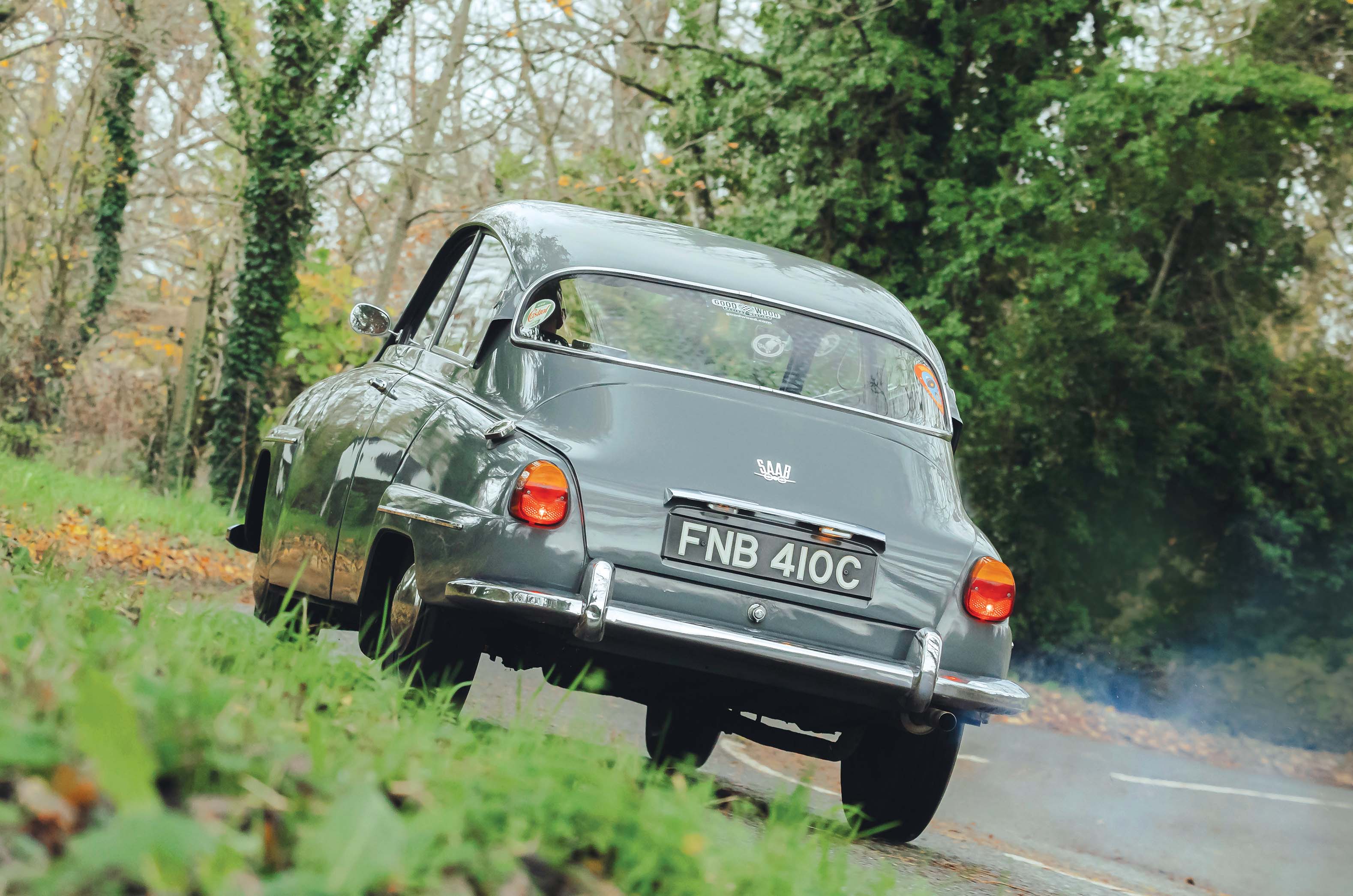
However, with the all-iron engine’s weight slung ahead of the front axle, some of the two-stroke’s sublime chassis balance has been lost – although much-improved straight-line stability is the upside.
Understeer is more prevalent during spirited cornering, and the general sensation of the 96 being light on its feet has been eroded somewhat in its V4 guise
The higher-geared Saab 96 V4 is a relaxed cruiser and feels more stable in a straight line
Nonetheless, as a car to live with over a long distance – especially on high-speed routes – it has the measure of its predecessor in every way.
I can think of no car that has undergone such a transformation by dint of an engine change as the Saab 96.
Swapping two-stroke triple for V4 four-stroke allowed the model to survive for 13 more years while retaining its unique character and design.
But having lived with both versions in a previous life, the delightful two-stroke remains my choice for driving pleasure – and for that thrilling soundtrack.
Images: Max Edleston
Thanks to: Saab Owners’ Club (GB) Ltd
The Saab 96’s rallying legacy
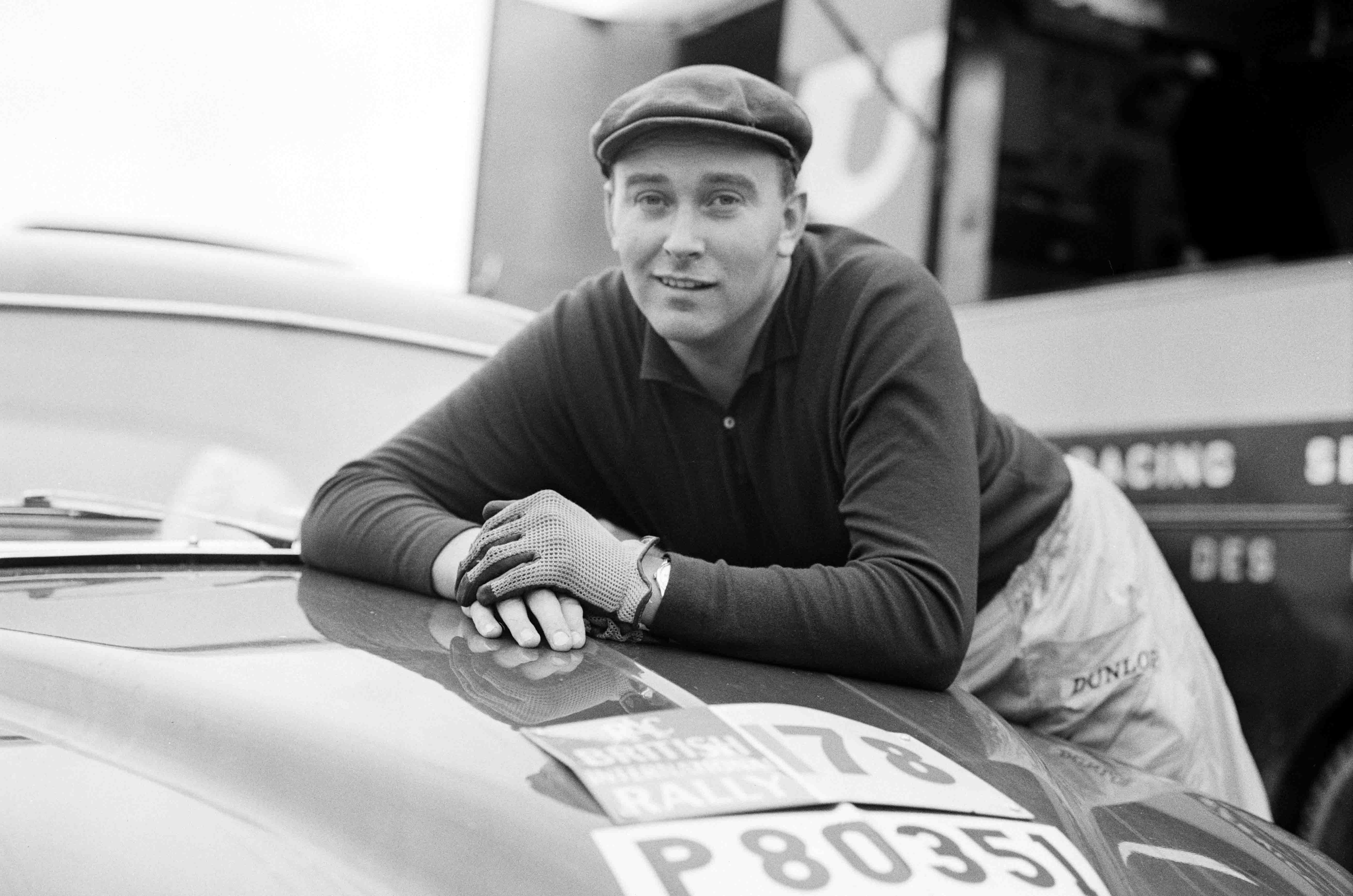
Erik Carlsson’s rally success boosted Saab’s image © Getty
Erik Carlsson (above), whose name will forever be connected with the now-defunct Saab marque, both as a rally driver and later as a roving ambassador for the company, perfected the art of left-foot braking in the works two-stroke 96s, and in doing so he was able to keep the little cars on the boil (and frequently on their roofs).
Carlsson and the 96 dominated international rallies soon after the model was launched, winning Britain’s RAC Rally in 1960, ’61 and ’62, as well as taking victory on the Rallye Monte-Carlo in 1962 and ’63.
The 96’s toughness and reliability were further confirmed in 1964, when Carlsson took second on the East African Safari Rally.
After the V4 was launched, while its competition success in World Rally Championship events in the 1970s dropped off as more modern and accomplished machines took to the stage, the 96’s capability in adverse conditions was still evident: Stig Blomqvist won the Swedish Rally in 1972 and ’73, and Per Eklund was victorious at the same event in ’76.
Factfiles
Saab 96
(two-stroke, long-nose)
- Sold/number built 1960-’67/547,221 (all 96s)
- Construction steel monocoque
- Engine aluminium/nickel-block, alloy-head 841cc two-stroke triple, three Solex carburettors
- Max power 42bhp @ 4500rpm
- Max torque 60lb ft @ 3000rpm
- Transmission four-speed manual, FWD
- Suspension: front independent, by double wishbones, anti-roll bar (to 1972) rear trailing U-beam axle, radius arms; coil springs, telescopic dampers f/r
- Steering rack and pinion
- Brakes drums
- Length 13ft 8in (4166mm)
- Width 5ft 2in (1575mm)
- Height 4ft 10in (1473mm)
- Wheelbase 8ft 1½in (2488mm)
- Weight 1792lb (813kg)
- 0-60mph 24.1 secs
- Top speed 76mph
- Mpg 22
- Price new £729 (1966)
- Price now £4500-12,500*
Saab 96 V4
(where different from two-stroke)
- Sold/number built 1967-’80
- Engine all-iron, ohv 1498cc 60° V4, single-choke FoMoCo carburettor
- Max power 65bhp @ 4700rpm
- Max torque 86lb ft @ 2500rpm
- Brakes discs front, drums rear
- Weight 1962lb (891kg)
- 0-60mph 16.5 secs
- Top speed 92mph
- Mpg 29.4
- Price new £1302 (1973)
- Price now £3500-9500*
*Prices correct at date of original publication
Enjoy more of the world’s best classic car content every month when you subscribe to C&SC – get our latest deals here
READ MORE
Saab 96 Sport: Swede dreams
Compact quality: Neckar Europa vs Lancia Appia vs Auto Union 1000S vs Saab 96
Saab: the rise and fall
Simon Hucknall
Simon Hucknall is a senior contributor to Classic & Sports Car